
Fondazione Prada Explores Generative Afroeurasian Connectivity in Global Antiquity
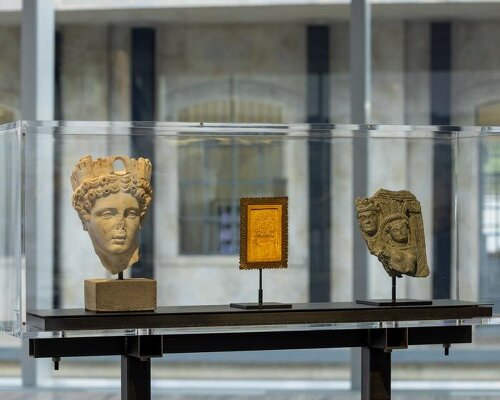
As Designboom reports, Fondazione Prada in Milan is hosting Global Antiquity: Cultural Interactions in Afroeurasian Space 600 BCE–1000 CE. Curated by Salvatore Settis, Anna Anguissola, and Chiara Ballestrazzi, the exhibition utilizes artifacts from four continents to examine how ancient trade routes fostered cross-cultural influences and shared aesthetic languages across vast geographical distances.
Context from Industry Pulse
The Global Antiquity exhibition at Fondazione Prada arrives during a period of high-profile architectural and design interventions in major urban centers. In Milan, this focus on historical continuity mirrors interior projects like Matteo Thun’s work on the Torre Velasca, which uses the building's own history as a creative starting point. Similarly, global design firms like OMA are increasingly tasked with reconciling dense archaeological or historical narratives within contemporary display spaces. By contrasting the generative nature of ancient globality against the standardized dilution of modern globalization, the show challenges designers to consider how material history can be preserved and handed down amidst the rubble of a modern, extracted world.
"each and every object has its own demands and comes with its own protocol and its own complexity"
The exhibition layout, authored by Rem Koolhaas alongside Giulio Margheri and the AMO/OMA team, features a collection of steles, coins, and textiles spanning sixteen centuries. Designboom notes that the opening sequence, titled An Impossible Encounter, juxtaposes Roman busts with a Gandhara Buddha from Pakistan to illustrate early aesthetic intersections. One Roman figure features an Indian-style bun carved in marble, while another represents a Greek philosopher who engaged with Indian sages during the first century.
Material migrations are tracked through thematic sections, such as a study on the diffusion of wine. The displays follow the path of rhyton drinking vessels from Italian necropolises through Greece, Ukraine, and China. These objects frequently retain specific horn-like shapes and animal motifs across disparate regions, suggesting that both trade goods and mythological imagery traveled along the same merchant paths. Designboom highlights how these recurring forms challenge modern perceptions of rigid boundaries between ancient societies.
Funeral objects recovered from Roman sites further emphasize this cross-continental reach. In the tombs of two young women, researchers found ivory dolls and jewelry featuring gemstones sourced from Southeast Asia and Sri Lanka. The presence of these Syrian-style artifacts in second-century Rome illustrates a high value placed on worldly goods that were intended to accompany the deceased into the afterlife. This bejeweled splendor reflects a persistent human desire to maintain connections across cultural lines.
Theoretical framing for the show draws on the work of Édouard Glissant, specifically regarding the distinction between globality and globalization. The curators focus on globality as a productive meeting of cultures rather than the standardizing force of modern globalization. While the exhibition acknowledges the transformative power of trade, Designboom observes that it largely bypasses the role of warfare and conquest in cultural exchange, opting instead to prioritize the generative effects of historical connectivity and shared materiality.
The Industry Pulse Bottom Line
The collaborative effort between OMA and Fondazione Prada demonstrates how curated antiquity can provide a roadmap for modern connectivity, emphasizing material density and cross-cultural contamination as essential tools for generative design.