
Studio Ruei Merges Brutalist Aesthetics and Automotive Design in Hong Kong
According to Designboom, Studio Ruei has completed Macchina, a 2,150-square-foot hybrid space in Hong Kong’s Wan Chai district. Designed by Yuisze Wong, the project functions as both a specialty coffee bar and a curated gallery that treats vehicles as industrial artifacts rather than commercial products, according to reporting by Designboom.
Context from Industry Pulse
The opening of Macchina follows a period of significant volatility and aesthetic experimentation in the automotive sector. While Studio Ruei celebrates the technical engineering of high-end vehicles like the Aston Martin Valkyrie in Hong Kong, other segments of the industry are facing rapid shifts. For instance, recent reports indicate Tesla is winding down production of the Cybertruck as analysts question the long-term viability of its polarizing design. Simultaneously, the creative tools used to render these vehicles are evolving, with Maxon updating ZBrush and Cinema4D to enhance 3D creation for Apple Vision Pro and Pro Display XDR, bridging the gap between digital modeling and physical industrial artifacts.
"Framing vehicles as cultural and industrial artifacts rather than commercial commodities, the interior provides a social venue where automotive design, mechanical engineering, and specialty coffee converge."
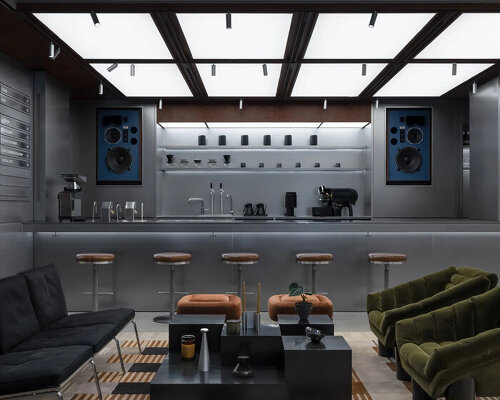
The interior design for Macchina utilizes a material palette of textured concrete, brushed metal, and natural timber to create a Brutalist-inspired atmosphere. As Designboom reports, the space on Gloucester Road features a street-facing envelope with large glazed apertures designed to draw the eye toward a central vehicular plinth. The layout is organized around visual corridors that connect visitors to the main display, which debuted with an Aston Martin Valkyrie as its sculptural centerpiece.
Studio Ruei focused on architectural precision to mirror automotive manufacturing tolerances. Designboom notes that the 2,150-square-foot facility avoids the traditional aesthetics of a car showroom. Instead, it employs a minimalist service counter and custom shelving units that hold design objects and automotive literature. Low lounge seating is positioned specifically to allow patrons to view the profile of the exhibited vehicles from various eye levels while drinking coffee.
The technical execution includes an integrated ceiling grid that combines diffused wash lighting with directional spotlighting. This setup allows the gallery to highlight specific contours of the engineering on display without requiring structural changes when the featured vehicle is rotated. Designboom explains that the lighting is intended to provide studio-grade illumination for the industrial artifacts.
Acoustic comfort was also a priority in the design of this social venue. Recessed acoustic panels are installed across the walls and ceiling to manage reverberation within the concrete environment. According to Designboom, these elements help balance the active sounds of a specialty espresso bar with the focused, quiet atmosphere expected in an exhibition gallery, ensuring that the hospitality and industrial engineering components can coexist effectively.
The Industry Pulse Bottom Line
Macchina demonstrates a shift in luxury hospitality where the traditional showroom is replaced by a cultural gallery, leveraging architectural Brutalism to elevate automotive engineering into a form of high art.