
Marlisa Marasco Reimagines Mediterranean Myths Through Hand-Crafted Mirror Series
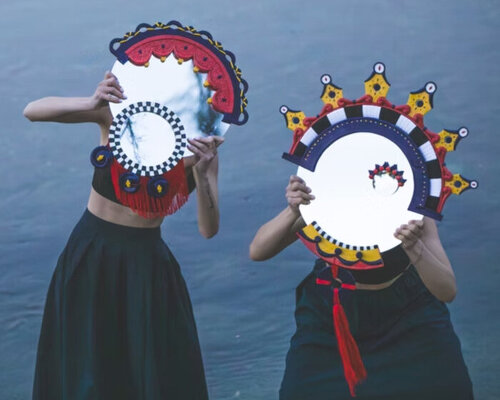
Designer Marlisa Marasco debuted Scilla & Cariddi at SaloneSatellite during Salone del Mobile Milano 2026, according to Designboom. The collection consists of two collectible wall mirrors that interpret the ancient sea monsters of the Strait of Messina. By blending glazed ceramics with reflective glass, the objects serve as both functional vanities and figurative sculptures.
Context from Industry Pulse
The debut of Marlisa Marasco’s work at SaloneSatellite aligns with a broader focus on experimental material use seen across recent design showcases in late 2026. While other designers are exploring biological pigments or architectural forms influenced by water and insects, Marasco utilizes traditional hand-modeled ceramics and timber to bridge the gap between ancient mythology and modern utility. This focus on tactile, narrative-driven objects reflects a persistent interest in collectible design that prioritizes craftsmanship over mass production. By integrating practical elements like pin cushions and wall hooks into sculptural forms, the project demonstrates how functional furniture can maintain a strong figurative identity without sacrificing household utility.
"The overlapping, offset mirror planes fragment the viewer’s reflection across varying scales, integrating optical shifts directly into the craft-driven wall compositions."
The Scilla & Cariddi series draws conceptual inspiration from the mythical guardians of the Calabrian and Sicilian coasts. As reported by Designboom, these pieces utilize a mixed-material assembly to translate maritime folklore into tangible interior objects. The construction involves hand-modeled glazed ceramic elements, multi-scale reflective glass, and timber substrates, finished with textile accents and integrated sponges. These materials work together to fragment the viewer’s reflection, creating an optical experience that references the chaotic nature of the Mediterranean myths.
The Scilla mirror represents the guardian of the Calabrian shore and features a crown of six ceramic serpent heads. Designboom notes that this piece includes a secondary magnifying lens meant to evoke the eye of the monster. For added utility, the designer integrated a sponge that serves as a functional pin cushion. The layered glass planes are designed to offset the reflection, forcing a shift in perspective that mirrors the creature's supernatural origins.
Representing the Sicilian side of the strait, the Cariddi mirror is modeled after the gaping mouth of a lamprey. According to Designboom, this design incorporates three spiraling ceramic vortices that simulate the movement of marine whirlpools. Beyond their aesthetic contribution, these ceramic spirals serve a practical purpose as wall hooks for hanging personal accessories. The piece is finished with textile fringe to further emphasize the contrast between rigid and soft textures.
By positioning these two mirrors as conceptual opposites, Marasco attempts to frame the dangers of the ancient sea passage through a modern craft lens. Designboom highlights how the overlapping mirror scales allow the user to become part of the mythical imagery. The project highlights a growing intersection between traditional hand-crafting techniques and functional household furniture, turning domestic objects into narrative-driven collectible art.
The Industry Pulse Bottom Line
Marasco’s work demonstrates how designers can leverage regional folklore and mixed-material assembly to create high-value collectible furniture that blends functional domestic utility with sculptural, narrative-driven art.