
ETH Zurich Researchers Utilize Bacteria as Robotic Construction Collaborators
Researcher Karen Antorveza Paez at ETH Zurich is investigating how microorganisms can function as active builders in architectural production. As reported by Designboom, the project combines 3D printing and robotic fabrication with biological processes to create solid mineral structures from sand and bacteria, challenging traditional human-centric manufacturing methods.
Context from Industry Pulse
The integration of biocementation into digital fabrication marks a shift from passive material use to active biological collaboration. While the industry has previously explored bacteria for soil stabilization or self-healing concrete, the ETH Zurich research treats the biological reaction as a primary manufacturing tool. By eliminating the high-heat requirements of traditional cement, the process addresses the significant carbon footprint of the construction sector. However, the production of ammonium byproducts and current strength limitations suggest that while bacteria may soon handle decorative or secondary elements like partitions and facades, they are not yet ready to replace industrial concrete in primary load-bearing structures.
"Antorveza Paez compares the process to baking a cake, with microorganisms taking the place of an oven by setting the material."
The research focuses on a biological process known as microbiologically induced calcite precipitation or biocementation. According to Designboom, the team utilizes a specific bacterium called Sporosarcina pasteurii to trigger a chemical reaction that breaks down urea. This process generates calcium carbonate, a mineral naturally found in limestone and mussel shells, which forms microscopic crystals that bind loose sand grains into a solid mass.
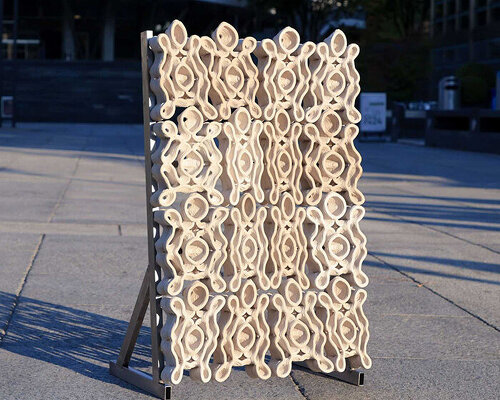
Two primary fabrication methods have emerged from the ETH Zurich study. Designboom notes that the first involves 3D printing a bio-ink composed of sand, live bacteria, and a water-based gel. The resulting geometry is submerged in a mineralization bath for two to five days, where the bacteria gradually solidify the structure at room temperature without requiring external heat sources. This method has already produced functional facade elements like sunshades and partitions.
A second approach utilizes a robotic arm to deposit layers of sand and mineralization substances directly onto surfaces. This technique draws inspiration from geological formations called stromatolites, which are created by the mineral-depositing activity of microorganisms over time. As Designboom reports, this automated system was demonstrated during a six-month continuous operation at the 2025 Venice Architecture Biennale, allowing observers to watch the material grow.
While the process offers a low-carbon alternative to traditional cement production, it faces environmental and structural hurdles. Designboom highlights that the chemical reaction produces ammonium as a byproduct, which requires careful management to avoid environmental damage. Furthermore, the material currently behaves more like mortar than concrete, meaning its use in load-bearing architecture is a long-term goal rather than an immediate application.
The Industry Pulse Bottom Line
ETH Zurich’s biocementation research proves that microorganisms can act as structural binders in robotic fabrication, offering a low-heat, biological alternative to traditional cement despite remaining challenges in waste management and load-bearing capacity.