
Andrés Jaque Challenges Architectural Utopia Amidst Permanent Connectivity
As reported by Designboom, Spanish architect and Columbia GSAPP Dean Andrés Jaque is re-evaluating the consequences of realized technological utopias. Jaque argues that twentieth-century visions of mobile, connected cities have morphed into modern infrastructures of surveillance and extraction, urging the design community to address the posthuman entanglements of biology and computation.
Context from Industry Pulse
The dialogue surrounding posthumanism and technology-driven design is intensifying across the creative sector. While recent industry events like the Walker Design Triennial showcase post-apocalyptic themes and flesh-like audio equipment, and the Alter exhibition in Tokyo integrates AI into traditional tea ceremonies, Jaque’s critique focuses on the structural power of these technologies. According to Designboom, his work with the Office for Political Innovation highlights that connectivity is not a neutral utility but a tool that can enforce segregation through fortified borders or displacement via financial algorithms. This reflects a broader shift where architecture must mediate between sophisticated computation and the survival of biological bodies in an increasingly automated world.
"Utopia did not simply fail. Its realization changed the politics of its promises. A utopia does not carry its politics intact into the future."
According to Designboom reporting, the historical excitement surrounding utopian architectural visions, such as those proposed by the Archigram group, has faced a complex transition into reality. While these early concepts focused on technological freedom and flexible urbanism, their eventual manifestation has coincided with the rise of permanent connectivity. This shift has transformed once-liberating promises into systems that facilitate power concentration, surveillance, and industrial disinformation.
Designboom reports that modern crises now emerge through the interplay of computational systems and biological processes. Issues such as housing stability, climate change, and biodiversity loss are no longer viewed as isolated problems but as posthuman enactments. For instance, residential availability is frequently dictated by financial algorithms and property regimes, while warfare increasingly relies on automated detection systems that destroy physical habitats and infrastructures.
Architecture now operates at the thresholds of sensing, where the production of reality often exceeds human perception. Jaque suggests that architectural practice must move beyond imagining distant alternatives and instead enter the active conflicts where reality is produced. This involves questioning what current institutions exclude and exploring what other forms of life might make possible through design intervention.
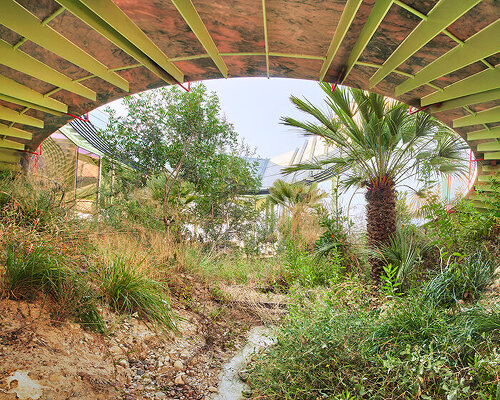
As Designboom highlights through projects like the Rambla Climate-House and the Reggio School, the Office for Political Innovation approaches design as an environmental and political tool. By making reality a site for collective experimentation, architecture can redirect the consequences of technological systems. This perspective shifts the focus from human-centric measures to a broader understanding of how built environments interact with microbial ecologies and planetary systems.
The Industry Pulse Bottom Line
Architects must pivot from designing idealistic futures to intervening in the existing computational and biological systems that currently dictate social equity, environmental health, and the politics of daily life.