
Gliese Design Merges Victorian Ruff and Chess Geometry in 3D Printed Series
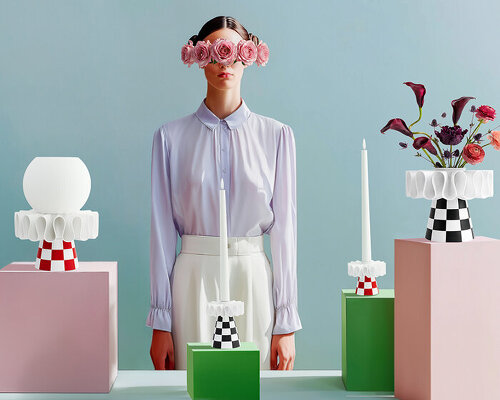
Mustafa Başaran and his studio Gliese Design have launched the Ondu Wonderland Collection, as Designboom reports. The series utilizes additive manufacturing to create domestic objects that blend surrealist narratives with geometric proportions. These functional pieces include table lamps, vases, and candle holders crafted from sustainable biopolymers to minimize environmental impact in contemporary homes.
Context from Industry Pulse
The Ondu Wonderland Collection arrives as designers increasingly experiment with additive manufacturing to solve sustainability challenges. By utilizing PLA from corn starch and recycled packaging, Gliese Design aligns with a broader industry shift toward biopolymers and post-consumer materials. This focus on waste reduction mirrors current regulatory movements, such as the EU's recent ban on destroying unsold fashion to curb luxury waste. While other segments of the design world are exploring large-scale installations, such as the steel-latticed museum at Powerhouse Parramatta or Carsten Höller’s giant slides in Mexico City, Başaran’s work demonstrates how 3D printing can bring high-concept, narrative-driven surrealism to the intimate scale of domestic tabletops.
The new furniture and accessory line from Mustafa Başaran is rooted in the studio's broader research into the balance between natural forms and computational precision. According to Designboom, the Ondu Wonderland Collection draws inspiration from the literary surrealism of Lewis Carroll, specifically translating the illogical nature of Alice's world into tangible household items. The design language utilizes a contrast between theatrical ruffled silhouettes and rigid, chess-inspired bases.
Materiality serves as a core pillar for the project. Designboom notes that the collection is manufactured using eco-friendly PLA derived from corn starch and recycled food packaging. Additionally, the studio incorporates post-consumer PETG into the production process. This reliance on sustainable biopolymers reflects an effort to combine high-tech additive layering with environmental mindfulness, ensuring that the resulting sculptural pieces have a low-impact footprint.
Each item in the series serves a specific functional role while maintaining a consistent aesthetic narrative. The table lamp features a ruffled top paired with a checkerboard base, a motif that carries over to the vases and candle holders. As Designboom reports, these signature ruffled forms are intended to echo Victorian-era collars, providing a sense of warmth and history that balances the cold precision typically associated with digital 3D printing.
The manufacturing process relies on additive manufacturing methods to achieve organic profiles that would be difficult to produce through traditional means. By pairing digital fabrication with story-driven design, the studio aims to create objects that act as storytellers within an interior space. Designboom describes the collection as a series of statement pieces that invite curiosity through their hidden details and surrealist themes.
The Industry Pulse Bottom Line
The Ondu Wonderland Collection demonstrates that 3D printing can transcend its industrial roots by integrating Victorian aesthetics and sustainable biopolymers, offering a path for high-end decor to achieve both narrative depth and environmental responsibility.