
Revieve Identifies Five Core Pillars Driving the Future of Beauty Through 2030
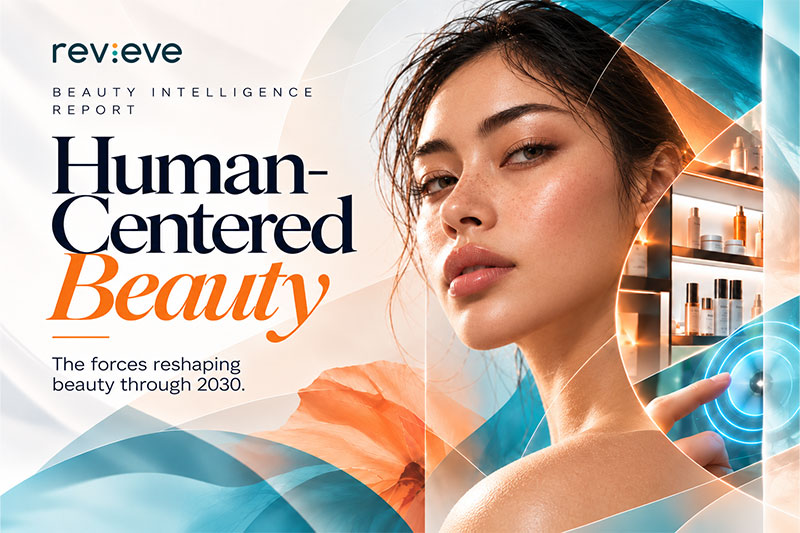
A new industry report from Revieve, titled Human-Centered Beauty: Wellness, Inclusion & Hyperpersonalization, details how the beauty sector is shifting toward holistic and adaptive digital experiences. According to Cosmetics Business, the research highlights a move away from static product matching in favor of continuous consumer journeys that integrate lifestyle, environmental data, and cultural nuances.
Context from Industry Pulse
The beauty industry is currently undergoing a period of significant growth and diversification, as evidenced by e.l.f. Beauty reporting a 51 percent sales increase following Rhode’s European launch. While new fragrance entries from brands like Off-White and Longchamp are slated for 2027, the Revieve report indicates that the long-term future of the sector relies on digital infrastructure rather than just new product categories. This tech-driven shift coincides with a broader expansion of specialized services, such as Shani Darden’s studio expansion into dermatology and the growing LemonBottle network in Latin America, illustrating a global move toward high-performance, personalized aesthetic solutions.
The latest analysis from Cosmetics Business identifies inclusive artificial intelligence as a primary driver for industry innovation. By utilizing representative datasets, these technologies can now provide recommendations that account for a wider range of hair textures, skin tones, and regional environmental factors. This shift reflects a move toward culturally relevant beauty solutions that acknowledge the specific needs of diverse global populations rather than applying one-size-fits-all digital algorithms.
Another significant development involves the intersection of skincare and internal wellness. As Cosmetics Business reports, there is growing consumer interest in nutricosmetics and ingestible beauty products. This holistic approach integrates nutrition with traditional topical care, treating long-term wellbeing as a core component of aesthetic maintenance. Furthermore, the report notes that brands are increasingly focusing on the biological links between skin health and lifestyle factors such as sleep quality, stress levels, and hormonal cycles.
Hyperpersonalization is evolving beyond basic skin-type identification into adaptive routines supported by behavioral insights. Cosmetics Business explains that AI-powered diagnostics now allow for ongoing guidance that changes alongside a user’s evolving requirements. Brands like The INKEY List and Tropic Skincare are cited as examples of companies leveraging these tools to simplify consumer decision-making and maintain engagement through life-stage-specific routines and cycle-aware formulations.
Finally, the research emphasizes the importance of connected omnichannel ecosystems. Consumers now expect their personalized skin profiles and loyalty benefits to transition smoothly between physical stores, social media platforms, and mobile apps. According to Cosmetics Business, the ultimate goal for the sector through 2030 is to create a unified experience where every digital and physical interaction builds upon the previous one to provide more relevant and useful guidance over time.
The Industry Pulse Bottom Line
The beauty market is transitioning from isolated transactions to data-driven, long-term relationships. Success through 2030 will depend on a brand's ability to integrate wellness, inclusive AI, and omnichannel connectivity into a seamless consumer experience.