
Celebrity Fragrance Resurgence Marks a Strategic Shift in Beauty Brand Building
A new wave of star-backed perfume launches is redefining the beauty market in 2026. As Cosmetics Business reports, high-profile figures like Kylie Jenner and Ice Spice are leveraging the fragrance sector as a high-margin, accessible entry point that prioritizes storytelling and persona over the technical complexities required by skincare or complexion products.
Context from Industry Pulse
The 2026 fragrance boom follows a decade where celebrity brands, such as Rihanna’s Fenty, focused heavily on disruptive complexion ranges. While those ventures set new standards for inclusivity, they required significant investment in formulation and logistics. The current pivot back to fragrance reflects a strategic desire for products with broader giftability and fewer technical hurdles. Recent industry activity, including One/Size securing major financing and Nia Long exploring scent ventures, suggests that even as indie brands and creator-led lines like Mikayla Nogueira’s POV Beauty gain traction, the celebrity perfume remains a foundational tool for monetizing star power through an accessible luxury format that avoids the logistical strain of shade-heavy inventories.
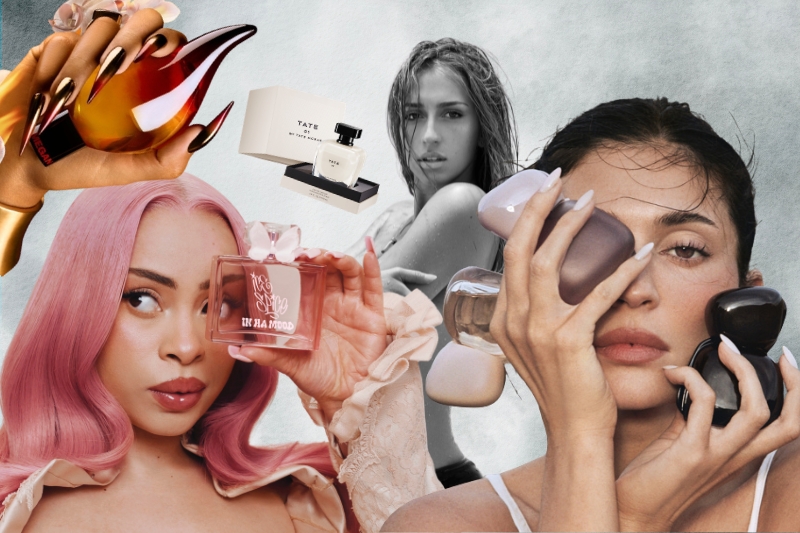
The beauty industry is witnessing a significant revival of celebrity-driven perfumery, reminiscent of the early 2000s market dominated by stars like Britney Spears and Beyoncé. According to Cosmetics Business, the current landscape has seen a surge in activity through 2026, with major launches from both established beauty moguls and newcomers to the sector. This movement includes Kylie Jenner expanding her Cosmic line with the Mood Stone collection and rapper Ice Spice debuting In Ha Mood through a partnership with Revlon.
Industry analysts cited by Cosmetics Business suggest that fragrance remains a uniquely attractive business model for celebrities because it avoids the technical barriers associated with other beauty categories. Unlike skincare or color cosmetics, which demand scientific credibility and complex shade matching, fragrance relies primarily on branding, mood, and personality. This allows celebrities to sell an aspirational lifestyle and an emotional connection rather than a specific functional performance.
Logistical advantages also contribute to the category's growth. As Cosmetics Business notes, perfumes are highly giftable and easier to ship than other beauty products because they lack the physical variations of makeup. This accessibility allows fans to purchase a piece of a celebrity's identity at a lower price point than designer apparel or luxury vehicles. The recent release of the unisex scent Hot Girl Summer by Megan Thee Stallion and Coty further illustrates how the market is evolving to include limited-edition and gender-neutral options.
The trend extends beyond traditional musicians and actors. Tate McRae recently entered the space with an eponymous fragrance, while Jennifer Lawrence has expanded her reach into biotech-led haircare. However, perfume continues to sit at the forefront of these business ventures because it provides a direct sensory link between the star and the consumer. By focusing on identity in a bottle, these brands bypass the consumer expectation for celebrities to act as professional formulators.
The Industry Pulse Bottom Line
Fragrance provides celebrities a low-friction entry into beauty by prioritizing narrative over technical formulation. This 2026 resurgence utilizes the category as a scalable, giftable bridge between luxury aspirations and consumer accessibility.