
Hogwarts Legacy DLSS 5 Launch Sparks Debate Over Subtle AI Visual Enhancements
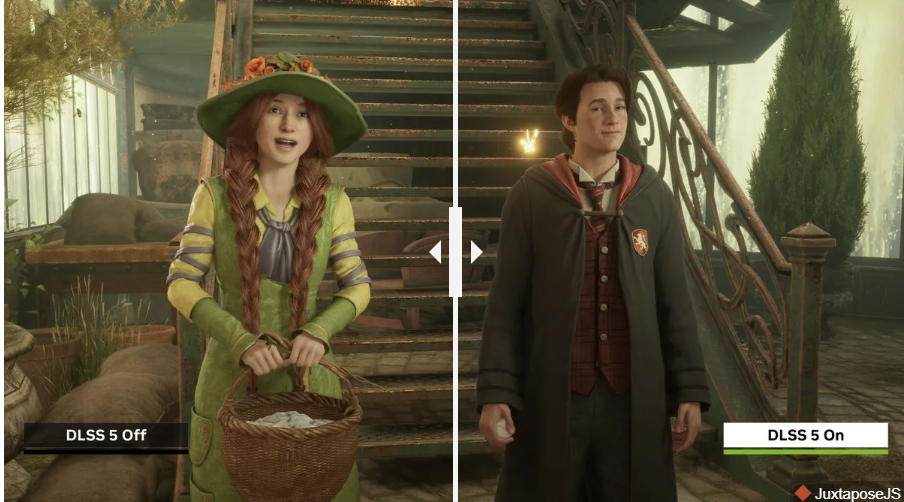
As Creative Bloq reports, Nvidia has launched its DLSS 5 technology in Hogwarts Legacy, introducing a suite of AI-driven neural rendering tools. While the update aims to enhance lighting and material quality, it has faced criticism from players who find the visual changes indistinguishable or potentially detrimental to the game's original atmosphere.
Context from Industry Pulse
The controversy surrounding DLSS 5 highlights a growing tension between automated AI enhancement and human artistic intent. Early iterations of the technology faced backlash for creating an uncanny effect on character faces, notably in titles like Resident Evil Requiem and NBA 2K27, where sharpening skin textures allegedly made characters appear aged or fundamentally different. By swinging from extreme alterations to the subtle implementation seen in Hogwarts Legacy, Nvidia appears to be navigating a difficult balance. The current criticism reflects a divide in the gaming community: while some fear AI will distort the original art direction, others demand visible, high-impact improvements to justify the high power consumption and hardware costs associated with the latest GPU generations.
The implementation of Nvidia DLSS 5 in Hogwarts Legacy marks a significant milestone for AI-driven rendering, yet it has arrived amid a wave of skepticism regarding its actual impact on visual fidelity. According to Creative Bloq, the technology includes 3D-Guided Neural Rendering and 6X Multi Frame Generation, designed specifically to boost environmental details while attempting to maintain the established identity of the characters. This release follows a period of intense scrutiny after earlier unfinished versions of the software leaked online.
Initial reactions to the official launch suggest that the dramatic visual shifts seen in early testing have been heavily scaled back. Creative Bloq notes that several users now find the enhancements so minor that they are difficult to detect even during side-by-side comparisons. Some players have expressed frustration, suggesting that the technology has been nerfed to the point where the performance cost and power requirements do not justify the marginal gains in image quality.
Technical requirements for the new suite are substantial, with official support currently restricted to GeForce RTX 50 Series GPUs and RTX Spark systems. When fully activated alongside ray tracing and Reflex technologies, the hardware can push the title to 4K resolution at 300 frames per second. Despite these raw performance metrics, the aesthetic debate continues. Creative Bloq suggests that the increased environmental detail may actually detract from the intended atmospheric feel of the wizarding world.
Nvidia previously indicated that this generation of DLSS would utilize a generative AI model to achieve a new level of photorealism by refining textures and lighting in real time. However, the move has historically been controversial. Previous demonstrations and leaks showed the AI altering character features significantly, leading to concerns that the software might override the original vision of game artists. Following its debut in Hogwarts Legacy, the technology is scheduled to arrive in other titles, including War Thunder and Where Winds Meet, later this month.
The Industry Pulse Bottom Line
Nvidia's subtle DLSS 5 rollout suggests a cautious approach to AI-driven rendering. While it protects artistic integrity, the lack of visible impact raises questions about the value proposition for consumers investing in high-end hardware.