
Optimization Tactics for High-Detail 3D Environments and Landscapes
Artist Calder Moore recently outlined a streamlined workflow for developing complex 3D environments by integrating Photoshop, Cinema 4D, and ZBrush. As Creative Bloq reports, the methodology emphasizes efficiency through pre-built foliage libraries and the strategic use of displacement textures to add intricate surface detail to basic geometry without the overhead of heavy polygon counts.
Context from Industry Pulse
The demand for high-fidelity 3D environments across the creative sector continues to push hardware and software limits. While other recent industry developments focus on physical architectural projects like ZAO’s sculptural art center or the interior renovation of the Torre Velasca, the digital realm remains focused on procedural efficiency. The workflow described by Creative Bloq mirrors a broader industry shift toward modular asset management. By utilizing pre-prepped libraries of foliage and materials, digital artists can bypass repetitive technical setups. This allows creators to maintain artistic momentum, much like how modern architects use specific materials to soften divisions in urban spaces or frame demolition sites for public observation.
Building complex 3D environments requires a balance between artistic vision and technical performance. According to Creative Bloq, the process typically begins with thumbnail sketches to establish composition and flow before moving into software. By locking in a camera position during the early blocking phase in Cinema 4D, artists can focus their detailing efforts specifically on what is visible within the frame, saving significant development time.
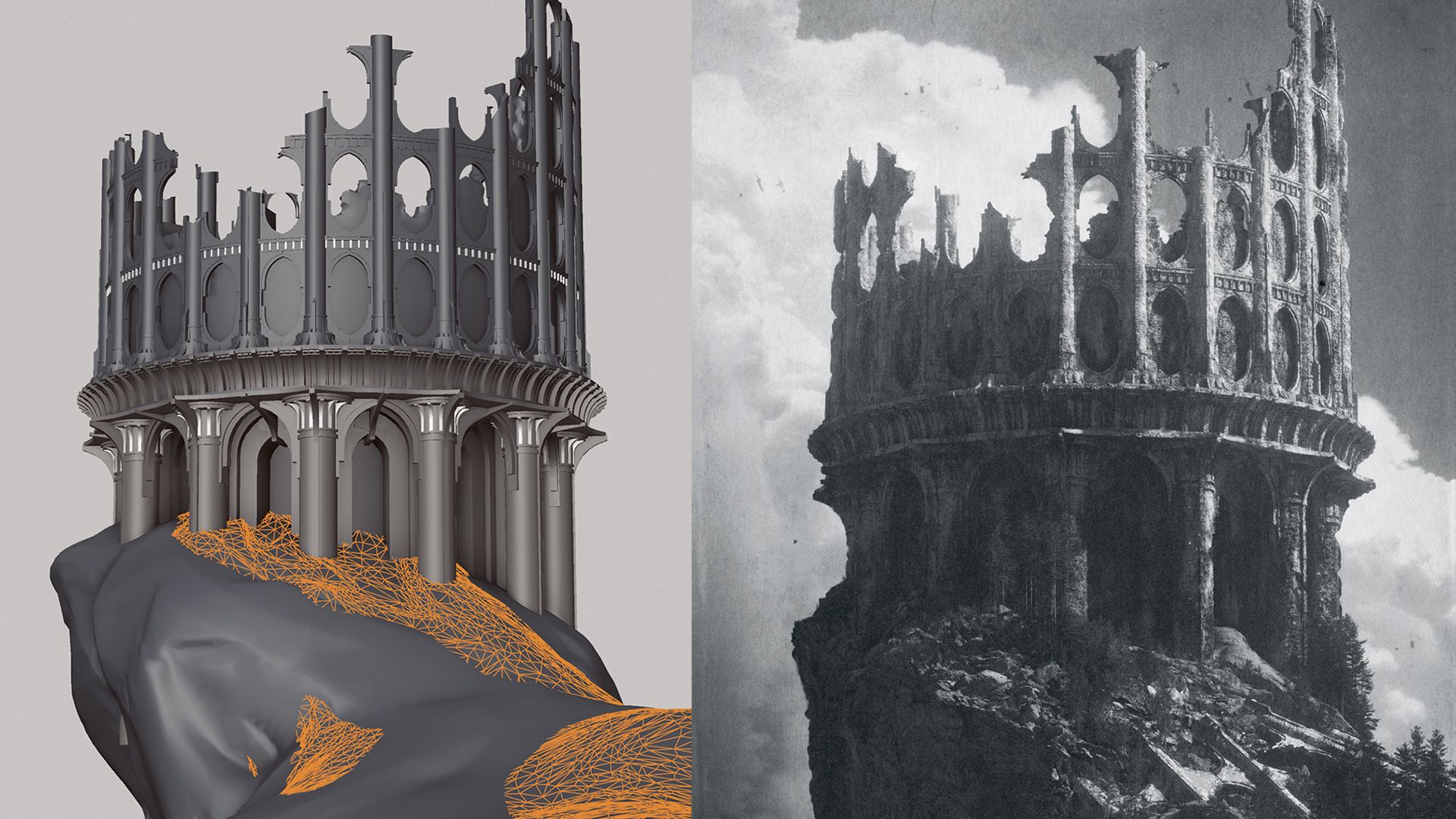
To achieve high levels of detail efficiently, the workflow utilizes displacement textures rather than complex modeling. For architectural elements like towers, basic geometry is refined with symmetry and radial cloners. Creative Bloq notes that destructive elements, such as making a structure look ancient or collapsed, are achieved using tools like voronoi fractures and manual selections to ensure the damage appears natural. This approach allows for rapid iteration of the silhouette without compromising the underlying scene structure.
Terrain development involves a hybrid approach between ZBrush and Cinema 4D. After sculpting primary forms in ZBrush, the geometry is exported back to Cinema 4D where tileable photoscanned materials are applied. As Creative Bloq explains, layering different terrain meshes with varying displacement scales creates a more natural blend between different ground types, such as rocky cliffs and soil. This technique adds depth and complexity to simple sculpts by leveraging high-quality texture data.
The final stages of production involve lighting and atmospheric effects to solidify the mood. Using HDR images and vertex maps to control foliage scatter systems allows for a densely populated world that remains manageable for rendering. Creative Bloq highlights that converting a scene to greyscale during the lighting phase can be a valuable technique for checking values, sometimes leading to unexpected stylistic choices that enhance the final visual impact.
The Industry Pulse Bottom Line
The Bottom Line: Master 3D environments by prioritizing early camera locks, leveraging displacement for detail, and maintaining a library of scatter assets to shift focus from technical troubleshooting to creative composition.