
Houston Multifamily Insurance Costs Surge for Aging Assets Due to Storm Risks
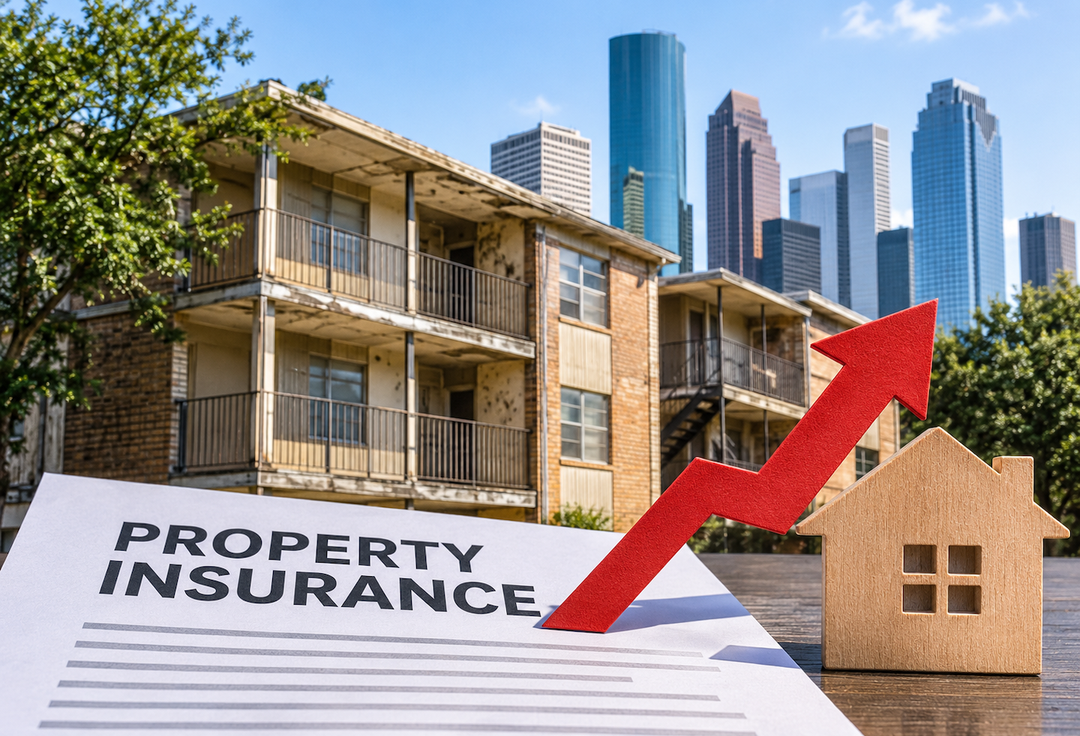
According to reporting from Bisnow, Houston apartment buildings constructed before 1980 face insurance premiums nearly double those of newer assets. Data from Advocate Technologies indicates that these aging properties pay 1.4 times the national average for similar vintages as carriers pull back due to severe weather risks and outdated infrastructure.
Context from Industry Pulse
The Houston market serves as a localized case study on how climate volatility and aging infrastructure intersect to disrupt real estate valuations. While national liability insurance costs have doubled for some developers since 2023, Houston’s specific exposure to hurricanes and freezes amplifies the risk for underwriters. The resulting 1.4-times premium for older assets compared to the national average creates a viability gap for affordable housing. Because these older buildings house a large share of the workforce, the contraction of the insurance market directly threatens the maintenance and existence of low-income units that cannot sustain the increased operating expenses or the capital requirements of modern building codes.
"The more expensive it is to do affordable housing, the less of it gets done, and insurance plays a role in that, absolutely."
Multifamily owners in Houston are grappling with a significant divergence in insurance pricing based on property age. As Bisnow reports, every decade of newer construction in the city results in a 14% reduction in premium rates. This makes building age roughly eight times more influential as a pricing factor in Houston compared to the national average, where the per-decade reduction is less than 2%. The disparity is fueled by aging electrical, plumbing, and roofing systems that are more prone to failure during extreme weather events.
Carrier availability has tightened significantly for older stock. Only about 10% of insurance markets currently entertain coverage for Houston buildings constructed before 1980. The local market features just 48 carriers writing multifamily policies, a sharp contrast to the 482 carriers operating nationwide. For properties built since 2000, premiums are actually 26% lower than the national average, highlighting the extreme premium placed on resilience and modern building codes.
Financial pressure on landlords is mounting as insurance costs now consume 7% of gross rents for pre-1980 buildings. In contrast, newer assets built after 2000 see insurance accounting for only 3.7% of gross rent. This financial burden is particularly heavy for workforce and affordable housing providers who have less room to absorb costs during refinancing or property valuations. Between 2021 and 2024, the National Apartment Association noted a 57.3% surge in Houston multifamily insurance prices.
The consequences of insufficient or low-quality coverage are becoming visible across the market. Some owners who opted for cheaper policies with specific exclusions have been unable to secure payouts for damages caused by recent winter storms and hurricanes. In one instance, a 580-unit property has over 100 units sitting out of service because the owner is waiting for a disputed insurance payout to fund repairs. These delays have also halted investor distributions at some properties for several years.
The Industry Pulse Bottom Line
Soaring insurance premiums for older Houston apartments are creating a bifurcated market where aging, affordable assets face decommissioning while newer, weather-resistant properties enjoy significantly lower relative costs and broader carrier interest.