
Blue Origin Unveils Northstar Engine to Cut Launch Costs and Boost Payload
Blue Origin has announced significant upgrades to its New Glenn rocket, including a new engine designed to drastically reduce manufacturing expenses. According to Ars Technica, the company is developing the Northstar engine and a third-stage booster to meet surging market demand while aiming for a launch frequency of over 1,000 missions annually.
Context from Industry Pulse
The announcement from Blue Origin reflects a pivot toward high-volume manufacturing and cost-efficiency in the private space sector. By leveraging 3D printing for the majority of engine components, the company is attempting to move away from the slow, expensive fabrication cycles that have historically defined rocket science. This strategy specifically targets the growing competition for heavy-lift contracts to the Moon and geostationary orbits. While Blue Origin maintains its partnership with United Launch Alliance, the development of Northstar suggests a desire to optimize its internal flight hardware for a much higher launch cadence than current industry standards allow, potentially reaching 1,000 flights per year as demand for satellite deployment and lunar logistics scales.
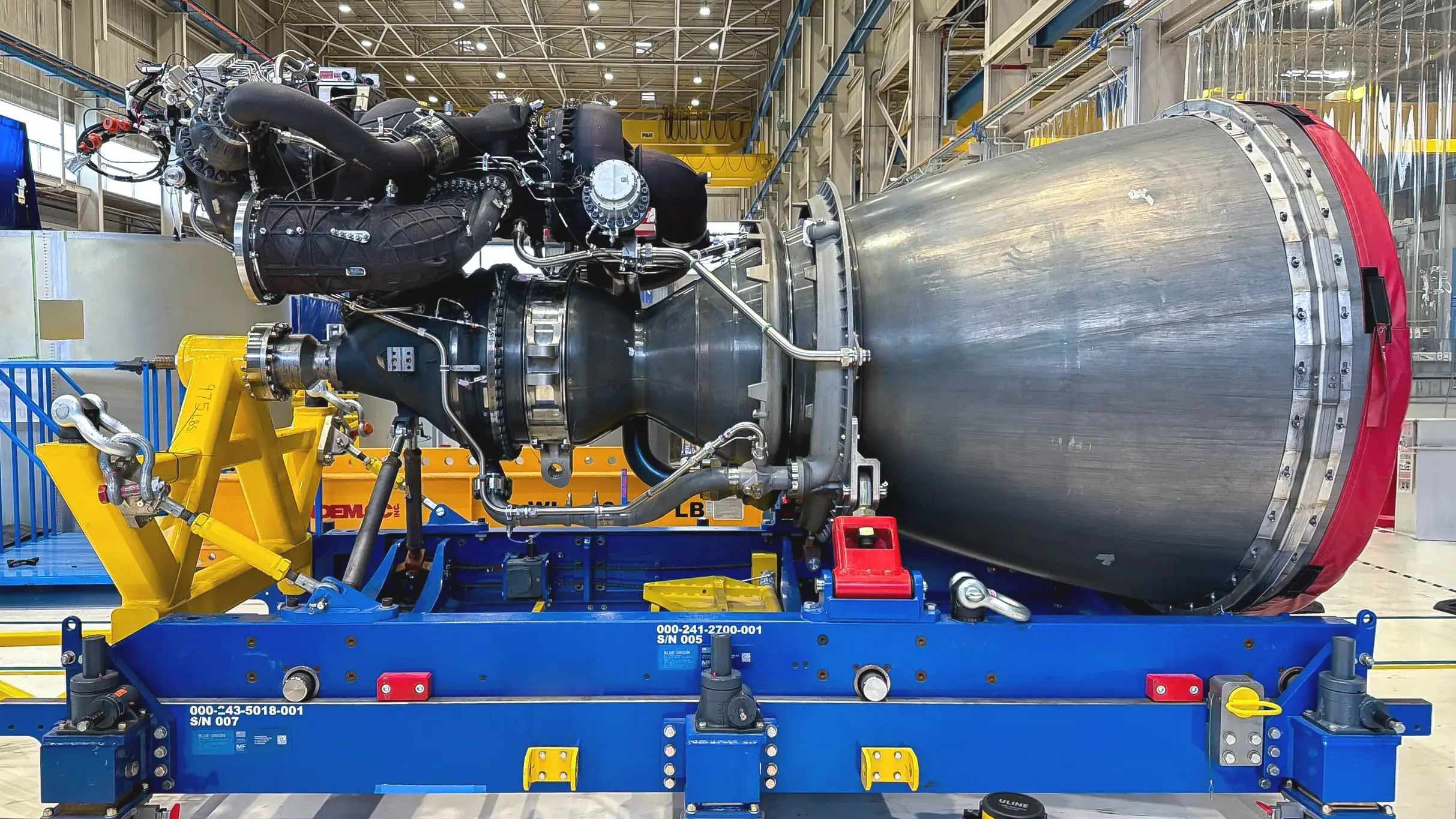
Blue Origin is shifting its propulsion strategy with the introduction of the Northstar engine, a simplified successor to the BE-4 currently powering the New Glenn first stage. As Ars Technica reports, the company has already initiated a test-firing program for this hardware. The new design utilizes an oxygen-rich staged combustion cycle and burns a mixture of methane and liquid oxygen, similar to its predecessor, but with a refined single-shaft turbopump architecture.
Technical specifications shared by leadership indicate that the Northstar engine achieves a 30 percent reduction in mass while offering a significant performance boost. Initial thrust is expected to reach 715,000 pounds, surpassing the 640,000 pounds generated by the current BE-4. Beyond performance, the manufacturing process has been optimized for speed and efficiency. Ars Technica notes that 65 percent of the engine can be 3D-printed, allowing for a part count that is half that of the previous model.
Financial and operational goals for the Northstar program are aggressive. Blue Origin expects to produce these engines at just 25 percent of the cost of a BE-4 and eventually intends to complete the assembly of a single unit in less than 24 hours. While the company transitions its own vehicle to this newer technology, it will continue to manufacture the original BE-4 engines for United Launch Alliance to power the Vulcan rocket fleet.
In addition to the engine overhaul, Blue Origin is developing a hydrogen-oxygen third stage known as GS3. This component is designed to increase the capacity of the New Glenn vehicle for complex missions to the Moon and geostationary orbit. Ars Technica highlights that these combined upgrades are part of a broader effort to lower the barrier for space access by reevaluating every component of the launch vehicle to handle record-high industry demand.
The Industry Pulse Bottom Line
Blue Origin's Northstar engine and GS3 stage represent a strategic shift toward rapid, low-cost production. By slashing part counts and manufacturing time, the company aims to dominate high-capacity launch markets through unprecedented mission frequency.