The Collision Mesh Arbitrage: Why Robotics Firms Are Buying Dead Gaming Studios
Ivan Robertson · Gaming · 2026-09-08
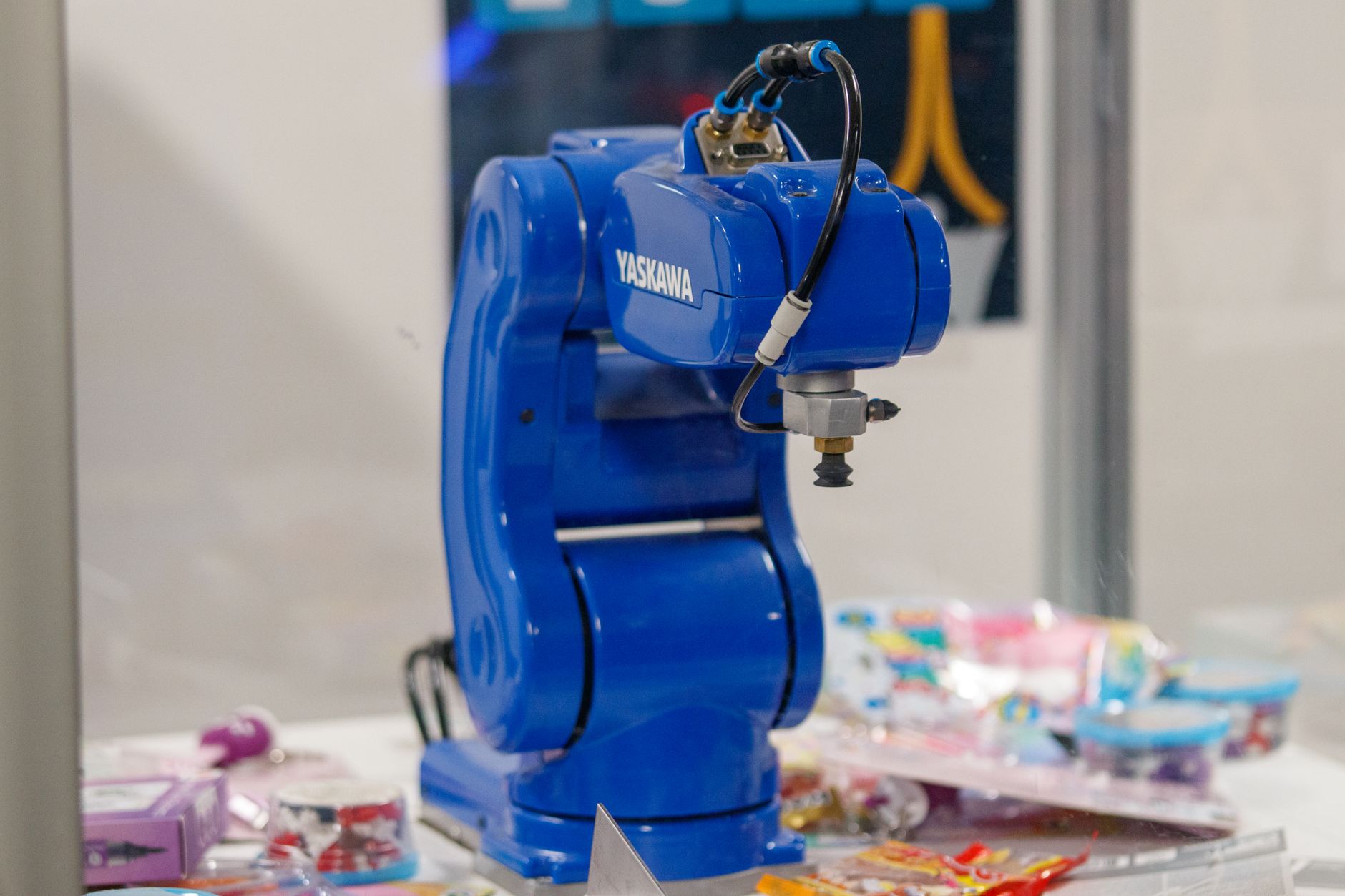
Private equity is scooping up failed video game developers. They don't want the intellectual property—they want the raw physics simulations to train the next generation of embodied AI.
In late August, a private equity vehicle out of Palo Alto finalized the acquisition of Cinderfall Studios, a mid-tier European video game developer that filed for bankruptcy earlier this year. Cinderfall’s primary asset was a commercially disastrous open-world survival game that launched in 2024 to scathing reviews and dismal sales. The gaming press assumed the buyers intended to sell off the studio’s intellectual property, perhaps licensing the characters for mobile spin-offs or restructuring the team for contract work.
They were mistaken. The buyers had zero interest in Cinderfall’s characters, its narrative universe, or its consumer brand. They bought the studio for its trash. Specifically, they bought the rights to the twelve million proprietary collision meshes, material interaction logs, and rigid-body physics simulations the developers had painstakingly hand-coded over five years. Within a week of the acquisition, the game’s source code was not being prepped for a relaunch; it was being fed into the training pipelines of a major robotics firm developing autonomous humanoid workers.
We are witnessing the emergence of the collision mesh arbitrage. Wall Street and Silicon Valley have realized that the video game industry, long viewed as a hit-driven entertainment sector, has inadvertently spent the last two decades building the exact synthetic training data required to solve embodied artificial intelligence.
The underlying economics of AI development have hit a physical wall. Large language models like GPT-4 and Claude consumed the entirety of human text on the public internet. Image generators scraped billions of two-dimensional photographs. But teaching a physical robot how to navigate a cluttered apartment, fold a shirt, or pick up a fragile glass without crushing it requires a different kind of data. Embodied AI requires interaction data—rules about gravity, friction, mass, and spatial reasoning.
Collecting this data in the physical world is prohibitively slow and expensive. Robotics companies like Boston Dynamics, Figure, and Tesla cannot afford to run ten thousand physical robots for fifty years just to learn how different objects tumble when dropped. They need synthetic data. They need digital environments where physics rules apply, where autonomous agents can run millions of trial-and-error simulations per second.
This is precisely what modern video game engines are. Every modern open-world video game is, beneath its graphical veneer, an advanced physics simulator.
When a player knocks over a virtual barrel in a game, the engine calculates the barrel’s mass, the friction of the cobblestone street, the trajectory of the roll, and the sound of the impact. Over the years, game developers have built vast libraries of these interactions. They have coded the exact friction coefficients for virtual mud, the tensile strength of virtual wood, and the kinematic constraints of human joints to ensure character animations look natural.
For a robotics company, a failed open-world game is a goldmine. It represents a fully realized, three-dimensional physical environment filled with varied topography, countless household objects, and pre-calculated collision boundaries.
The acquisition strategy is ruthlessly efficient. Private equity firms are specifically targeting AA studios—mid-budget developers who build complex physical worlds but lack the marketing budget to achieve commercial success. These studios frequently go bankrupt, leaving their codebases heavily discounted. The buyers acquire the studio, strip away the expensive graphical textures, the voice acting, and the storylines, and are left with the naked geometry and physics rules of the world.
These stripped-down worlds are then converted into headless simulations. Instead of a human player controlling a character on a screen, a nascent AI model is plugged into the environment. The AI attempts to navigate the virtual terrain, pick up virtual objects, and avoid obstacles, running millions of iterations overnight. Because the game’s physics engine enforces rules of gravity and momentum, the AI learns realistic physical constraints.
The financial logic is difficult to ignore. Building a custom synthetic training environment from scratch inside industrial software like Nvidia’s Omniverse can cost millions of dollars and require years of dedicated engineering. Buying a bankrupt game studio with a pre-built, fully populated virtual city might cost a fraction of that price.
This structural shift alters the fundamental valuation metrics of the gaming industry. Traditionally, a game studio’s value was derived entirely from its consumer appeal. If a game failed to attract players, the studio was deemed worthless. Today, the intrinsic value of a studio is increasingly decoupled from its entertainment value. A boring, commercially unviable game might possess incredibly valuable synthetic data if its physics engine is robust and its environments are detailed.
Consider the implications for asset pricing. A studio that developed a hyper-realistic factory simulator might sell zero copies to consumers, yet command a massive premium from industrial automation firms seeking to train robotic arms. The code that determines how virtual conveyor belts interact with virtual cardboard boxes is directly transferable to the algorithms running real-world logistics hubs.
We are seeing the creation of a secondary market for digital physics. Data brokers are beginning to catalog the specific attributes of failed games. A survival game might be prized for its outdoor terrain and weather physics. A virtual reality cooking game might be acquired solely for its intricate hand-tracking and object-manipulation algorithms. The intellectual property of the game becomes irrelevant; the value lies in the fidelity of its physical rules.
Skeptics point out that game physics are often approximations, relying on shortcuts and “hacks” to maintain high frame rates on consumer hardware. Characters occasionally clip through walls, objects glitch and vibrate violently, and gravity is often tweaked to make jumping feel more responsive rather than strictly realistic. Training a physical robot on exaggerated game physics could result in a machine that expects to be able to double-jump or survive a three-story fall.
This is a valid concern, and it explains why robotics firms are not using game environments for final, real-world deployment training. Instead, game data is used for foundational pre-training. It provides the initial burst of spatial awareness and basic object interaction. Once the AI understands the fundamental concept that objects cannot pass through each other—a concept easily taught by a game’s collision mesh—it is transferred to more rigorous, high-fidelity industrial simulators for fine-tuning. The game data acts as a massive, cheap sandbox for early-stage cognitive development.
Furthermore, the gap between game physics and real-world physics is closing. The latest iterations of commercial game engines, such as Unreal Engine 5, incorporate highly advanced rigid-body dynamics, fluid simulations, and soft-body deformation. As games become more realistic, their utility as synthetic training grounds increases exponentially.
This convergence forces a reevaluation of what game developers actually do. For decades, the industry has viewed itself as an offshoot of the entertainment business, akin to Hollywood. Writers wrote scripts, artists drew textures, and programmers made it run. But from the perspective of the broader technology sector, game developers are the world’s leading experts in simulating reality. They have spent billions of dollars and millions of man-hours mapping the physical properties of the real world into a digital format.
As the demand for embodied AI grows, game studios may find that their most lucrative customers are not teenagers buying sixty-dollar discs, but Fortune 500 companies buying raw simulation data. We may soon see studios developing dual-use virtual worlds. The front end will be a consumer video game, generating revenue to fund development. The back end will be a sanitized, headless training environment licensed to robotics firms.
The players navigating these virtual worlds will unwittingly act as human feedback mechanisms, demonstrating complex navigation and problem-solving strategies that are recorded and fed into the AI training pipeline. Every time a player successfully maneuvers a vehicle through a crowded virtual street, they are generating premium training data for an autonomous driving system.
The Cinderfall acquisition is merely the beginning. Wall Street is currently scanning the balance sheets of hundreds of struggling game developers, looking for robust physics engines trapped inside failed consumer products. They recognize a profound truth about the next decade of technological development: the companies that will build the physical robots of tomorrow are the ones quietly buying up the discarded virtual worlds of yesterday.
The entertainment value of these digital realms was always ephemeral. Their true lasting contribution was structural. By attempting to entertain us, game developers accidentally built the most comprehensive library of physical constraints in human history. The arbitrage lies in recognizing that the underlying geometry of a failed video game is exactly what is needed to teach machines how to move through the real world.