The Cryogenic Toll Road: Why Wall Street Is Cornering the Biotech Deep-Freeze
Claire Whitmore · Business · 2026-10-17
Pharmaceutical giants are inventing the next generation of biologics. Private equity is buying the only warehouses capable of keeping them alive.
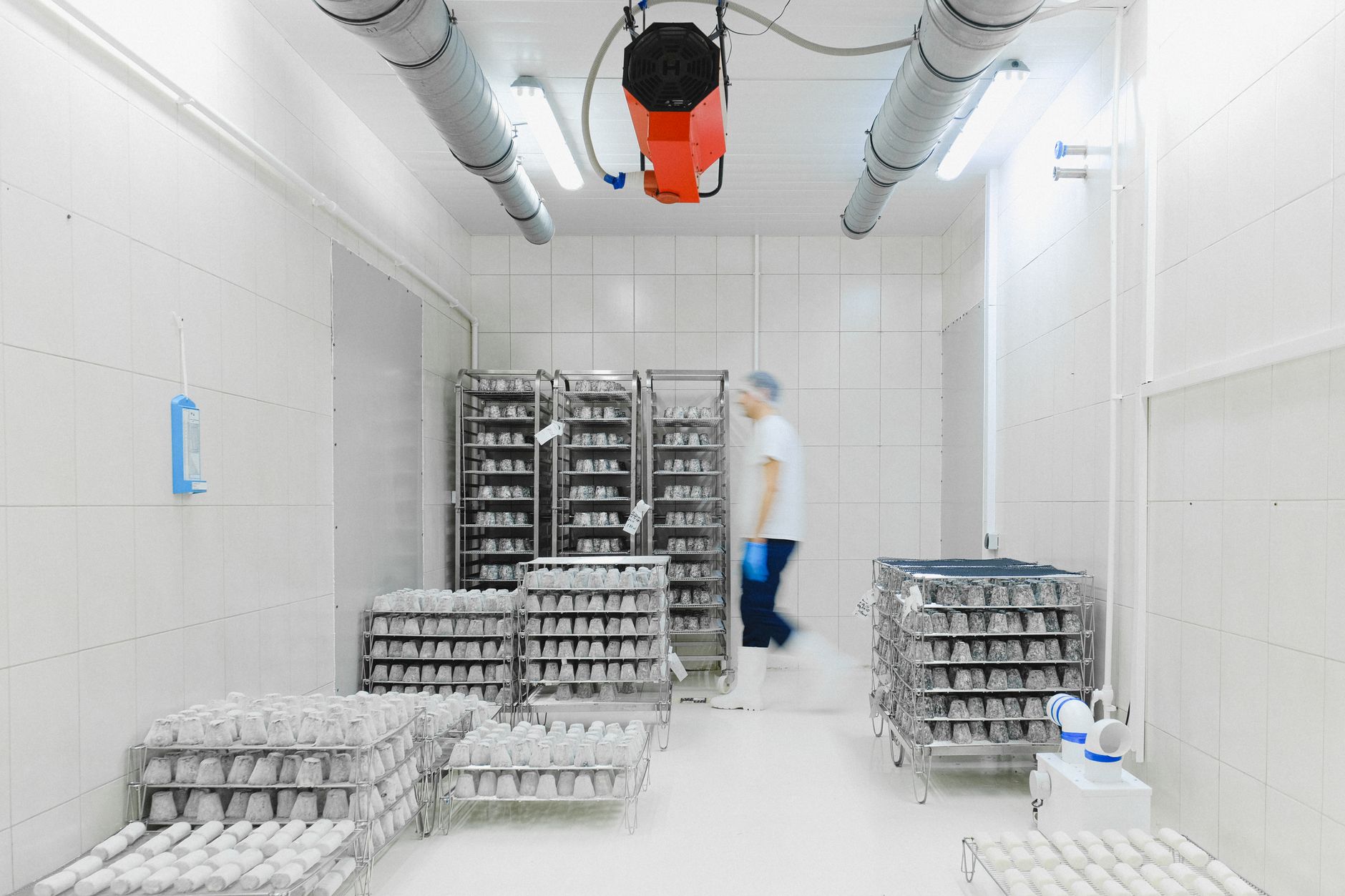
Just outside Indianapolis, a massive windowless concrete box sits adjacent to a minor rail spur. From the highway, it resembles any of the countless fulfillment centers processing consumer electronics or fast fashion. Inside, however, the environment is radically different. The facility is heavily insulated, fed by a dedicated electrical substation, and maintained at a constant, punishing minus 80 degrees Celsius.
It does not hold frozen food. It holds the future of American pharmacology—billions of dollars worth of mRNA therapeutics, advanced biologics, and targeted genetic treatments.
This specific facility is not owned by Pfizer, Moderna, or any traditional pharmaceutical giant. It is the property of a mid-sized private equity firm based in Manhattan, representing a quietly aggressive structural shift in healthcare infrastructure. Wall Street has realized that the defining bottleneck of twenty-first-century medicine is not molecular discovery. It is the thermostat.
Over the past four years, financial institutions have executed a land grab for ultra-low temperature (ULT) storage and the specialized logistics networks required to move deep-frozen cargo. By purchasing independent cold-chain operators, retrofitting industrial real estate, and locking down liquid nitrogen supply lines, alternative asset managers are building a toll road through the center of the modern medical economy. They are avoiding the binary risk of drug development entirely, choosing instead to own the physical infrastructure that modern therapeutics cannot survive without.
The transition from chemical medicine to biological medicine changes the fundamental physics of the pharmaceutical supply chain. Traditional small-molecule drugs—aspirin, statins, standard antibiotics—are chemically stable. They can be manufactured in bulk, pressed into pills, tossed into cardboard boxes, and stored on pharmacy shelves for years at room temperature.
Biologics are entirely different. These therapies are essentially living materials or highly fragile genetic instructions. Synthetic proteins, monoclonal antibodies, personalized cancer vaccines, and advanced GLP-1 derivatives degrade rapidly when exposed to heat, light, or minor temperature fluctuations. The mRNA technology that proved its viability during the pandemic was just the beginning. The global pipeline of clinical trials is now dominated by therapies that require strict thermal management, often at cryogenic temperatures.
Biotech companies spent the last decade pouring hundreds of billions of dollars into research and development, racing to patent novel therapeutic pathways. In their sprint toward clinical approval, many neglected the unglamorous reality of physical distribution. They assumed the logistics industry would naturally scale to meet their needs.
That assumption proved deeply flawed. Standard refrigerated logistics—the networks that transport beef, dairy, and seasonal produce—operate around four degrees Celsius. Adapting these networks for pharmaceuticals is not a matter of simply turning down the dial. Ultra-low temperature storage requires specialized compressors, redundant power systems, reinforced architectural vapor barriers, and highly trained personnel operating in hazardous conditions. It is capital-intensive, technically demanding, and historically operated on thin margins.
Wall Street recognized the mismatch between the surging supply of biologics and the stagnant supply of deep-freeze infrastructure. Private equity firms began quietly mapping the thermal capacity of the domestic supply chain. They found a fragmented industry composed of regional family-owned operators, legacy chemical handlers, and outdated biomedical warehouses clustered around older research universities.
The consolidation phase was swift and largely ignored by the financial press. Firms specializing in real assets began executing roll-up strategies, buying dozens of regional cold-storage operators and combining them under single corporate umbrellas. They stripped out the legacy management, injected capital to upgrade the cooling systems from standard refrigeration to ULT standards, and began aggressively negotiating long-term contracts with the pharmaceutical manufacturers.
The economics of this cryogenic arbitrage are brutally effective. A traditional warehouse commands a predictable rent based on square footage and location. A ULT facility operates on a completely different pricing model. Because the product stored inside is highly valuable, perishable, and strictly regulated by the FDA, the switching costs for a pharmaceutical client are astronomical. Moving inventory from one freezer facility to another risks a temperature excursion that could ruin hundreds of millions of dollars of product.
Consequently, the operators of these deep-freeze facilities possess immense pricing power. They do not merely charge for space; they charge for thermal reliability, regulatory compliance, and risk mitigation. Rents in the life-sciences cold-storage sector have decoupled entirely from the broader industrial real estate market, achieving yields that traditional commercial landlords can only envy.
The strategy extends beyond static warehouses. The financialization of the cold chain encompasses the entire journey of the drug. Private equity has acquired fleets of specialized refrigerated trucks, the companies that manufacture vacuum-insulated shipping containers, and the software platforms that track temperature data in real-time. The goal is to offer a closed-loop, end-to-end service. A pharmaceutical company can synthesize a drug in Massachusetts, hand it over to a contracted logistics provider, and have it delivered to a clinic in Arizona without the manufacturer ever owning a freezer.
This arrangement suits the drug companies in the short term. It frees up their capital to invest in further R&D and clinical trials, keeping their balance sheets focused on intellectual property rather than concrete and compressors. However, it also surrenders strategic control of their physical product to financial actors whose primary objective is maximizing yield.
The long-term consequences for the healthcare system are substantial. As the reliance on biologics grows, the cost of specialized logistics will become an increasingly significant component of the final price of the drug. Pharmaceutical executives already cite cold-chain expenses as a major factor in the pricing of novel therapies. When the infrastructure is controlled by a concentrated group of financial firms accustomed to extracting maximum rent, those costs are inevitably passed down to insurers, hospitals, and ultimately, patients.
Furthermore, the geographic concentration of these mega-freezers introduces systemic vulnerabilities. To achieve economies of scale, operators are building massive, centralized facilities rather than distributed networks. A single regional power grid failure, a localized shortage of liquid nitrogen, or a severe weather event could threaten a significant portion of the national supply of critical therapies. While these facilities are equipped with robust backup generators, the sheer concentration of biological value in a few discrete locations creates a fragile choke point.
Some biotech analysts argue that this deep-freeze dominance will be temporary. They point to the ongoing research into lyophilization—freeze-drying—and novel lipid nanoparticle formulations that could stabilize fragile biologics at room temperature. If pharmaceutical chemists can engineer temperature stability into the drugs themselves, the need for ULT logistics would evaporate, leaving the private equity firms with extremely expensive, heavily insulated empty boxes.
Another potential counterweight is the push for decentralized, point-of-care manufacturing. If hospitals can utilize desktop bioreactors to synthesize bespoke therapies on-site, directly before administration to the patient, the entire concept of a continental pharmaceutical supply chain becomes obsolete. The drug goes from the machine directly into the arm, bypassing the deep-freeze entirely.
Yet, these technological solutions remain years, if not decades, away from widespread commercial viability. Regulatory hurdles for decentralized manufacturing are immense, as the FDA requires strict quality control that is difficult to replicate across thousands of individual clinics. The engineering challenges of stabilizing complex proteins without refrigeration are equally formidable. For the foreseeable future, the cold chain remains an absolute necessity.
Financial markets operate on the principle of identifying and exploiting scarcity. In the mid-twentieth century, that meant controlling oil pipelines. In the early digital age, it meant owning fiber-optic networks and data centers. In the current era of advanced biotechnology, the critical infrastructure is the ability to maintain absolute zero.
By buying up the nation's industrial freezers, Wall Street has successfully positioned itself as the indispensable middleman in the future of healthcare. They are not curing diseases, nor are they inventing new therapies. They are simply providing the climate control. As long as the next generation of medicine remains fragile, the highest returns may not belong to the scientists who discover the treatments, but to the landlords who keep them cold.