The Tolerance Extortion: Why Hackers Are Sabotaging American Factories By A Fraction of a Millimeter
Nathan Caldwell · Manufacturing · 2026-10-05
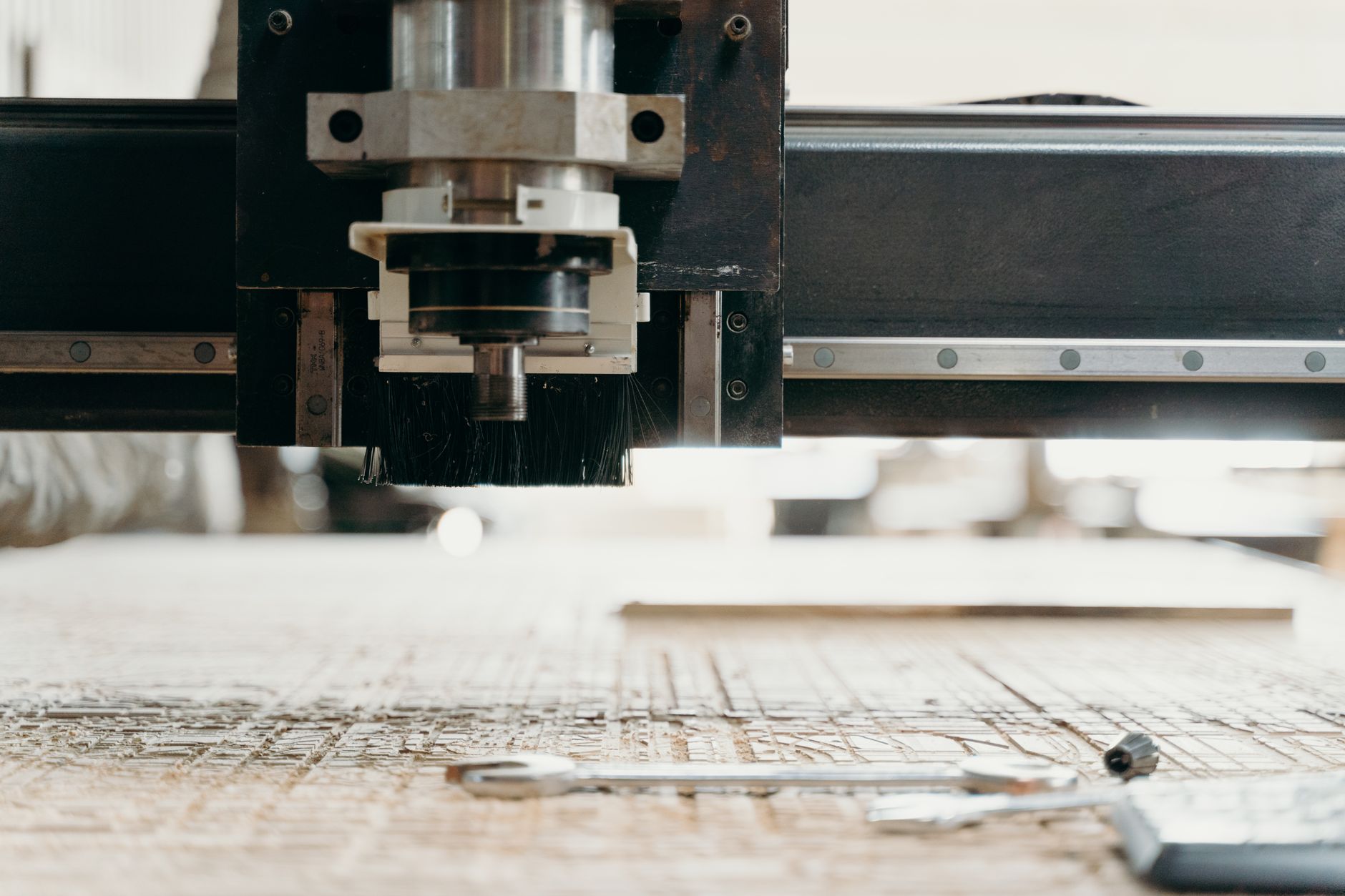
Industrial cyberattacks have moved beyond locked screens and stolen data. The new threat alters CNC calibrations just enough to ruin production runs, forcing manufacturers to pay for the map of their own defective parts.
In late September, a Tier 2 supplier for the American commercial aerospace sector halted its primary milling line in Ohio. There were no flashing red screens on the factory floor, no locked databases, and no dramatic demands for cryptocurrency splashed across executive monitors. The corporate IT network was functioning perfectly.
Yet, the company was bleeding money with every rotation of its spindles.
Over a three-week period, a specific titanium bracket produced by the facility began failing stress tests at the final assembly plant. The failure rate was not total—which would have immediately triggered a mechanical audit—but hovered at a maddening 14 percent. It took metallurgical engineers a month to discover the problem. The cutting tools on two specific computer numerical control (CNC) machines were running a fraction of a millimeter too deep, altering the structural integrity of the brackets.
When the cybersecurity forensics team finally isolated the operational technology (OT) network, they found the intrusion. A sophisticated actor had not stolen the company’s blueprints or encrypted its enterprise resource planning software. Instead, they had subtly altered the machine parameters. Tucked inside a text file left on a segmented server was a quiet demand: pay two million dollars, or the attackers would refuse to hand over the logs detailing exactly which batches of brackets had been compromised.
Welcome to the era of tolerance extortion.
For the past decade, the dominant narrative surrounding industrial cybersecurity has been one of disruption. Ransomware gangs target manufacturing networks to halt production, betting that the sheer cost of downtime will force a swift payout. Alternatively, state-sponsored actors infiltrate systems to steal proprietary designs and trade secrets.
But a fundamentally new economic model of industrial sabotage is emerging across the American manufacturing base. Hackers have realized that in precision engineering, uncertainty is vastly more expensive than downtime. By infiltrating smart factories and introducing micro-defects into the production process, attackers are holding the physical integrity of the supply chain hostage. They are not selling access back to the victim; they are selling certainty.
To understand why this shift is so devastating, one must look at the financial mechanics of modern manufacturing liability. In industries like aerospace, automotive, and medical device manufacturing, strict traceability is mandated by federal law. Every component carries a digital passport recording when, where, and how it was made.
If a ransomware gang shuts down an automotive plant for a week, the financial damage is severe but calculable. The manufacturer loses a set volume of output, files a business interruption claim with their cyber insurance provider, and eventually spins the line back up. The damage is contained to the balance sheet.
Tolerance extortion bypasses this entirely. If an attacker alters the torque parameters on a robotic arm fastening steering columns, and allows the line to run for a month before sending a ransom note, the manufacturer faces an existential crisis. They have shipped thousands of potentially lethal vehicles into the consumer market. A total recall of that month’s production run might cost hundreds of millions of dollars and permanently damage the brand.
The attackers offer a cheaper way out: a relatively modest ransom in exchange for the exact timestamps and serial numbers of the altered components. The victim is not paying to unlock their computers. They are paying to limit a physical recall.
This model preys on the massive blind spot created by the convergence of IT and OT environments. For years, factories operated on a principle of air-gapping. The machines that cut metal, mixed chemicals, and welded chassis were kept physically separate from the networks that handled email and payroll.
The drive toward Industry 4.0 and predictive maintenance destroyed that separation. Today, a standard milling machine is bristling with sensors sending real-time telemetry to cloud-based analytics platforms. Manufacturers demand remote visibility into their factory floors to optimize efficiency and minimize wear and tear on tooling.
This connectivity has created a massive, porous attack surface. Hackers no longer need to breach a hardened corporate firewall. They can exploit vulnerabilities in third-party predictive maintenance software, or compromise a vendor who has remote access to troubleshoot a malfunctioning programmable logic controller (PLC).
Once inside the OT network, the sophistication of the attack lies in its subtlety. A blunt alteration to a machine’s code would trigger immediate physical crashes or automated safety shutdowns. Instead, attackers engage in "parameter drift." They modify the compensation tables that tell a machine how much its cutting tool has worn down, or they spoof the temperature sensors in a curing oven so that the actual temperature is ten degrees cooler than what the monitoring system displays.
The physical output remains seemingly normal to the naked eye. The parts still fit into the jigs. The automated optical inspection cameras, which are calibrated to look for gross defects, pass the components down the line. It is only under extreme stress, or deep inside the final product, that the engineered weakness reveals itself.
The insurance industry is utterly unprepared for this development. Cyber insurance policies were written to cover data breaches, network restoration, and business interruption. They explicitly exclude physical damage and product liability. Conversely, traditional product liability and recall policies typically require a physical failure or an accidental manufacturing defect; they are murky on coverage when the defect is the result of a deliberate cyber intrusion.
This creates a terrifying coverage gap. When a manufacturer discovers a micro-defect attack, their cyber insurer will likely refuse to pay for the recall, pointing to the physical nature of the loss. The product liability insurer will point to the cyber exclusion clauses. The manufacturer is left to absorb the entire cost, making the attackers' ransom demand look like the most rational financial option available.
Predictably, the security industry’s response has been to push more software. Factories are being urged to install edge-based artificial intelligence systems that monitor OT networks for anomalous commands, or digital twin simulations that constantly compare the physical machine’s behavior against a perfect virtual model.
While theoretically sound, these solutions frequently fail in the chaotic environment of heavy industry. A stamping press is not a sterile server room. Voltages fluctuate, sensors degrade, and operators manually override parameters to keep production moving. The signal-to-noise ratio is incredibly low. AI anomaly detection systems in these environments are notorious for generating endless false positives, leading alarm-fatigued engineers to simply turn them off.
Furthermore, digital twins are entirely dependent on the data fed to them by the machine's sensors. If an attacker has compromised the PLC, they can feed spoofed, perfectly normal telemetry to the digital twin while the physical machine ruins the workpiece. The virtual model will report that everything is operating flawlessly.
The only viable defense against tolerance extortion is a step backward in automation. Manufacturers who produce critical components must reintroduce analog metrology and out-of-band verification into their quality control processes.
This means pulling random samples from the line and measuring them with tools that are completely disconnected from the factory network. It means physically checking the calibration of temperature gauges with secondary, analog instruments. It is a deliberate friction injected into the system, sacrificing a degree of operational efficiency for physical certainty.
For the past twenty years, the prevailing dogma of industrial management has been that data is truth. If the dashboard says the machine is running at peak efficiency, and the automated inspection logs show green checkmarks, the product is sound.
Tolerance extortion shatters that illusion. It weaponizes the trust that engineers place in their digital dashboards. As long as American factories continue to value continuous data flow over verifiable physical reality, they will remain vulnerable not just to disruption, but to quiet, systematic sabotage. The ransom demands of the future will not be paid to turn the lights back on. They will be paid to know whether the airplane engine will hold together.