The Subterranean Land Grab: Why Wall Street Is Buying the Dirt Beneath Your Basement
Claire Whitmore · Real Estate · 2026-09-20
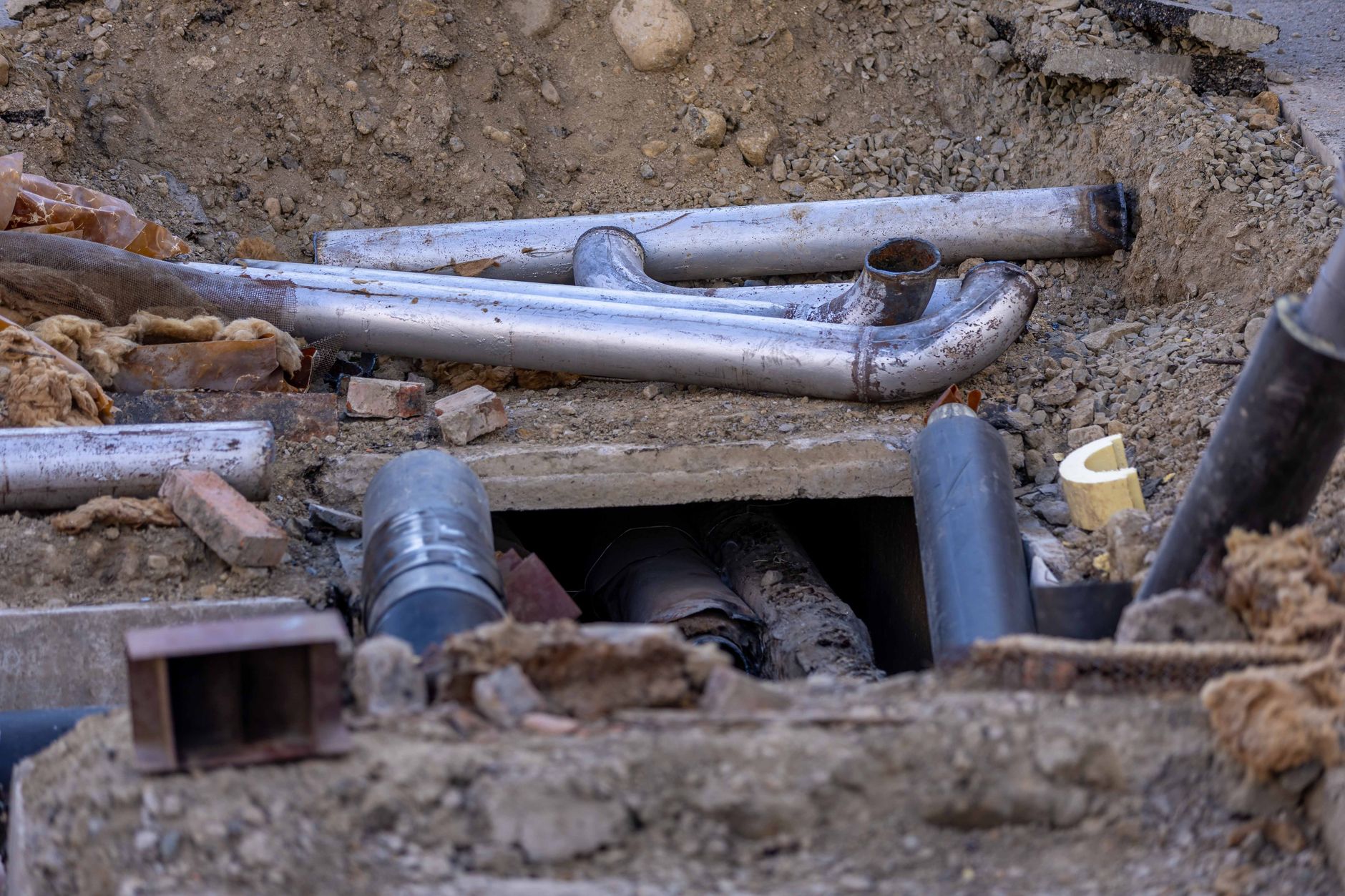
Urban bedrock is the ultimate finite resource. Financial firms are quietly hoarding subterranean thermal rights, creating a new monopoly over how the next generation of skyscrapers will heat and cool themselves.
A curious transaction took place last October beneath a dilapidated strip mall on the outskirts of Denver. The buyer, a shell company linked to a massive New York-based infrastructure fund, did not purchase the building, the parking lot, or even the traditional mineral rights. Instead, they purchased a highly specific, legally novel subsurface easement: the exclusive right to alter the temperature of the bedrock situated between two hundred and eight hundred feet below ground.
This was not an isolated bet. Over the past twenty-four months, billions of dollars of institutional capital have quietly flowed into a completely unregulated asset class. Private equity firms, hedge funds, and sovereign wealth vehicles are scrambling to acquire what industry insiders now call "thermal rights." They are hoarding the subterranean thermal capacity of major American cities, creating a new monopoly over the very ground that future commercial real estate will rely upon to keep the lights on.
To understand this invisible land grab, one must look at the collision between strict new emissions mandates and the unyielding laws of thermodynamics.
As cities nationwide aggressively enforce carbon-neutral building codes—modeled after New York’s draconian Local Law 97 and subsequent 2025 federal updates—traditional natural gas heating and conventional air conditioning are rapidly becoming financial liabilities. The fines for missing emission targets are now severe enough to wipe out a commercial building’s net operating income. The consensus solution across the industry is geo-exchange systems, commonly known as ground-source heat pumps.
These systems work by using the earth as a massive, stable thermal battery. During the summer, a building pulls heat from its rooms and pumps it deep underground. In the winter, it reverses the process, extracting that stored heat to warm the building. It is immensely efficient, entirely electric, and highly favored by municipal regulators.
But there is a fatal physical constraint that regulators and developers missed, and which Wall Street has now recognized. The earth’s capacity to absorb and dissipate heat is finite.
When one skyscraper pumps massive amounts of summer heat into the bedrock, the temperature of that surrounding rock rises. If a neighboring developer attempts to drill their own geothermal boreholes a year later, they will find the ground is already saturated with thermal energy. Their cooling system will fail. This phenomenon, known in hydrology as "thermal interference," means that in dense urban environments, geothermal capacity is a zero-sum game. The first mover claims the thermal sink; latecomers are left with stranded, unbuildable assets.
Wall Street is not building the skyscrapers. They are buying the thermal sinks.
The mechanics of this arbitrage are brilliantly simple. Institutional investors map out the fastest-growing urban corridors where zero-carbon mandates are coming into effect. They then approach the owners of low-density properties in those areas—parking garages, single-story retail, aging municipal facilities. For a modest upfront cash payment, the property owner signs over a perpetual subsurface thermal easement.
The property owner loses nothing they were ever planning to use. The investor gains control of the thermal battery beneath the block.
When a major developer later attempts to construct a Class-A office tower or a high-density residential complex next door, they quickly discover that their own narrow footprint does not provide enough bedrock volume to support the required geo-exchange system. They need to drill horizontally, or they need to utilize the thermal mass of the adjacent lots to prevent their system from overheating the ground.
That is when the infrastructure fund steps in. They do not sell the easement. They lease the thermal capacity back to the developer at a premium, acting as a toll collector on the building's HVAC system for the next ninety-nine years.
This shifts the fundamental economics of urban real estate. Historically, a developer's primary constraint was air rights—the legal ability to build upward into the sky. Today, the constraint has inverted. The sky is theoretically infinite, but the thermal capacity of the ground is rigidly bounded by geology. By cornering the subsurface rights, financial firms have effectively capped the development potential of entire neighborhoods, holding future construction hostage until developers agree to their utility rates.
We are witnessing the privatization of urban geology.
The structural brilliance of this strategy lies in its invisibility. Unlike a traditional land assembly, where a developer must buy contiguous parcels of visible real estate, thermal easements can be acquired piecemeal and registered quietly in municipal land records as obscure utility right-of-ways. By the time a city's planning department realizes that a single private equity firm controls the thermal capacity of a central business district, the easements are already binding.
Municipal governments are entirely unprepared for this development. Zoning laws across the United States dictate building heights, setbacks, and shadows, but they remain entirely silent on underground temperature variations. The legal precedents governing subsurface rights were written in the nineteenth century for oil, gas, and coal extraction. They deal with the removal of physical substances, not the injection and extraction of kinetic energy.
This legal vacuum has sparked an aggressive race to the bottom. In Chicago, developers of a new riverfront district recently halted construction when they discovered a competing firm had purchased the thermal easements beneath the adjacent riverwalk, legally preventing the new towers from dissipating their cooling load into the surrounding clay. The ensuing litigation is expected to take years, but the immediate result is a freeze on development and a massive devaluation of the surface real estate.
Some industry advocates argue that the consolidation of thermal rights is a necessary evil. They contend that district-scale geo-exchange—where dozens of buildings share a single massive underground thermal network—is more efficient than every building drilling its own closed-loop system. By aggregating these rights, private capital is arguably laying the groundwork for the privately funded, district-wide heating utilities of the future.
Yet this defense ignores the pricing power that accompanies a localized monopoly. When a single firm controls the only viable mechanism for a building to meet its legal emissions targets, the price of thermal exchange will inevitably rise to match the exact cost of the regulatory fines a developer would face for non-compliance. It is a perfectly captive market.
The long-term consequences of this arbitrage will reshape urban development. Surface land values in primary markets are already beginning to bifurcate based on subsurface thermal ownership. A prime commercial lot with its thermal rights intact commands a severe premium. An identical lot where the thermal rights have been severed and sold to an infrastructure fund is trading at a steep discount, often deemed unviable for high-density development.
Real estate has always been defined by location. But the definition of location has expanded in three dimensions. As the climate crisis forces a transition away from fossil fuels, the value of a piece of land is no longer just about its proximity to transit or its views of the skyline. It is about the specific thermodynamic properties of the granite, limestone, and clay situated hundreds of feet below the sidewalk.
Wall Street understood this physics equation before the developers did. They are securing the final frontier of urban real estate, locking away the earth's natural thermal batteries. In the zero-carbon cities of tomorrow, the air may belong to the public, but the temperature of the ground has already been sold.