The Subterranean Bypass: Why Big Tech is Turning Abandoned Oil Wells into Geothermal Grids
Nathan Caldwell · Engineering · 2026-10-20
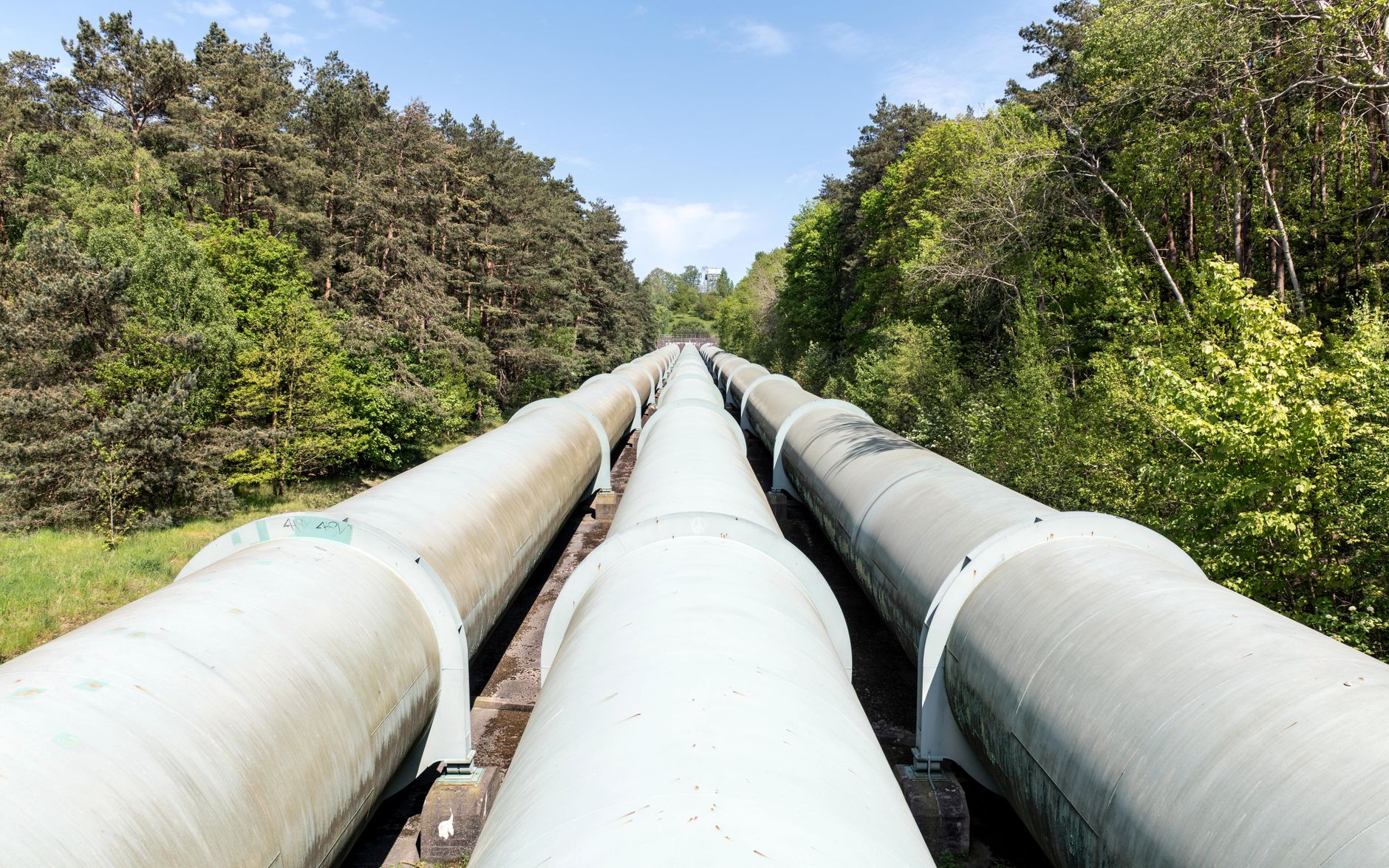
Millions of toxic, orphaned wells dot the American landscape. Now, tech giants are realizing that a liability to the fossil fuel industry is the perfect closed-loop energy source for edge AI.
In the scrubland outside Midland, Texas, a rusted pipe protrudes a few feet above the dry dirt. For decades, it was classified by the state as an orphaned well—a defunct relic of the 1980s oil boom, left behind by a bankrupt wildcatter. It leaked trace amounts of methane, threatened the local water table, and sat on a government backlog waiting for a taxpayer-funded cement plug.
Today, that same patch of dirt hosts a matte-black, shipping-container-sized modular data center. The rusted pipe remains, but it has been retrofitted with a polished steel manifold humming with the faint vibration of high-pressure fluid. There are no power lines connecting this site to the Texas grid. The facility is entirely self-sufficient, drawing baseload electricity from the very hole that was once considered a toxic liability.
A quiet engineering land grab is unfolding across the American energy landscape. Tech consortiums, private equity firms, and hyperscale cloud providers are hunting down abandoned oil and gas wells. They are not looking for residual hydrocarbons. They are hunting for the deep, pre-drilled boreholes, viewing them as massive, sunk-cost infrastructure ready to be repurposed. By sliding closed-loop advanced geothermal systems (AGS) down these existing casings, engineers are turning the fossil fuel industry’s trash into isolated, 24/7 micro-grids designed to feed the insatiable power demands of artificial intelligence.
The central bottleneck for the next decade of technology is not silicon; it is electricity. The U.S. electrical grid is congested, bogged down by interconnection queues that can delay new power projects for up to six years. Data centers, which run continuous, heavy computational loads, cannot rely solely on the intermittent generation of wind or solar power without massive, economically unviable battery reserves. They require steady, uninterrupted baseload power.
Geothermal energy has always been the holy grail of baseload renewables. It is always on, unaffected by weather or darkness. However, traditional geothermal power relies on hydrothermal systems. You have to find highly specific geological anomalies where hot water sits in permeable rock relatively close to the surface, pump it up, use the steam, and reinject it. Finding these sites is geologically risky, and drilling deep into hard crystalline basement rock is prohibitively expensive. In a standard geothermal project, the drilling phase alone can account for up to sixty percent of the capital expenditure.
This is the engineering arbitrage at the heart of the well-retrofit movement. The oil and gas industry spent the last century drilling millions of holes into the earth’s crust. The drilling risk has already been taken. The capital was spent decades ago. According to the Environmental Protection Agency, there are over three million abandoned oil and gas wells in the United States alone. While most are too shallow for effective geothermal heat harvesting, hundreds of thousands penetrate deep enough into the crust to reach temperatures exceeding 150 degrees Celsius.
The mechanism unlocking this dormant energy is the coaxial closed-loop heat exchanger. Unlike traditional geothermal engineering, which forces fluids through cracks in the rock to harvest existing steam, closed-loop systems operate like a massive subterranean radiator. Engineers insert a specialized pipe-within-a-pipe down the existing well casing. A working fluid is pumped down the outer annulus. As it descends thousands of feet, it absorbs conductive heat from the surrounding bedrock. By the time it reaches the bottom of the well, the fluid expands, rushing back up the insulated inner pipe to the surface.
At the wellhead, this pressurized, superheated fluid is fed through an Organic Rankine Cycle (ORC) turbine. The heat boils a secondary refrigerant with a low boiling point, spinning the turbine to generate electricity. The primary fluid is then cooled and pushed back down the well in a continuous, sealed loop. Nothing touches the rock. No water is consumed. No hydraulic fracturing is required.
Recent advancements in the thermodynamics of these systems have made the economics viable. Early attempts at single-well geothermal retrofits failed because water is a relatively inefficient thermal transport medium in a closed loop. Today, engineers are utilizing supercritical carbon dioxide (sCO2) or advanced proprietary synthetic refrigerants. Supercritical CO2 possesses a high density and high heat capacity, and it creates a thermosiphon effect. As it heats up in the deep earth, it becomes buoyant, rising to the surface on its own and drastically reducing the parasitic load required to pump the fluid through the system.
By acquiring orphaned wells, tech companies are achieving three distinct victories at once. First, they bypass the national grid entirely. An edge data center focused on localized inference processing or specific machine learning training modules can be dropped onto a retrofitted well pad, powered by a dedicated 1-to-3 megawatt geothermal output. There is no waiting for the local utility to approve a substation upgrade.
Second, the financial optics are unprecedented. State and federal governments are currently pouring billions of dollars into plugging orphaned wells, which are significant sources of fugitive methane emissions. Wall Street has realized that by acquiring these leases, they can often secure government remediation grants. They plug the bottom of the well to stop the methane leak, but instead of filling the entire shaft with cement, they install a heat exchanger in the upper casing. They are essentially being subsidized to build their own power plants.
Third, they secure geographical isolation. In an era where local municipalities are increasingly hostile to the noise, water usage, and aesthetic blight of mega data centers, utilizing rural, pre-disturbed industrial land is a masterstroke in zoning evasion. An oil patch in the Dakotas or a depleted gas field in Appalachia is already zoned for industrial extraction. A modular data center makes significantly less noise than a pumpjack and consumes zero municipal water.
Yet, the subterranean bypass is not without its physical limits. The primary engineering constraint is thermal drawdown. A deep well is hot, but rock is a relatively poor conductor of heat. If a closed-loop system extracts heat faster than the surrounding geology can naturally conduct it back to the borehole, the rock immediately surrounding the casing will cool down. Over a period of five to ten years, the power output of the well will inevitably degrade.
Engineers refer to this as the thermal radius of influence. To combat it, system designers are employing pulsed extraction—running the turbine heavily during peak computational loads and slowing it down during idle periods to let the rock "recharge" its heat. Others are utilizing multi-lateral wells, where horizontal drilling techniques popularized by the fracking boom are used to fan out multiple heat exchangers from a single vertical wellbore, vastly increasing the surface area for thermal conduction.
Despite these workarounds, a single retrofitted well is ultimately a depreciating thermal asset. It will not power a facility indefinitely at peak output. But in the context of the technology sector, it does not need to. The life cycle of server hardware is roughly three to five years. The architecture of AI processing is evolving so rapidly that a physical data center may become obsolete long before the rock surrounding its power source goes cold. If the well suffers thermal depletion after fifteen years, the modular servers can simply be unbolted and moved to the next retrofitted well down the road.
We are witnessing a profound shift in how heavy industry views physical legacy. The transition to the next era of computing requires raw materials, energy, and real estate on a scale that greenfield development can no longer support quickly enough. The infrastructure of the future will not always be built from scratch. Increasingly, it will be parasitic, grafting itself onto the industrial ruins of the twentieth century. The oil age left behind a perforated earth; the AI age is figuring out how to plug right into it.