The Substation Premium: Why Dead Paper Mills Are Selling for Tech-Valuation Multiples
Nathan Caldwell · Manufacturing · 2026-08-31
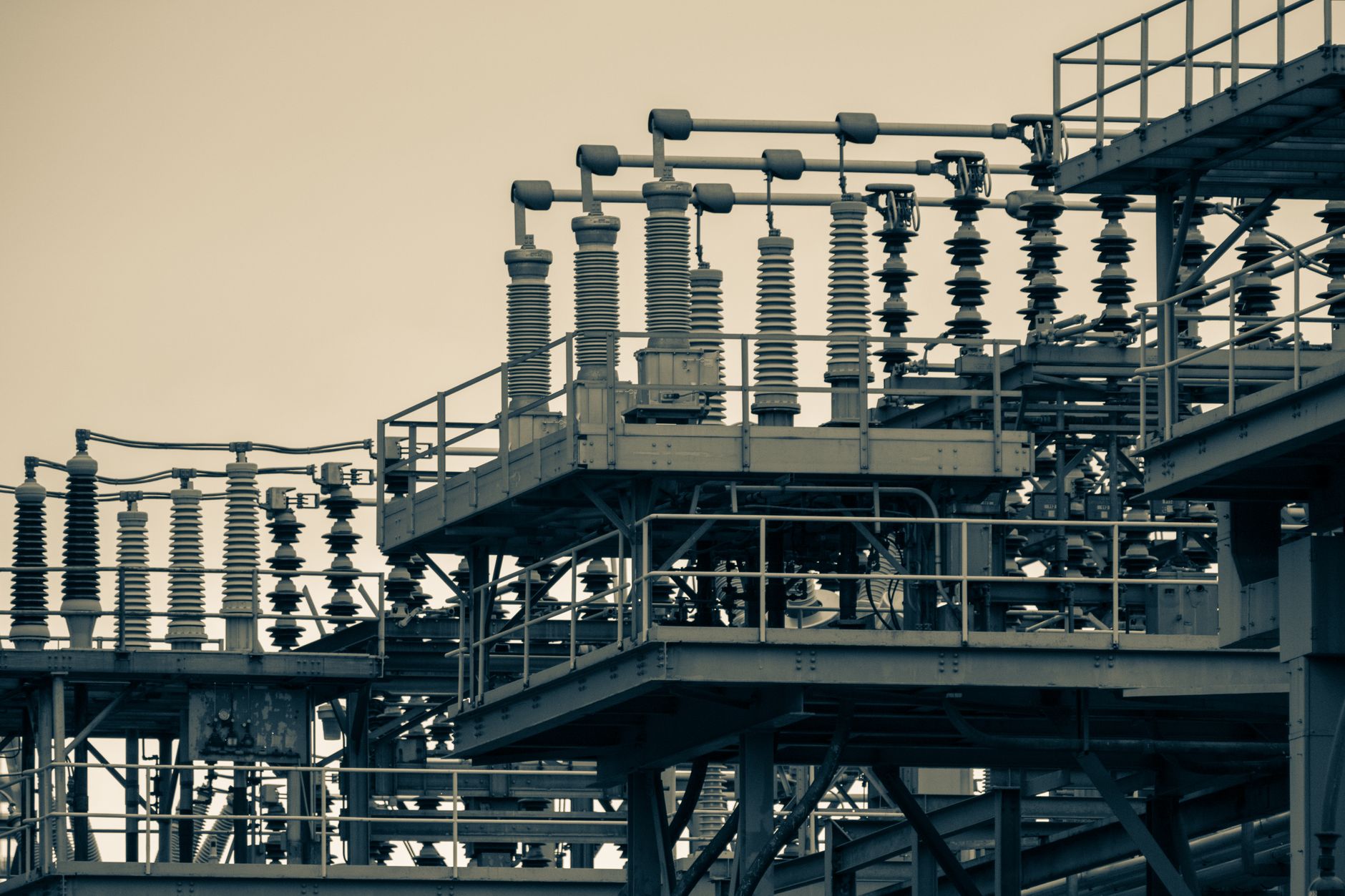
The great American reshoring boom has hit a permitting wall. Now, advanced manufacturers are paying astronomical premiums for abandoned rust-belt factories just to inherit their grandfathered grid connections.
The recent sale of a sprawling, dilapidated pulp mill in northern Maine barely registered in the national business press. For over a decade, the site had been a local political liability, a monument to offshoring that cost the municipality millions in lost tax revenue and environmental monitoring. When it finally changed hands this past spring, the buyer was not a real estate developer looking to build riverfront condos, nor a rival timber conglomerate. It was an advanced materials manufacturer heavily backed by federal industrial subsidies, and they paid nearly four times the site’s highest historical valuation.
They did not want the buildings, which are scheduled for immediate demolition. They did not want the local labor pool, which has long since aged out or relocated. They wanted a single, decaying asset that has quietly become the most precious commodity in American manufacturing: a grandfathered, high-capacity electrical substation and a pre-existing industrial wastewater discharge permit.
The great American reshoring boom, fueled by hundreds of billions in capital from the Inflation Reduction Act and the CHIPS and Science Act, has collided violently with the physical realities of domestic infrastructure. Capital is abundant. Automation has largely neutralized the historic labor cost advantages of East Asia. The primary bottleneck for heavy industry in the United States is now the ability to plug into the electrical grid and discharge industrial byproducts legally.
This friction has spawned a massive repricing of industrial decay. Advanced manufacturers are abandoning the dream of pristine, greenfield mega-sites in the Sunbelt. Instead, they are engaging in aggressive bidding wars over the rust-belt ruins of the twentieth century, purchasing abandoned chemical plants, shuttered steel foundries, and dead paper mills solely to acquire their legacy infrastructure rights.
The Grid Queue Wall
To understand the sudden premium on heavy industrial ruins, one must look at the math of modern manufacturing. Next-generation industrial processes—whether fabricating battery precursors, smelting specialized aerospace alloys, or producing synthetic industrial chemicals—are extraordinarily energy-intensive. A modest advanced manufacturing facility routinely requires 20 to 50 megawatts of continuous power.
Securing that level of power for a newly built facility on a greenfield site requires joining an interconnection queue. Regional transmission organizations like PJM Interconnection, which coordinates the movement of wholesale electricity in all or parts of 13 states and the District of Columbia, are currently overwhelmed. The surge in data center construction, combined with the push for industrial electrification, has created a backlog of historic proportions. Wait times for new, large-scale grid interconnections routinely stretch to five or even seven years.
For a manufacturing firm racing to capture market share and federal tax credits that have strict sunset provisions, a five-year wait just to turn the lights on is an existential threat. The capital deployment schedules demanded by private equity backers and federal grant administrators cannot accommodate a half-decade pause for utility permitting.
An abandoned heavy industrial site offers an immediate bypass. A paper mill built in 1965 already possesses heavy-duty transmission lines, industrial-scale transformers, and an established interconnection agreement. When a site goes bankrupt or enters a prolonged dormant phase, those utility connections often remain intact, maintained in a minimal state by the local utility or the bankruptcy trust. Purchasing the site allows a new manufacturer to inherit the power capacity. Even if the substation requires modernization, upgrading an existing point of interconnection is a fundamentally different, and drastically shorter, regulatory process than establishing a new one.
The Regulatory Bypass
Power is only half the equation. The regulatory burden of environmental permitting has also fundamentally altered site selection economics. Constructing a chemical processing facility on untouched land triggers an avalanche of local, state, and federal environmental reviews. Securing new air emission permits under Title V of the Clean Air Act, or establishing new wastewater discharge limits under the National Pollutant Discharge Elimination System (NPDES), can delay a project by years and subject it to aggressive litigation from local opposition groups.
Legacy industrial sites offer a distinct legal advantage. Many of these properties possess operating permits that, while dormant, remain legally valid or can be renewed and modified rather than originated from scratch. Modifying an existing industrial permit to accommodate a new, often substantially cleaner, manufacturing process is administratively simpler than convincing a zoning board and the Environmental Protection Agency to industrialize a virgin plot of land.
This dynamic creates a bizarre inversion of real estate values. A pristine, flat, heavily subsidized 500-acre industrial park in a sunbelt state, perfectly situated near major highways and rail lines, is often less valuable to an advanced manufacturer than a cramped, environmentally compromised 40-acre brownfield in Ohio that happens to sit on a 100-megawatt transmission corridor and borders a river with an active thermal discharge permit.
The physical structure of the old factory is irrelevant. In most cases, the new buyers view the existing steel and concrete as a nuisance to be cleared. They are paying tech-valuation multiples for the invisible geography of regulatory and utility access.
The Institutionalization of Industrial Decay
This shift in valuation has not gone unnoticed by financial engineers. A new class of specialized real estate private equity firms has emerged, focusing explicitly on what industry insiders call "infrastructure stripping."
These funds operate by monitoring bankruptcy filings and distressed asset sales in traditional heavy industries. They purchase shuttered coal plants, defunct automotive foundries, and closed pulp mills. They do not attempt to revitalize the original businesses. Instead, they strip the sites down to the concrete pads, demolish the hazardous structures, perform the minimum required environmental stabilization, and then flip the underlying grid and permit rights to advanced manufacturing conglomerates.
Municipalities find themselves in a complex position. For decades, city councils across the Rust Belt and rural Northeast viewed their abandoned factories as toxic blights that depressed local property values and posed severe environmental hazards. Suddenly, these liabilities are being courted by well-funded industrial concerns.
However, the promises of these new buyers rarely match the historic economic impact of the previous occupants. A paper mill in 1980 might have employed two thousand local residents in middle-class union jobs. An advanced battery component facility built on the same footprint in 2026, highly automated and managed by a handful of specialized technicians and robotics engineers, might employ two hundred. The municipality gets its tax base restored and the site remediated, but the anticipated local employment boom rarely materializes. The workforce required for modern manufacturing simply does not scale linearly with the physical footprint of the factory.
The Remediation Risk
The primary friction in this strategy lies beneath the concrete. Purchasing a legacy industrial site inherently involves assuming a degree of environmental liability. Century-old factories often conceal significant soil and groundwater contamination. Heavy metals, volatile organic compounds, and per-and polyfluoroalkyl substances (PFAS) are routine discoveries during the demolition phase.
While federal and state brownfield programs offer some liability shields and cleanup grants to innocent purchasers, the financial exposure can still be severe. A manufacturer that budgets twenty million dollars for site clearing and demolition can quickly find itself facing a hundred-million-dollar remediation mandate if excavation uncovers decades of undocumented chemical dumping.
Furthermore, the EPA has become increasingly sophisticated in how it handles permit transfers. Regulators are well aware of the strategy of buying dead sites for their permits. If the new manufacturing process fundamentally alters the risk profile of the site, regulators can force a complete reopening of the environmental review process, effectively neutralizing the entire purpose of the acquisition. The line between a "permit modification" and a "new permit application" is heavily contested legal territory, and manufacturers must navigate it with extreme precision.
The Geography of Necessity
The resurgence of American heavy industry was supposed to redraw the economic map, spreading high-tech manufacturing facilities across emerging domestic markets and creating new industrial hubs. Instead, the severe constraints of infrastructure and regulation are forcing the new economy to inhabit the exact physical footprint of the old one.
Companies are not choosing these locations because of favorable tax climates or optimized logistics routes. They are choosing them because they have no other viable path to deployment. The speed of corporate strategy is currently subordinated to the speed of utility bureaucracy.
This reality challenges the prevailing narrative of a frictionless industrial renaissance. Capital can be raised in weeks. Blueprints can be drawn in months. Equipment can be ordered and shipped within a year. But the right to consume industrial quantities of electricity and discharge industrial quantities of water remains strictly tethered to the geographic relics of a bygone era.
As long as the national electrical grid remains congested and the permitting apparatus remains structurally slow, the ruins of the twentieth century will continue to dictate the industrial capacity of the twenty-first. The most valuable industrial asset is no longer the factory of the future; it is the lingering legal and infrastructural shadow of the factory of the past.