The Artificial Scarcity of the Soundstage Stadium
Nathan Caldwell · Sports Industry · 2026-10-02
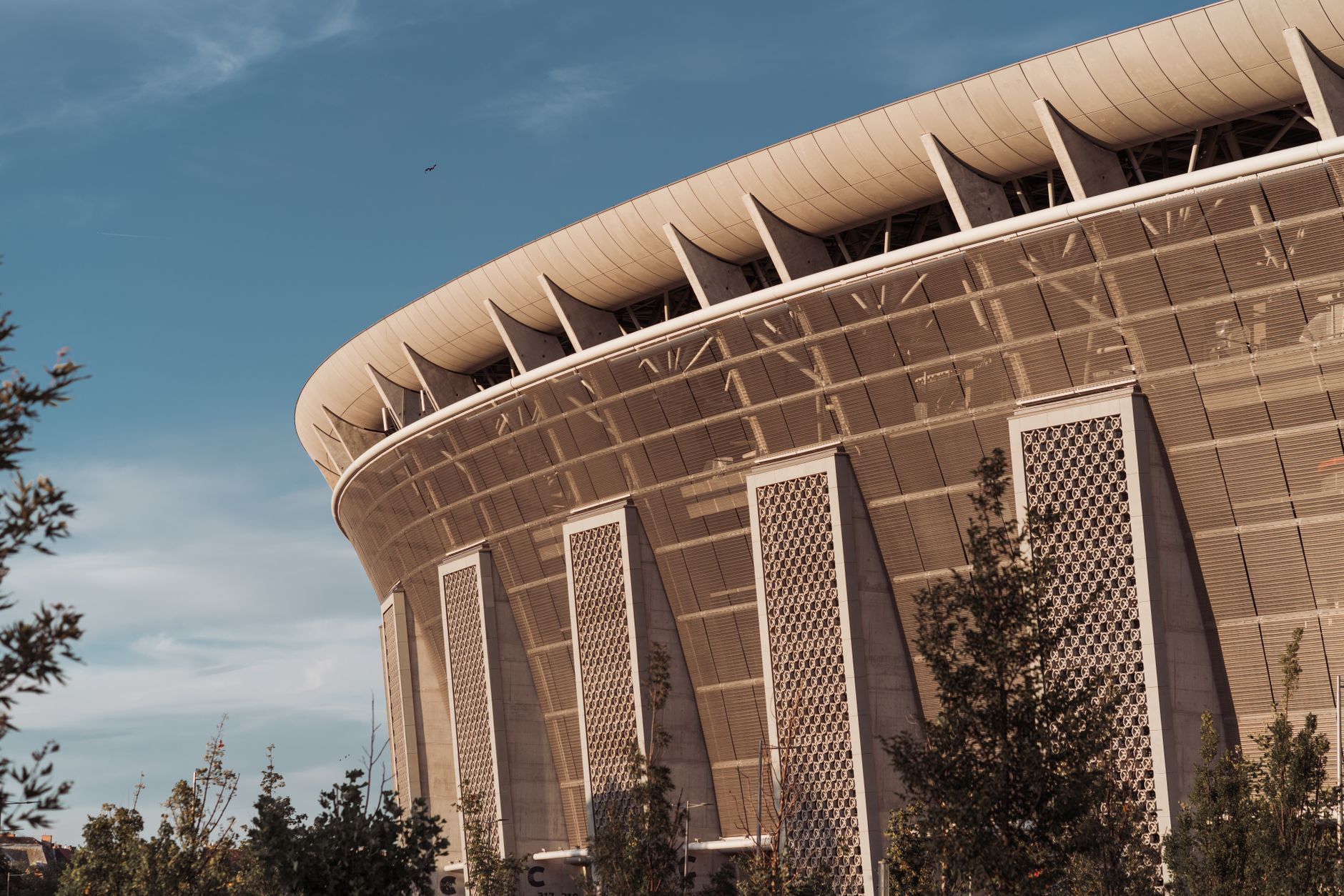
Professional sports franchises are deliberately shrinking stadium capacities. The goal is no longer mass attendance, but creating a controlled soundstage for high-frequency betting and volumetric broadcasting.
For the past century, the architectural ambition of professional sports could be measured in concrete and capacity. The mandate was simple: build it bigger. From the colossal bowls of the mid-twentieth century to the billion-dollar steel cathedrals of the 2010s, franchise valuation was inextricably linked to how many human beings could be squeezed through the turnstiles on a Sunday afternoon.
That arithmetic is now obsolete. Across professional sports, a quiet but profound architectural contraction is underway. The newest blueprints for NFL, MLB, and top-tier European soccer venues reveal a counterintuitive trend: owners are intentionally shrinking their stadiums.
The physical footprint of the professional sports venue is getting smaller, but the cost to build it is accelerating. Franchises are abandoning the 80,000-seat mega-stadium model in favor of hyper-premium, lower-capacity venues. The stadium is no longer a mass civic gathering space. It is transitioning into a closed-door soundstage designed primarily to facilitate global broadcasting, volumetric data capture, and high-frequency micro-betting.
To understand this contraction, one must examine the changing economic utility of the "average fan" in the stands.
The Liability of Volume
Historically, mass ticketing was the foundational revenue stream for any sports franchise. A team needed tens of thousands of middle-class fans buying hot dogs and parking passes to cover payroll. Today, the local ticketing revenue of an average regular-season game is a rounding error compared to national media rights, global streaming syndication, and official sports-book partnerships.
In this new financial reality, the upper deck is a liability. Cheap seats require massive physical infrastructure: concrete maintenance, hundreds of low-wage stadium employees, security perimeters, and vast parking lots that sit empty 300 days a year. The margins on general admission tickets have collapsed under the weight of operational costs and municipal taxes.
Instead of trying to fill 30,000 upper-bowl seats at fifty dollars a head, franchises have realized they can generate higher net revenue by replacing those sections with a dozen ultra-premium hospitality suites, a broadcast studio, and an on-site sportsbook. By artificially restricting supply, teams drive up the baseline price of admission, creating an atmosphere of intense scarcity. The live event becomes an exclusive luxury experience, akin to a VIP lounge or a high-end nightclub, while the masses are intentionally redirected to the digital product.
The Soundstage Stadium
This architectural shrinkage serves a dual purpose. It forces the middle-tier consumer out of the physical venue and into the digital ecosystem, where their consumption can be tracked, monetized, and routed through betting platforms. The fan who used to buy a cheap ticket is now expected to purchase a streaming subscription, a virtual reality access pass, or a series of in-game prop bets from their living room.
Simultaneously, the smaller, denser stadium is vastly superior for modern broadcast technology. The future of sports media relies on volumetric video—the ability to capture a game in three dimensions so a viewer can watch from any angle using augmented reality headsets. Volumetric capture requires hundreds of synchronized, high-resolution cameras to flood the field of play.
A compact, steep-sided arena with a controlled lighting environment is the ideal physical structure for this technology. Massive, sprawling stadiums introduce uncontrollable variables: sunlight angles, weather interference, and dead zones in 5G coverage. By shrinking the venue and controlling the environment, franchises are essentially building massive motion-capture studios. The live audience is present primarily to provide ambient noise and visual authenticity for the global broadcast. They are the studio audience for a multi-billion-dollar reality show.
The Real Estate Equation
The space saved by shrinking the stadium itself is not left empty. It is immediately repurposed into mixed-use real estate. The modern sports owner is often a real estate developer first and a sports operator second.
By reducing the footprint of the arena and eliminating surface parking in favor of automated subterranean garages, owners free up adjacent acres for high-density commercial development. The stadium becomes the anchor tenant for a privately owned, year-round neighborhood featuring luxury condominiums, boutique hotels, corporate headquarters, and high-end retail.
The franchise no longer relies on the 81 days a year a baseball team plays at home. They collect rent 365 days a year from the surrounding real estate ecosystem. The stadium itself operates as a loss-leader—a cultural monument that artificially inflates the property values of the team-owned district surrounding it.
Municipal Subsidies for Private Clubs
This structural shift presents a severe political problem. For decades, billionaire owners have successfully leveraged local governments into subsidizing stadium construction, arguing that these massive venues serve as public utilities and civic unifiers. The implicit contract was that public tax dollars would build a space large enough for the public to actually attend.
As capacities shrink to 45,000 or even 35,000 seats, that argument disintegrates. Cities are increasingly being asked to float municipal bonds to construct highly exclusive, heavily fortified luxury compounds that the vast majority of local taxpayers will never be able to afford to enter. The civic pride argument rings hollow when the civic monument is designed explicitly to exclude the working class.
Local municipalities are beginning to realize that subsidizing a modern stadium is akin to subsidizing a private television studio. The economic benefits of job creation have always been overstated by franchise-hired economists, but the visual reality of a shrinking, hyper-expensive venue makes the political optics of public funding nearly impossible to defend.
The End of the Crowd
The psychological impact of this transition on the sports themselves remains untested. The chaotic, intimidating roar of an 80,000-person crowd is a fundamental component of the athletic drama. It influences referee decisions, rattles opposing quarterbacks, and provides the visceral emotional stakes that make live sports compelling television.
Franchises are gambling that they can replicate that atmosphere with fewer, wealthier people, or that the global digital audience simply won't care. Acoustic engineering can amplify the noise of 40,000 fans to sound like 80,000. Artificial intelligence can digitally enhance the crowd density in the live broadcast.
The professional sports industry has made its calculation. The era of the populist stadium is over. The future belongs to the digital subscriber, the micro-bettor, and the high-net-worth individual occupying the luxury suite. The game on the field will continue, but the physical space it occupies will never again belong to the masses. The stadium has become a walled garden, and the gates are slowly pulling shut.