The Amenity Strip-Mine: Why Wall Street is Erasing the Hotel Lobby
Emma Carlisle · Hospitality · 2026-10-19
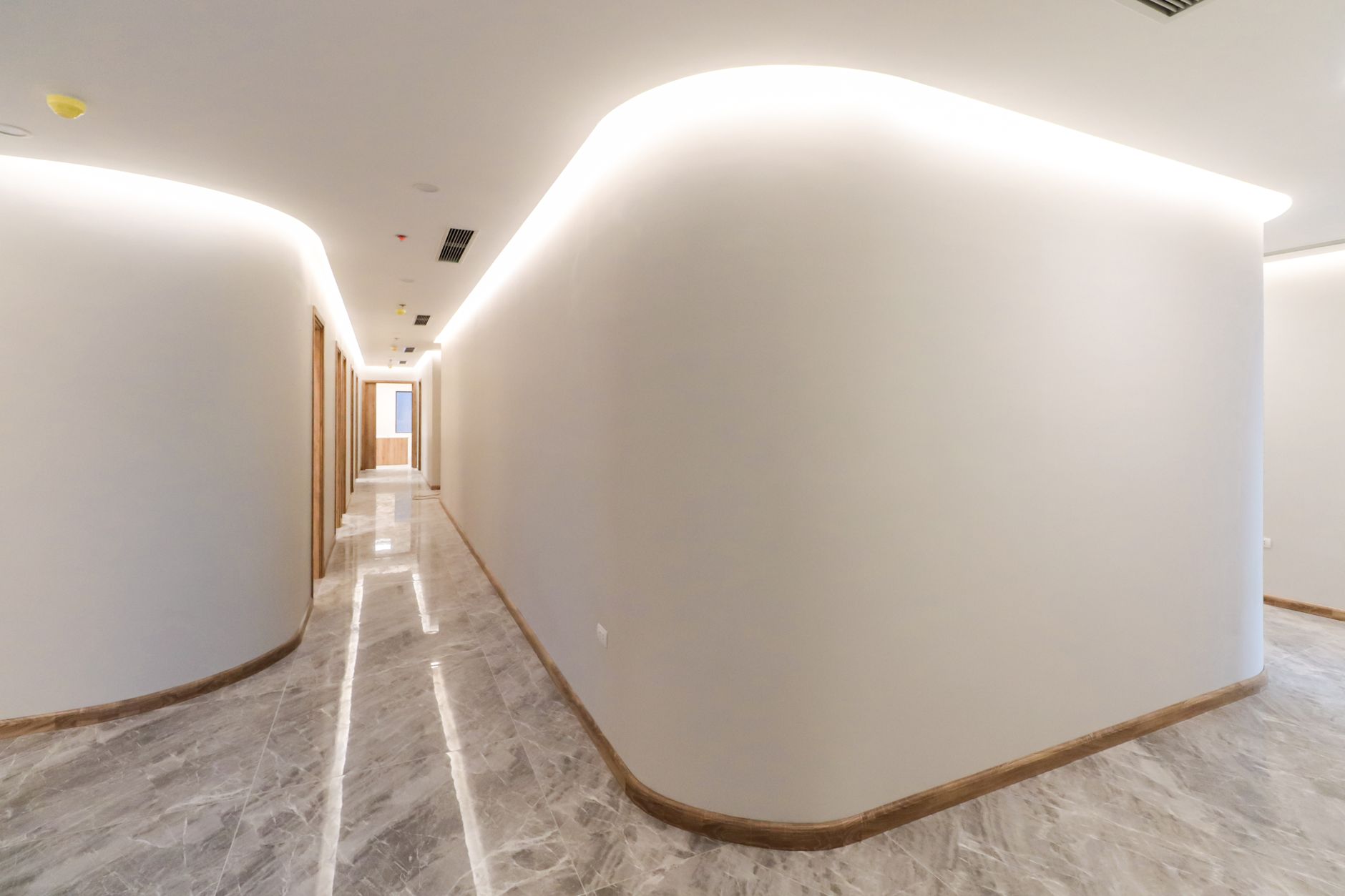
Legacy hospitality brands spent a century perfecting the art of the grand entrance. Now, financial engineers are ripping out the ground floors to execute a ruthless spatial arbitrage.
Walk past the historic facade of the Wellington on Chicago’s Magnificent Mile, and you will notice a subtle architectural violence has occurred. The revolving brass doors remain, but they no longer lead to a sprawling expanse of marble, velvet seating, and a concierge desk. Instead, the ground floor has been hermetically sealed and partitioned. The western half is a high-end athletic apparel flagship; the eastern half serves as a distribution hub for a rapid-delivery grocery service. To access the actual hotel rooms, guests are directed to a narrow, automated side entrance, where a QR code grants them access to a sterile elevator bank.
The Wellington is not an anomaly. It is the leading edge of a ruthless spatial arbitrage currently sweeping through the urban hospitality sector. Private equity firms and real estate investment trusts (REITs) are acquiring legacy hotels not to operate them better, but to systematically strip-mine their amenities.
For a century, the economic model of the grand urban hotel relied on a cross-subsidy. The guest rooms generated the bulk of the profit, but those high daily rates were justified by the "vibe"—the grand lobby, the sprawling restaurant, the sweeping staircases, and the expansive ballrooms. These spaces were notoriously inefficient. They required heating, cooling, staffing, and maintenance, yet they often generated zero direct revenue. Hoteliers accepted this inefficiency as the cost of brand prestige. It was the civic anchor that made the building a destination.
Financial engineers look at that same footprint and see a catastrophic misallocation of square footage.
When a private equity consortium buys an aging downtown property today, they execute a precise extraction operation. The target is not simply operational inefficiency; it is the physical space itself. By gutting the public areas, owners can convert non-yielding hospitality square footage into highly lucrative commercial leases.
The metric driving this transformation is Revenue Per Square Foot (RevPSF), a standard retail calculation that is aggressively supplanting Revenue Per Available Room (RevPAR) as the hospitality industry’s definitive benchmark. Under the ruthless logic of RevPSF, a 4,000-square-foot lobby with a fountain and a lounge is a financial liability. Converted into three triple-net lease storefronts, it becomes a predictable, high-margin annuity.
This is fundamentally altering the definition of a hotel. Historically, hospitality was an operational business wrapped in real estate. Today, for a growing cohort of aggressive investors, a hotel is merely a multi-tenant commercial asset where the upper floors happen to be leased on a nightly basis.
The mechanics of the amenity strip-mine are brutally effective. First, the food and beverage operations are shuttered. Room service is outsourced to local delivery platforms, operating through a ghost kitchen in the basement or off-site entirely. Next, the lobby is compressed. The sprawling reception desks are replaced by a single kiosk or bypassed entirely through smartphone check-ins. Finally, the reclaimed ground-floor space is leased to corporate retail tenants or automated fulfillment centers, entities that value prime urban foot traffic and demand zero daily management from the building’s owners.
We are witnessing the eviction of the semi-public living room. For decades, hotel lobbies served as neutral zones for urban commerce and socialization. They were places where locals and travelers intersected, where business deals were negotiated over overpriced coffee, and where anyone could find a momentary refuge from the street.
The financialization of this space destroys that civic function. Once the ground floor is leased to a global coffee chain and a boutique fitness studio, the hotel ceases to exist as a unified social environment. It fractures into a series of disconnected commercial transactions. The guest becomes a mere occupant of a sleep chamber, navigating a building that feels entirely indifferent to their presence.
Proponents of this model argue that they are simply responding to consumer demand. The narrative peddled in investor presentations is that millennials and Gen Z travelers prioritize frictionless, digital-first experiences. They do not want to interact with a bellhop; they want to bypass the desk and unlock their room with their phone. They do not want a mediocre hotel breakfast; they want to explore the local neighborhood.
This argument is a convenient cover for aggressive cost-cutting. It weaponizes the language of convenience to justify the removal of service. While it is true that modern travelers value digital efficiency, there is a profound difference between streamlining check-in and erasing the physical heart of a building. When you remove the staff, the seating, and the atmosphere, you are not offering a streamlined experience. You are offering a vending machine that dispenses sleep.
The long-term consequences of this spatial arbitrage threaten the very foundation of hospitality pricing power. When an owner strips away the social infrastructure of a hotel, they eliminate the brand's primary differentiator. Without a compelling public space, a room at a historic downtown property is functionally identical to a room at a budget chain down the block.
By optimizing purely for yield per square foot, these owners are commoditizing their own assets. They are trading long-term brand equity for a short-term bump in commercial leasing revenue. It is a strategy that works brilliantly on a spreadsheet in year one, but it leaves the property deeply vulnerable in year five. Once the hospitality premium is destroyed, the property must compete solely on price and location. In a market saturated with short-term apartment rentals and automated micro-hotels, that is a race to the bottom.
The real estate operators currently hollowing out our urban hotels are playing a dangerous game. They assume they can extract the cultural cachet of a legacy property while entirely dismantling the physical spaces that generated that cachet in the first place. But prestige is not a permanent fixture of a building; it requires constant, inefficient tending. When the last grand lobby is walled off and converted into a flagship sneaker store, the financial engineers will find that they have successfully optimized the hotel entirely out of existence.