The Outtake Economy: Why Wall Street is Buying Up Studio Mistakes
Emma Carlisle · Creative Industries · 2026-09-12
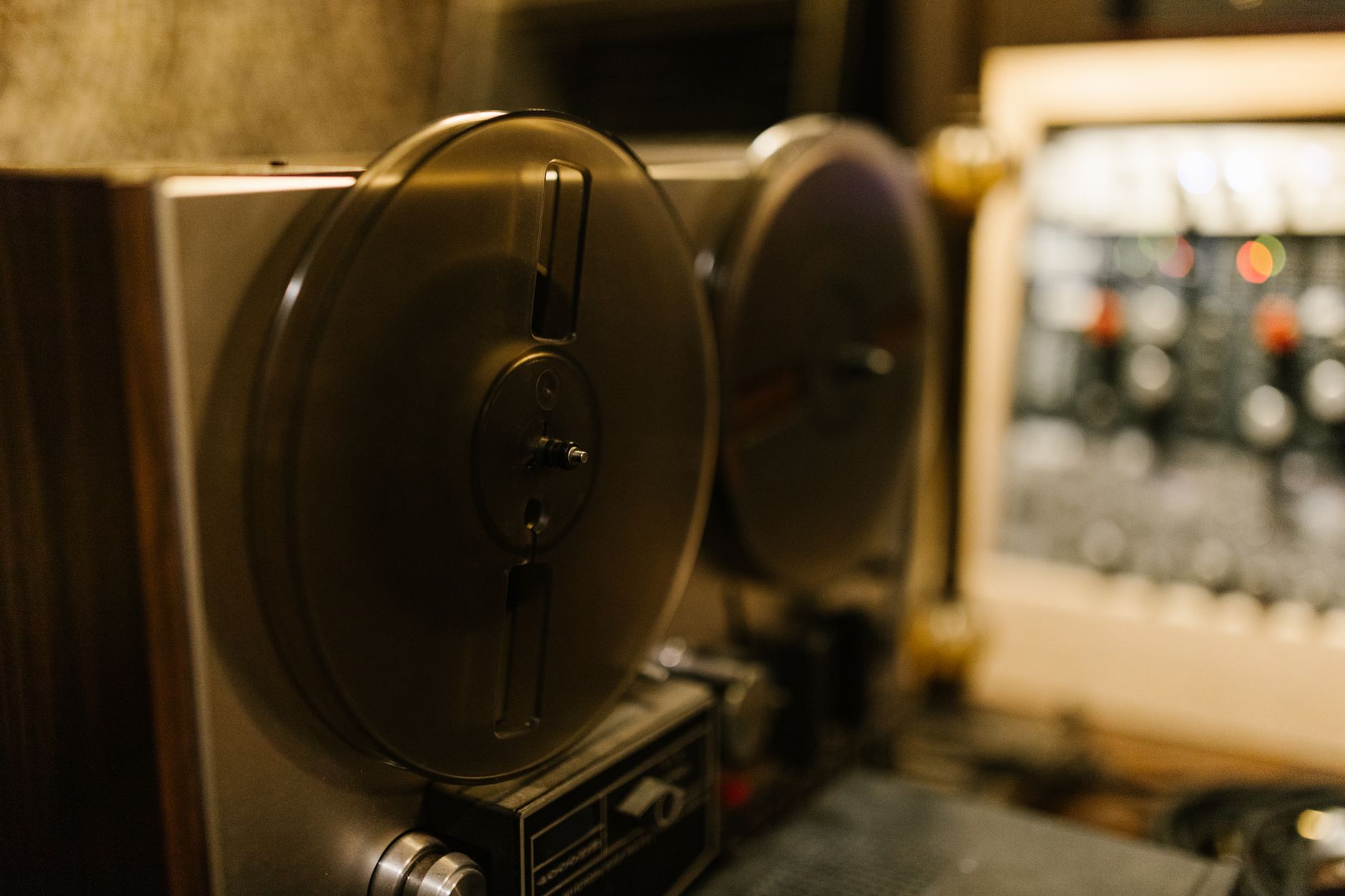
As generative AI drives the cost of flawless production to zero, asset managers are hoarding decades of discarded analog recordings to monopolize verifiable human imperfection.
Last month, a consortium of alternative asset managers executed a peculiar transaction in the music industry. They did not purchase the publishing rights to a legendary rock catalog or the master recordings of a contemporary pop star. Instead, they spent an estimated $140 million acquiring the physical tape archives of three defunct recording studios in Los Angeles and London. The vaults contained virtually zero commercial hits. What they held were thousands of hours of outtakes, aborted takes, false starts, off-mic conversations, and technical failures spanning from 1968 to 1994.
For decades, the recording industry treated these magnetic reels as refuse. They were the cutting-room floor of analog production, the mistakes that had to be edited out to create a polished consumer product. Today, they are becoming one of the most heavily contested asset classes in the creative economy.
The financial logic driving this acquisition reflects a structural inversion in how media is valued. Generative audio platforms can now synthesize mathematically flawless, perfectly mixed music on demand. Perfection is infinitely scalable and functionally free. As a result, the premium in the music market has shifted from the finished composition to the verifiable raw materials of human creation. Investors are cornering the market on friction.
To understand why a missed chord change or a drummer losing the tempo now commands a premium, one must look at the escalating legal and commercial crisis in synthetic media. The copyright doctrine in the United States and the European Union remains clear: only works created by a human author can receive copyright protection. AI-generated tracks, no matter how sophisticated, immediately enter the public domain.
For music conglomerates and streaming platforms, a public domain ecosystem is a financial nightmare. If a platform’s dominant playlists are filled with synthetic, uncopyrightable music, anyone can scrape, reproduce, and monetize those exact tracks without paying licensing fees. The industry’s entire balance sheet relies on exclusive intellectual property.
To maintain these legal moats, major labels and the private equity firms that back them need to prove human authorship. This is where the outtakes come in. When an investor owns the raw, multitrack “stems” of a recording—complete with the sound of the bass player coughing, the tape machine humming, and the producer swearing through the talkback mic—they own an indisputable chain of custody.
These archives serve a dual purpose. First, they provide the raw material for "new" vintage releases. A vocal sigh from 1974 or an accidental guitar harmonic from 1982 can be isolated, copyrighted, and licensed as a foundational sample for contemporary tracks. Because the source material is undeniably human, the resulting derivative work enjoys full copyright protection, securing steady mechanical royalties.
Second, and far more lucrative, is the data-licensing angle. The engineers developing the next generation of generative audio models have realized that consumers experience fatigue when exposed to purely synthetic music for extended periods. The tracks lack the micro-fluctuations in timing, the slight pitch drifts, and the acoustic anomalies that the human brain associates with genuine emotion.
AI models trained solely on finished masters learn to replicate the polished, compressed sound of commercial radio. To build a premium model—one that a high-end film studio or advertising agency will pay a significant license for—developers need to train the system on human imperfection. They need the machine to understand how a tired singer’s vocal cords fray on the fourth take of a demanding chorus. They need the algorithm to learn the physics of a drumstick hitting the rim instead of the center of the snare.
The physical archives of the late 20th century are the only finite supply of this training data. By hoarding the outtakes, asset managers are essentially creating a toll road for AI developers. If a tech company wants its model to generate music that feels authentically human, it must license the proprietary dataset of human error.
This strategy completely rewrites the incentive structure of music valuation. The traditional catalog acquisition model, popularized by firms like Hipgnosis, valued assets based on historical streaming yields and cultural ubiquity. A hit song from 1985 generated predictable cash flows from radio play, commercials, and Spotify algorithms.
The outtake economy operates on a different metric: data density. A flawlessly executed three-minute pop song contains relatively low data density for training an organic AI model. It is too sterile. A twenty-minute reel of a jazz quartet struggling to find the right groove, communicating through micro-hesitations and adjustments, is a goldmine of acoustic and behavioral data.
Investors are employing forensic audio engineers to appraise tape vaults based on their "imperfection density." Vaults containing isolated multitrack recordings—where the mistakes of individual instruments can be cleanly extracted—are fetching valuations previously reserved for multi-platinum albums. The actual musical genre is almost irrelevant; the value lies in the biological mechanics of the performance.
The implications for working musicians are profound. Contracts for studio session players are being quietly rewritten to encompass "all incidental audio," ensuring that warm-up exercises, discarded takes, and accidental noises become the property of the label. The industry is financializing the byproduct of the creative process.
A natural counterargument arises regarding the longevity of this arbitrage. Algorithmic researchers argue that AI will eventually learn to simulate human error mathematically, rendering the physical tape archives obsolete. They suggest that randomized parameters can introduce the necessary “slop” to trick the human ear without requiring millions of dollars in analog tape acquisitions.
This view misunderstands both the legal and psychoacoustic realities of the market. Mathematically simulated error tends to sound like a digital filter applied over a perfect signal—it lacks the complex, interlocking physical variables of a real mistake. When a human drummer rushes a beat, the bassist compensates, altering the tension of the string, which slightly changes the harmonic distortion picked up by the microphone. Simulating that cascade of physical consequences requires immense computational power, and even when successful, it fails the legal test. A simulated mistake generated by an algorithm is still an algorithmic output, and therefore ineligible for copyright protection. The legal moat holds.
We are witnessing a peculiar phase in the industrialization of art. For a century, the creative industries expended massive capital trying to eradicate the flaws of human performance. They built acoustically dead rooms, invented click tracks, and developed pitch-correction software, all in the pursuit of an immaculate product.
Now that machines can manufacture that immaculate product at zero marginal cost, the industry realizes it destroyed its own scarcity. The frantic rush to buy up decades-old studio refuse is an acknowledgment that the only defensible asset left in the creative economy is human frailty. The mistakes were the actual product all along.