The Mold Arbitrage: Why Wall Street is Securitizing Bespoke Factory Tooling
Nathan Caldwell · Manufacturing · 2026-08-26
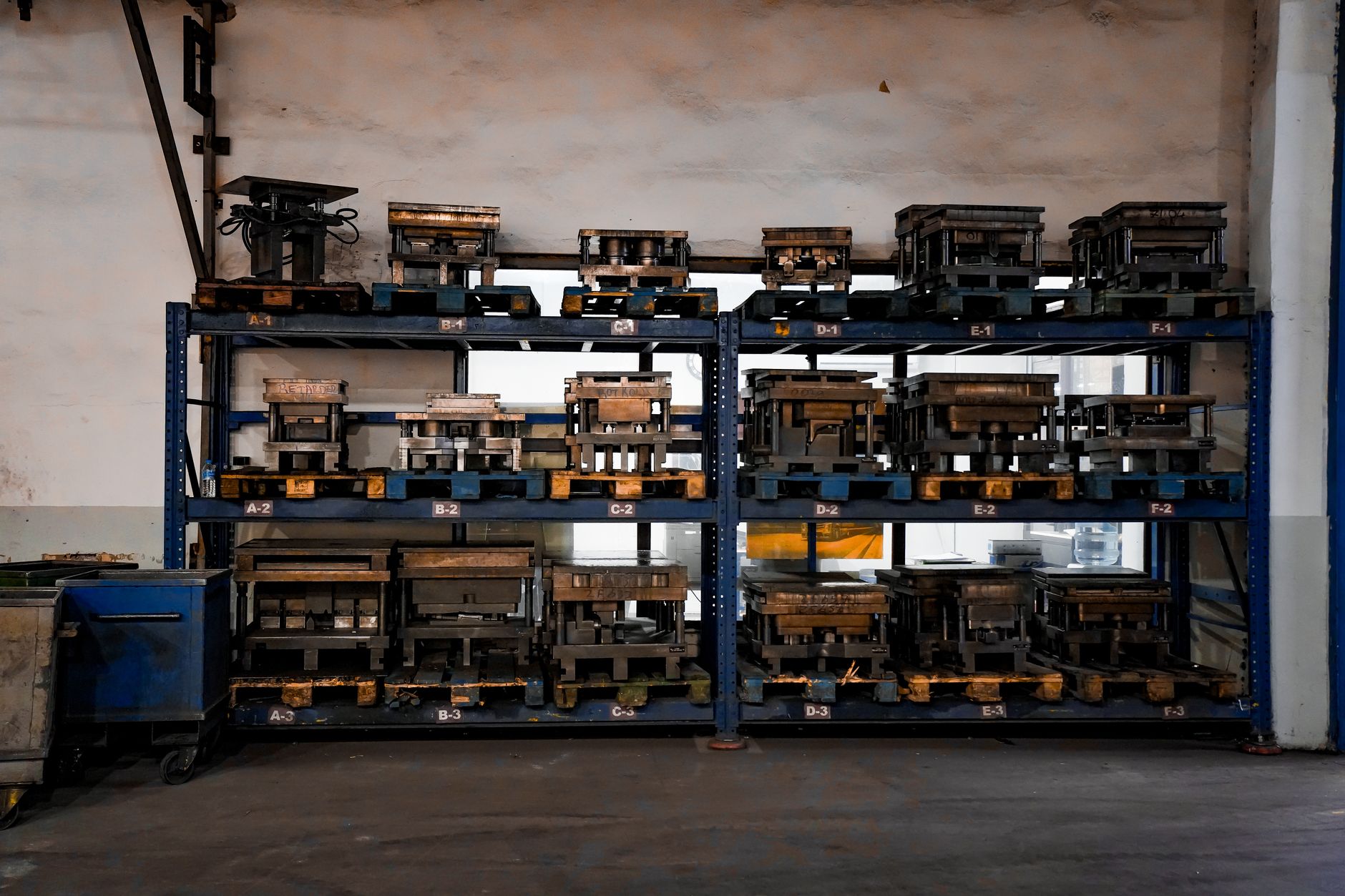
Heavy industry is quietly shifting its most expensive, highly specialized physical assets—dies, jigs, and molds—off the balance sheet.
Walk through any automotive stamping plant or heavy consumer electronics facility, and the most valuable assets in the room are rarely the robotic arms or the assembly lines. They are the blocks of aggressively machined hardened steel sitting at the center of the presses. These are the dies, molds, and jigs—highly specialized, violently expensive pieces of bespoke tooling engineered to produce exactly one specific geometric shape.
For a century, the economic reality of these heavy metal blocks was immutable. If an automaker wanted to stamp a fender for a 2027 sedan, or a consumer electronics company needed to injection-mold a chassis for a new laptop, they had to pay for the tooling upfront. These molds can cost anywhere from hundreds of thousands to several million dollars a piece. They sit on the balance sheet, depreciating over a five-to-seven-year product lifecycle, tying up vast amounts of capital in highly illiquid, physically burdensome shapes.
Now, that capital structure is being dismantled. Heavy industry is quietly shifting its most expensive, highly specialized physical assets off the balance sheet through a mechanism that mimics the commercial aviation industry's relationship with jet engines. Welcome to the mold arbitrage.
Over the past three years, a quiet but massive shift has occurred in industrial capital expenditure. Manufacturers are selling their bespoke tooling to specialized private credit firms and leasing it back on a per-stamp, per-cycle basis. The manufacturer no longer owns the means of forming their product. Instead, they pay a micro-lease fee every time the press closes and a part is ejected.
This financialization of the factory floor solves an immediate, agonizing problem for modern manufacturers: the crippling cost of capital transitions.
The automotive sector is the clearest example. Legacy automakers are currently attempting to fund two parallel universes. They must maintain their internal combustion engine architectures while simultaneously spending hundreds of billions of dollars on battery electrification, software-defined vehicle platforms, and autonomous driving telemetry. The capital requirements are catastrophic. By selling their global inventory of stamping dies and injection molds to institutional financiers, these companies can instantly liquefy billions of dollars in trapped capital.
From an accounting perspective, the shift is highly attractive to chief financial officers. The immense upfront capital expenditure (CAPEX) required to launch a new product line is flattened into an operational expense (OPEX). The cost of the tooling scales directly with the revenue generated by the product. If a specific car model sells poorly, the manufacturer isn't left holding the bag on $50 million worth of fully owned, underutilized steel molds. They simply pay fewer per-cycle fees. The risk of product failure is partially distributed to the financier.
The mechanics of this arrangement were impossible a decade ago. Historically, an original equipment manufacturer (OEM) could never convince a Wall Street firm to buy a mold sitting in a Tier-2 supplier's facility in Ohio or Monterrey because there was no reliable way to verify utilization. The financier would have to rely on the supplier's self-reported production volumes to calculate the lease payments.
Industrial telemetry has erased that friction. Modern tooling is deeply embedded with Internet of Things (IoT) sensors. These sensors monitor temperature, pressure, and acoustic signatures to predict maintenance schedules. More importantly for the financial sector, they act as an immutable, cryptographically secure odometer for the mold.
Every time a multi-ton press stamps a sheet of aluminum into a car door, the embedded sensor logs the cycle and beams the data to a cloud ledger. The private credit firm holding the title to the die automatically bills the OEM three cents for the stroke. The financial asset is perfectly tethered to the physical action in real-time. Wall Street has effectively securitized the kinetic energy of the factory floor.
For the private credit markets, this represents a fascinating, if dangerous, new frontier for yield. Flush with capital and facing an environment where traditional corporate debt yields are under pressure from fluctuating rate expectations, alternative asset managers are hunting for physical assets with reliable cash flows.
A stamping die for a high-volume pickup truck fits the profile beautifully. A truck platform might run for eight years, producing a million units annually. To a credit fund, buying the tooling for that truck and clipping a fractional coupon on every part produced looks remarkably like an infrastructure toll road. It is an asset tightly integrated into the cash-generation engine of a massive corporation.
However, the risk profile of bespoke tooling differs radically from traditional sale-leaseback assets. When an airline sells a Boeing 737 to a leasing company and rents it back, the leasing company has a structural safety net. If the airline goes bankrupt, the financier can repossess the aircraft, repaint the tail, and lease it to another operator in a different hemisphere. The 737 is a fungible, globally standardized asset.
Industrial tooling possesses zero fungibility. A mold engineered to cast the engine block of a specific hybrid SUV is completely useless for any other purpose. It cannot be repurposed to make washing machines or aerospace components. If the OEM goes bankrupt, or if the specific product line is a catastrophic market failure, the financier cannot repossess the asset and lease it to a competitor. A Ford fender die is of no use to General Motors.
In the event of a default, the multi-million-dollar piece of specialized tooling immediately reverts to its base metallurgical value. It is just scrap hardened steel, worth perhaps a few thousand dollars by weight.
Financiers are attempting to mitigate this severe collateral risk through complex structuring. Lease rates are heavily front-loaded, ensuring the credit firm recovers its principal within the first two years of a product's lifecycle, leaving the remaining years as pure profit. Furthermore, tooling portfolios are heavily cross-collateralized. A single financing vehicle might own the molds for a top-selling pickup truck, a mid-tier consumer blender, and an aerospace bracket. The steady performance of the broad portfolio is designed to absorb the inevitable shock of individual product failures.
Yet, the macro-level consequences for the manufacturing sector remain largely unexamined. By embracing the mold arbitrage, manufacturers are fundamentally altering their relationship with production. They are trading industrial resilience for balance sheet liquidity.
Historically, owning the tooling provided a manufacturer with absolute leverage over its supply chain. If a Tier-1 supplier demanded an unreasonable price increase or suffered a catastrophic labor strike, the OEM could dispatch flatbed trucks, physically extract their owned dies from the supplier's facility, and transport them to a competitor. The tooling was the ultimate point of leverage.
Under the new financial structure, the OEM's agility is severely compromised. Moving a financialized, sensor-laden asset between facilities requires the approval of the credit firm that actually owns it. The financier holds a veto over supply chain logistics, injecting a layer of financial bureaucracy into emergency operational decisions.
Furthermore, this trend accelerates the hollowing out of the industrial corporate structure. As manufacturers sell off their real estate, outsource their logistics, and now financialize their core production tooling, they are drifting toward a state of pure brand management. The factory of the future is increasingly a space where a company leases the building, leases the robots, and pays a per-cycle fee on the molds, acting merely as a systems integrator orchestrating rented assets.
This hyper-financialization leaves the physical economy deeply exposed to credit market volatility. If the private credit markets experience a sudden liquidity crunch, the capital required to engineer and manufacture new tooling could evaporate. Manufacturers, having dismantled their internal capital reserves for tooling in favor of operational leasing, would find themselves unable to launch new products. The physical cadence of industrial innovation would be entirely subordinated to the risk appetite of alternative asset managers.
The mold arbitrage is brilliant financial engineering. It elegantly matches the need for corporate liquidity with the demand for institutional yield, utilizing telemetry to bridge the trust gap. But it fundamentally redefines what a manufacturing company actually is. When a heavy industry giant no longer owns the steel that shapes its products, it ceases to be a manufacturer in the traditional sense. It becomes a subscriber to its own industrial output.