The Megawatt Premium: Why Wall Street Is Buying Empty Offices Just for the Plugs
Claire Whitmore · Real Estate · 2026-10-08
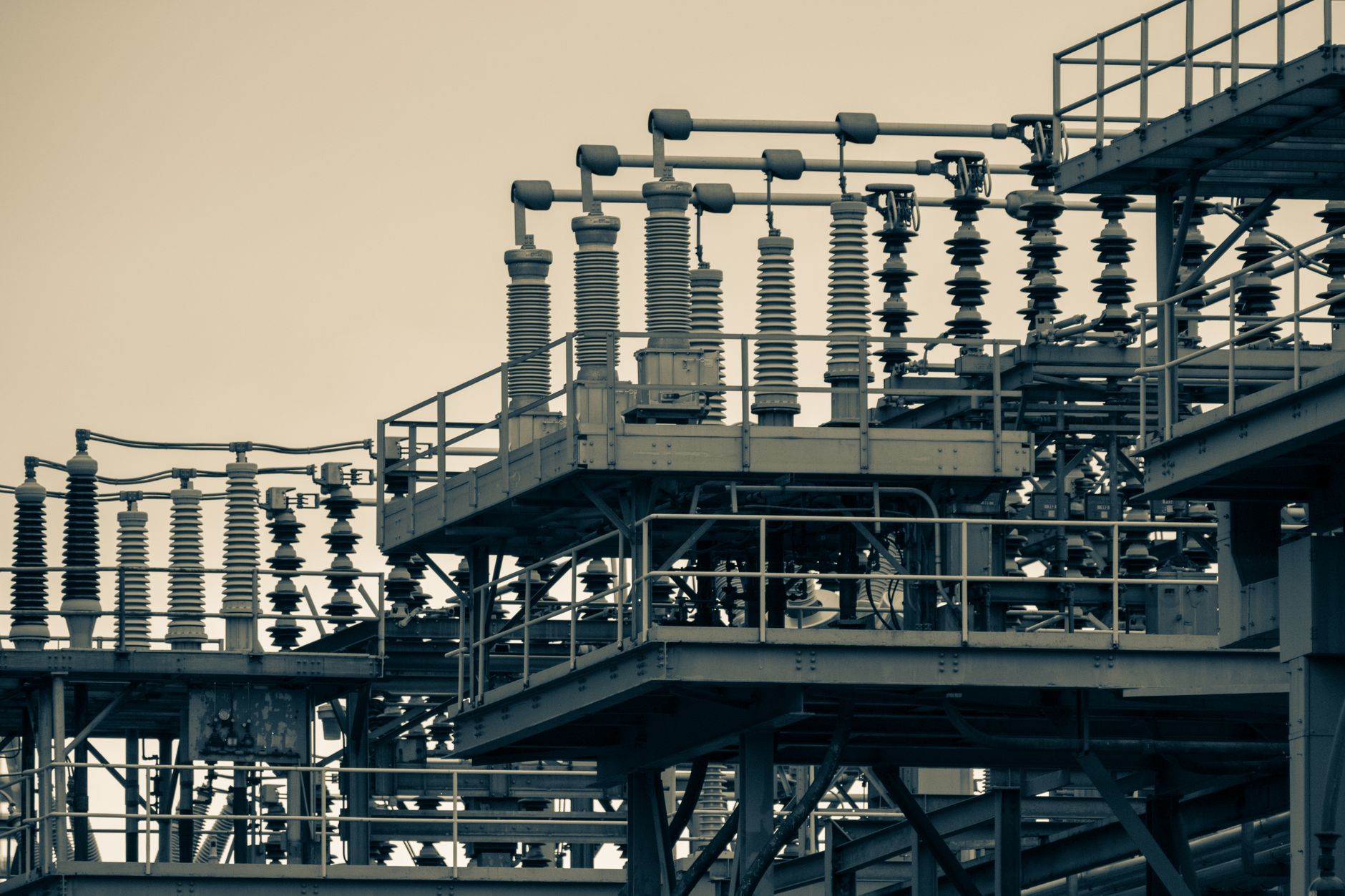
Investors are snapping up obsolete commercial buildings just to strip-mine their electrical grid interconnections, transforming landlords into shadow utilities.
In late August, a functionally obsolete 1980s office tower in downtown Dallas sold for 40 percent above its appraised value. The building was empty. Its HVAC systems were beyond repair, its floor plates were entirely unsuited for modern residential conversion, and the local commercial real estate market remains notoriously soft. Yet, three different institutional buyers engaged in a bidding war. The victor, a private equity firm typically focused on digital infrastructure, immediately filed permits for demolition.
They did not buy the building for the land. They bought it for the copper. More specifically, they bought it for the legacy grid interconnection rights that accompanied the deed.
For the last century, commercial real estate valuation relied on a simple axiom: location, location, location. Proximity to transit, affluent zip codes, and consumer foot traffic dictated the premium. Today, a new metric has silently eclipsed geographic desirability. In an era defined by artificial intelligence data centers, mass electrification, and a strained national grid, the ultimate scarce resource is power capacity.
We are witnessing the emergence of the megawatt premium. Wall Street is acquiring distressed commercial real estate solely to strip-mine its electrical infrastructure.
The Interconnection Bottleneck
To understand why a dead office building is suddenly a prized asset, one must look at the queue. Across the United States, wait times for new commercial grid interconnections have ballooned to between four and seven years. Utilities, grappling with aging transformers, regulatory red tape, and an unprecedented surge in industrial load demand, simply cannot plug new projects into the grid fast enough.
For developers of edge data centers, urban microgrids, and electric vehicle charging hubs, a five-year wait is an existential threat. The capital cost of idling a project while waiting for a utility green light destroys the underlying financial model.
The workaround is surprisingly crude but highly effective: buy an existing building with a massive, pre-approved power draw, tear down the structure, and inherit the electrical capacity. That Dallas office tower possessed a legacy 15-megawatt connection, originally installed to run inefficient 1980s chillers and primitive mainframes. By purchasing the property, the private equity firm bypassed half a decade of bureaucratic purgatory. They intend to construct a windowless, localized AI inference data center on the footprint, utilizing the exact same substation feed that once kept thousands of office workers air-conditioned.
The Shadow Utilities
This strategy marks a fundamental shift in the nature of real estate investment. Landlords are no longer simply leasing square footage; they are leasing electrical proximity.
In some markets, property owners are decoupling the power rights from the physical structure without demolition. Owners of sprawling suburban retail centers—many struggling with high vacancy rates—are discovering that their greatest asset is the heavy-duty electrical feed running to their empty big-box anchor stores. Instead of searching for a new retail tenant, they are leasing the rear parking lots to battery energy storage system (BESS) operators. The landlord provides the grid connection; the operator provides the lithium-ion cabinets. Together, they arbitrage power, buying cheap electricity at night and selling it back to the grid during peak hours.
The real estate firm ceases to be a traditional property manager and effectively becomes a shadow utility. They manage interconnection queues, negotiate power purchase agreements, and optimize load profiles. The physical building, once the core asset, is reduced to a weather-resistant shell for electrical conduit.
The Urban Geography of Power
The long-term consequences of this megawatt arbitrage will permanently alter the urban landscape. City planners rely on commercial real estate to provide active streetscapes, retail tax revenue, and employment centers. A high-density data center or an urban battery park provides none of these. They are silent, unstaffed fortresses.
If the market strictly dictates land use, downtown cores with robust legacy power infrastructure could see a creeping proliferation of dark buildings. Planners in cities like Chicago and Atlanta are already expressing alarm at the volume of commercial zoning variance requests aimed at converting habitable space into industrial-grade server farms. The tax implications are equally complex. While data centers carry high capital valuations, they do not generate the local payroll taxes or transit-adjacent commerce that municipalities rely upon to balance their budgets.
The Regulatory Clawback
The window for this type of arbitrage, however, may be closing. Utilities and state regulators are beginning to realize that commercial landlords are essentially hoarding capacity.
In response, public utility commissions in several states are floating the concept of "use it or lose it" power tariffs. If a commercial property owner cannot prove they are utilizing their allocated megawatt capacity within a rolling 24-month period, the utility reserves the right to downgrade the connection and reallocate the capacity to the public queue.
This introduces a significant risk for speculative buyers. Purchasing an empty office building for its power rights requires moving fast enough to install a new load before the utility notices the drop in usage and revokes the connection. Landlords are combating this by installing temporary, high-draw equipment—sometimes even localized crypto-mining rigs—simply to keep the meter running and preserve their capacity rights while they wait for data center permits to clear.
It is a bizarre spectacle: burning electricity in empty buildings just to prove that the building is capable of burning electricity.
A New Valuation Metric
For real estate investors, the takeaway is clear. The standard due diligence checklist—roof condition, HVAC lifespan, foundation integrity—must now prioritize electrical infrastructure. Assessing the rating of the onsite transformers, the distance to the nearest major substation, and the exact terms of the historical utility agreements are now the primary drivers of asset pricing.
A pristine, modern office building with a small, highly efficient electrical footprint may actually be worth less than a deteriorating, inefficient concrete brutalist structure with a massive power feed.
The definition of prime real estate has been irrevocably altered. For a century, land value was dictated by what was built above the ground. For the next decade, it will be dictated by what is buried beneath it.