The Gravel Arbitrage: Why Wall Street is Securitizing Empty Dirt
Nathan Caldwell · Real Estate · 2026-08-23
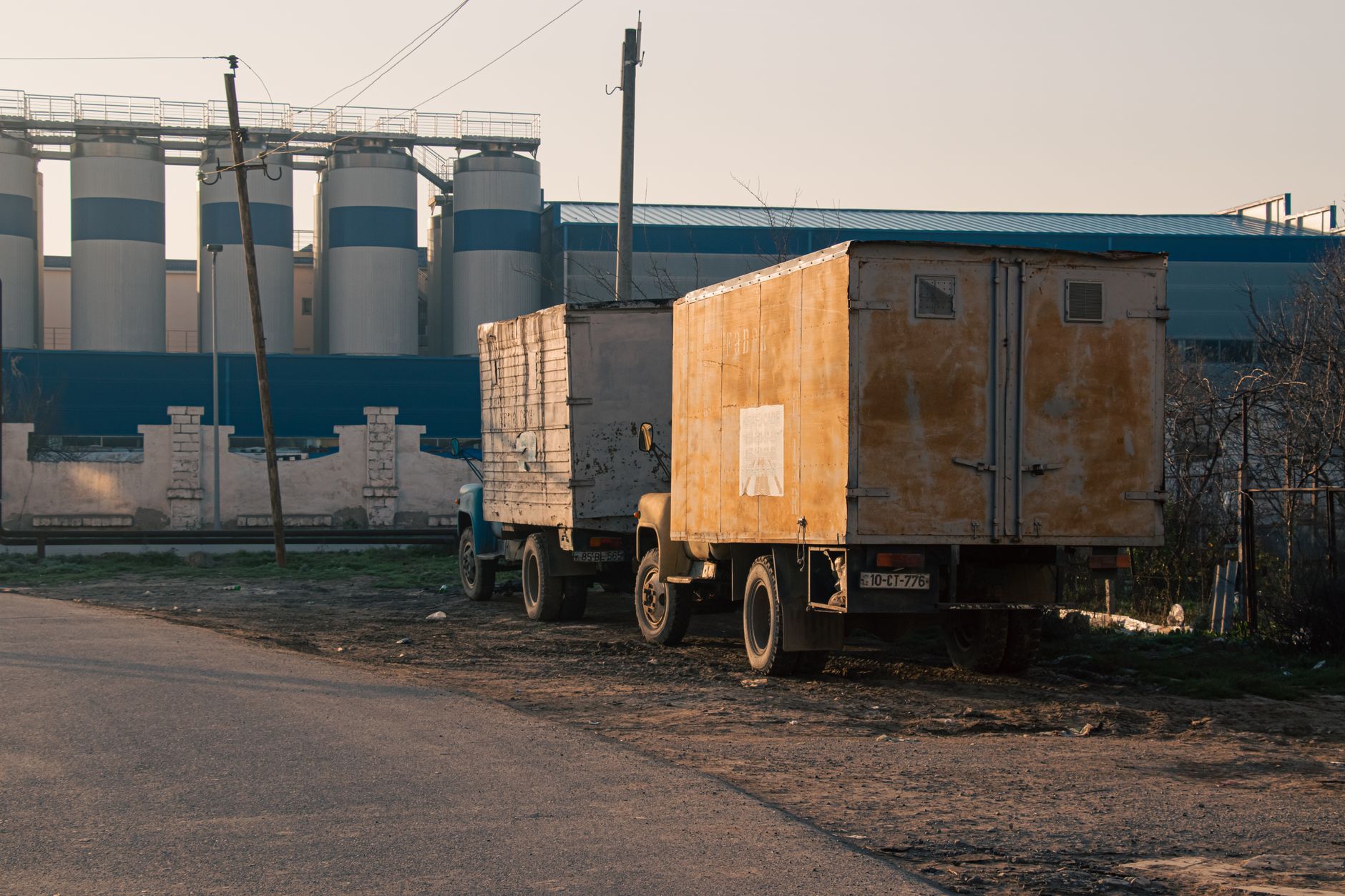
Why institutional capital is treating empty dirt as the physical API of the modern supply chain.
Drive past any major logistics corridor in the American Sunbelt—the I-85 in Georgia, the I-10 corridor in Texas, or the Inland Empire’s sprawling edges—and you will see the most coveted asset class in commercial real estate. It does not have glass facades. It does not feature polished concrete floors or climate-controlled racking systems. It is, quite literally, a patch of crushed gravel surrounded by a chain-link fence.
For decades, Industrial Outdoor Storage (IOS) was the junk drawer of the commercial property market. These lots were used by regional trucking outfits to park idle rigs, by construction firms to dump scaffolding, or by municipalities to store impounded vehicles. Institutional capital ignored them entirely. Private equity firms wanted Class A warehouses with thirty-foot clear heights and credit-tenant leases, not dusty acreage leased month-to-month by local pallet recyclers.
That calculus has violently inverted. Over the past thirty-six months, billions of dollars from the world’s largest asset managers have flooded into the IOS space. Wall Street is currently buying up dirt lots with the same aggressive underwriting they applied to data centers and life-sciences buildings a decade ago.
This capital migration is not a fluke of interest rate adjustments or a temporary hedge against warehouse oversupply. It represents a fundamental rewiring of the North American supply chain. As the freight industry transitions toward autonomous middle-mile trucking and fleet electrification, the physical bottleneck has shifted. The logistics network no longer lacks indoor storage capacity; it lacks unbuilt, secure outdoor staging environments. Empty dirt is becoming the physical API of the modern supply chain—the crucial transition node where different protocols of transit connect.
To understand why a fenced gravel lot now commands premium institutional valuations, one must examine the mechanics of autonomous freight. The widespread deployment of Level 4 autonomous trucks has permanently altered the geometry of logistics. These robot-driven rigs operate flawlessly on the interstate highway system, cruising efficiently from state to state without mandatory rest breaks. But they struggle with the chaotic, unpredictable environments of local city streets and congested warehouse districts.
The industry’s solution is the "drop-and-hook" model. Autonomous trucks handle the long, monotonous stretches of highway, pulling off at designated transfer points near major interchanges. Here, the autonomous cab detaches from its loaded trailer. A human driver in a conventional cab immediately connects to that same trailer to navigate the complex "last mile" to the final distribution center.
This handoff requires space. Massive amounts of it. A high-volume transfer hub cannot be crammed into the loading bays of an existing warehouse. It demands vast, flat, durable acreage where hundreds of fifty-three-foot trailers can be temporarily cached, swapped, and staged 24 hours a day. The logistics industry has effectively decoupled the act of transport from the act of warehousing, creating a distinct spatial requirement strictly for the staging of rolling stock.
Simultaneously, the electrification of commercial fleets is radically increasing the utility of empty industrial land. Transitioning heavy-duty drayage trucks and regional delivery fleets to battery power introduces severe operational constraints. Megawatt-scale charging infrastructure requires immense physical footprints and lengthy dwell times. Fleet operators are realizing that installing this infrastructure at their primary warehouses is highly inefficient, eating into valuable dock space and complicating terminal traffic flow.
Instead, charging operations are being pushed outward to dedicated IOS facilities. These formerly vacant lots are being trenched and wired, transforming into high-capacity fleet depots. A parcel of land that previously generated marginal rent as a parking lot for surplus shipping containers is now a mission-critical utility node, generating reliable, long-term yield from national logistics operators who cannot run their electric fleets without it.
The financial profile of an IOS asset is uniquely attractive in a high-cost environment. Traditional industrial development is notoriously capital intensive. Building a modern logistics facility involves millions of dollars in steel, concrete, roofing, and mechanical systems. It requires navigating complex permitting processes, managing supply chain delays for construction materials, and funding continuous maintenance capital expenditures (CapEx) over the life of the building.
IOS strips the physical asset down to its absolute bare minimum. The capital expenditure required to bring a site to market involves grading the land, laying down a few feet of compacted crushed stone or recycled asphalt, installing high-lumen security lighting, and erecting a heavy-duty perimeter fence. There are no roofs to leak, no HVAC systems to fail, and no fire suppression sprinklers to freeze.
Because the maintenance costs are effectively zero, the net operating income drops straight to the bottom line. Landlords are capturing warehouse-level rental rates on properties that require a fraction of the development capital. Furthermore, logistics companies are willing to sign triple-net leases on these lots, absorbing property taxes and insurance costs, simply to guarantee they have the staging capacity required to keep their networks fluid.
Yet the true moat surrounding the IOS asset class is regulatory. Municipalities universally despise outdoor storage. To a local planning board, a gravel lot full of truck trailers is an industrial eyesore. It generates minimal property tax revenue compared to a massive, automated fulfillment center, and it produces zero local jobs. Consequently, nearly every growing municipality in the United States has tightened its zoning codes to explicitly forbid the development of new industrial outdoor storage facilities.
This regulatory hostility has inadvertently minted a gold mine for incumbent owners. By choking off new supply, local governments have created artificial scarcity in a market experiencing exponential demand. Existing IOS sites are legally grandfathered in as non-conforming uses. You cannot build a new one, which means the ones that already exist operate as local monopolies. When a national freight carrier needs a drop-lot near a specific highway junction, they cannot simply buy adjacent farmland and pave it. They must bid for the limited inventory of legally permitted sites, driving rents to unprecedented highs.
Critics of this investment thesis argue that the current yield premium is a temporary dislocation. They suggest that as autonomous vehicle technology improves, the need for intermediary drop-lots will evaporate. The theoretical endgame of autonomous freight is "dock-to-dock" automation, where the robot truck navigates directly from the factory door to the final urban warehouse, eliminating the human handoff entirely. Under this scenario, the staging lots become redundant.
This perspective fundamentally misunderstands the physical constraints of urban infrastructure. Even if an autonomous truck possesses the software capability to navigate a dense city street, the physical dimensions of the vehicle remain incompatible with legacy urban grids. Fifty-three-foot trailers cannot physically execute the turning radii required in older industrial parks without swinging into oncoming traffic. The bottleneck is not silicon; it is asphalt. The separation of highway transit from local delivery is a structural requirement of modern freight volume, not a temporary technological crutch.
Furthermore, the environmental push toward zero-emission logistics cements the role of the staging lot. Environmental Protection Agency mandates and state-level regulations—particularly in California—are forcing a rapid timeline for heavy-duty fleet electrification. The grid capacity required to charge hundreds of commercial trucks simultaneously cannot be arbitrarily deployed anywhere. Sites that secure megawatt power connections from local utilities become permanent fixtures in the network architecture. The dirt itself becomes secondary to the electrical capacity trenched beneath it.
The operational reality of modern commerce is that goods are in perpetual motion. The warehouse is no longer a static storage facility; it is a high-velocity sorting machine. To keep that machine running efficiently, the surrounding ecosystem must absorb the friction of the transit network. Traffic delays, port congestions, and vehicle charging times all create variance in delivery schedules.
Industrial outdoor storage acts as the shock absorber for this system. It provides the elastic capacity required to buffer the rigid schedules of automated warehouses against the fluid reality of highway transport. Institutional investors are not buying gravel out of desperation for yield. They are acquiring the physical bandwidth necessary to run the next iteration of the global supply chain. In the architecture of modern logistics, the most valuable space is the space that remains deliberately empty.