The Architecture of Absence: Why the Next Generation of Hotels is Designed to Run Without Staff
Emma Carlisle · Hospitality · 2026-09-03
The hospitality industry has stopped trying to hire its way out of the labor crisis. Instead, developers are engineering physical buildings that treat human employees as a structural flaw.
On a Tuesday afternoon in suburban Nashville, a newly constructed 150-room midscale hotel is operating at 85 percent occupancy. Guests are checking in, dropping their bags, using the fitness center, and grabbing coffees from the lobby lounge. The building is generating roughly $22,000 in daily room revenue.
There are exactly three employees on the premises.
A decade ago, running a property of this size required a carefully choreographed dance of front desk clerks, concierges, bellhops, housekeeping teams, maintenance staff, and food service workers. Today, the owner of this Nashville property has stripped that headcount down to a general manager, a roving security and compliance officer, and a single on-site housekeeping coordinator.
This extreme operational leanness is not the result of a temporary staffing shortage. It is the deliberate output of a new paradigm in commercial real estate development. The hospitality industry has quietly abandoned the idea that it can hire its way out of structural labor deficits. Instead, developers have turned to architecture. They are engineering physical buildings that treat human employees as a structural flaw, designing out the need for staff before the foundation is even poured.
The shift represents a fundamental rewriting of hospitality economics. For decades, hotel profitability was driven by Revenue Per Available Room (RevPAR). The goal was to maximize the top line through amenities, service, and brand loyalty, accepting that operational expenses—chiefly labor—would consume a massive, rigid percentage of that revenue.
That equation broke permanently during the wage inflation cycle of the early 2020s. Hospitality wages surged, but the real crisis was availability. Operators found themselves capping occupancy simply because they could not staff the physical footprint of their buildings. Rooms sat empty because there was no one to clean them; restaurants remained dark because the kitchen lacked cooks.
The industry’s initial response was digital. Brands rolled out mobile keys, app-based check-in, and automated messaging platforms. Yet software can only optimize the edges of a physical business. An app cannot strip a bed, plunge a toilet, or restock a linen closet. The core labor load of a hotel is bound to its physical geography.
Realizing that software had hit its limits, major hotel developers and real estate investment trusts (REITs) began attacking the floor plan.
The resulting design philosophy, colloquially known among developers as "zero-labor architecture," fundamentally changes how a hotel is built. Every square foot is evaluated by its labor-load coefficient—the amount of human time required to clean, maintain, and operate it.
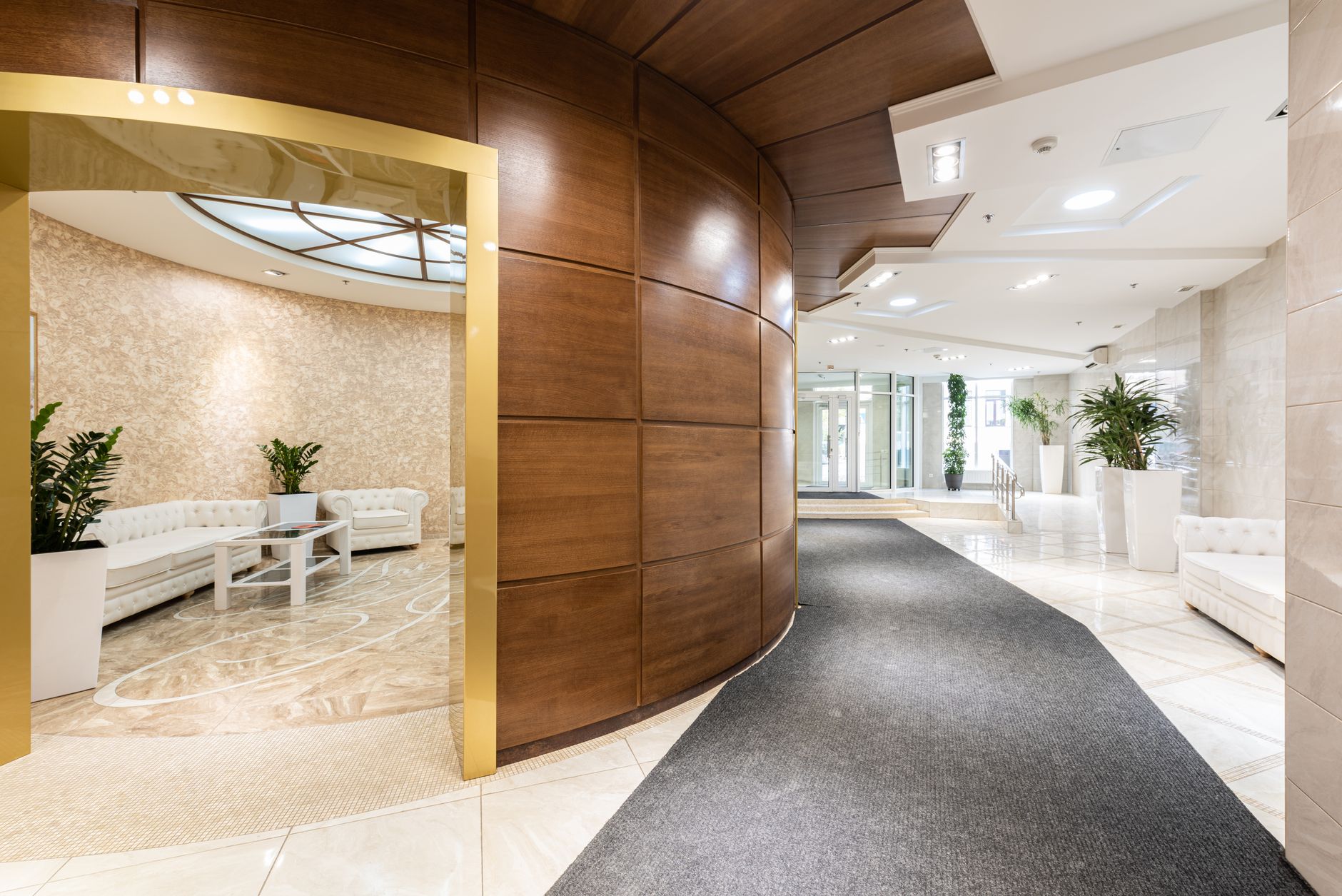
Consider the traditional hotel lobby. Historically designed as a sprawling, multi-use living room, it required constant human intervention. Furniture had to be straightened, carpets vacuumed, trash cans emptied, and surfaces wiped. The 2026 iteration of the mid-market lobby is aggressively minimalist. Seating is built into the architecture itself, eliminating the need to reset chairs. Flooring materials are specified to hide scuffs and allow for automated robotic scrubbers to run nocturnal routes without human supervision.
The front desk, long the command center of hospitality, has been physically erased from new builds. In its place are biometric kiosks and ambient sensor zones that detect a guest’s arrival, authenticate their identity via their mobile device, and assign a room. The removal of the desk eliminates the need for three shifts of standing clerks, but it also alters the psychology of the space. There is no central point for a guest to direct a complaint, effectively routing all customer service interactions through centralized, off-site call centers or AI chatbots.
The most radical architectural interventions are happening out of sight, in the back-of-house corridors.
Housekeeping has always been the heaviest labor expense in hospitality. For decades, the process remained identical: a human pushing a heavy cart down a hallway, returning to a central supply room, and navigating service elevators. New hotels are designed to break this cycle through decentralized vendor stocking.
Architects are installing secure, exterior-facing utility nodes on every floor. Third-party logistics companies—often the same commercial laundries that wash the sheets—deliver clean linens directly to these floor-level nodes via dedicated exterior service lifts during the night. The traditional housekeeping cart has been eliminated. The few remaining room attendants arrive on the floor to find their materials already staged steps away from the rooms they will service.
Room design has similarly been weaponized against maintenance labor. Carpets have been universally replaced by luxury vinyl tile, which does not require shampooing. Complex plumbing fixtures with multiple fail points have been swapped for modular, sensor-equipped units. If a shower valve begins to leak, the internal sensor alerts a regional maintenance contractor—not an on-site engineer—who swaps the entire module in minutes rather than diagnosing the leak. Even the furniture is suspended. Wall-mounted nightstands and floating beds allow robotic vacuums to clear the entire floor space without a human having to move a single piece of wood.
Food and beverage operations, historically a loss leader justified by the need to secure star ratings, have been surgically excised from the mid-tier hotel model. Kitchens require intense labor, complex ventilation, and constant health compliance. New builds are replacing them with hyper-localized delivery lockers integrated directly into the hotel’s architecture. Guests order from a curated list of neighborhood ghost kitchens; couriers drop the meals into exterior-facing thermal lockers that the guest opens from the inside using their room key. The hotel collects a commission on the meal without employing a single cook, server, or dishwasher.
This architectural ruthlessness is transforming the financial profile of midscale and upscale hotels. By stripping out the labor load, developers are driving gross operating profit margins to unprecedented highs. A traditional full-service hotel might operate at a 30 percent margin in a strong market. The new generation of zero-labor builds is routinely modeling margins above 55 percent.
For institutional investors, these assets behave less like traditional operational businesses and more like triple-net leased real estate or automated self-storage facilities. The cash flow is highly predictable because the variable cost of labor has been largely fixed or entirely eliminated.
The consequences of this shift are creating a severe bifurcation in the travel market.
Hospitality is splitting into two distinct commodities: architectural efficiency and human presence. At the luxury tier, human labor is the primary amenity. Five-star brands are leaning heavily into visible staffing—doormen, sommeliers, dedicated concierges—using human beings as the ultimate marker of exclusivity. If you want a person to hand you a physical key or pour your coffee, you will pay a massive premium for the privilege.
Below that luxury threshold, human interaction is being engineered out of the guest experience entirely. The mid-tier hotel is becoming an autonomous box for sleeping, a physical structure optimized purely for capital efficiency.
Critics point to the sterility of this model. The defining characteristic of a zero-labor hotel is a profound, echoing emptiness. Guests navigate from the street to their beds without exchanging a single word with another human being. The spontaneous interactions that once defined travel—the local recommendation from a bartender, the greeting from a desk clerk—are gone, replaced by the frictionless hum of automated systems.
There are also deep operational risks. A building designed to run on three people becomes incredibly fragile when an anomaly occurs. A localized power failure, a software glitch in the access control system, or a disruptive guest can paralyze a property that lacks the human slack to manage edge cases.
Yet developers are aggressively proceeding, betting that consumers have already been trained by airlines and retail self-checkout to accept automation in exchange for efficiency and price stability.
Real estate pipelines reflect this conviction. Regional banks and private equity firms are heavily favoring financing for properties that can demonstrate low labor-load coefficients. A proposed hotel with a sprawling restaurant, complex landscaping, and heavy staffing requirements faces intense underwriting scrutiny. A modular, highly automated build with decentralized logistics commands favorable lending terms.
The hospitality industry has long sold itself on the promise of the human touch. The reality of the 2026 market is that human labor is simply too expensive, too volatile, and too difficult to manage to serve as the foundation of a mass-market business model. The solution was not to pay more, nor to build better apps. The solution was to pour concrete in a way that makes the worker obsolete.