The Gravity Arbitrage: Why Wall Street is Securitizing the Vertical Void
Claire Whitmore · Business · 2026-09-21
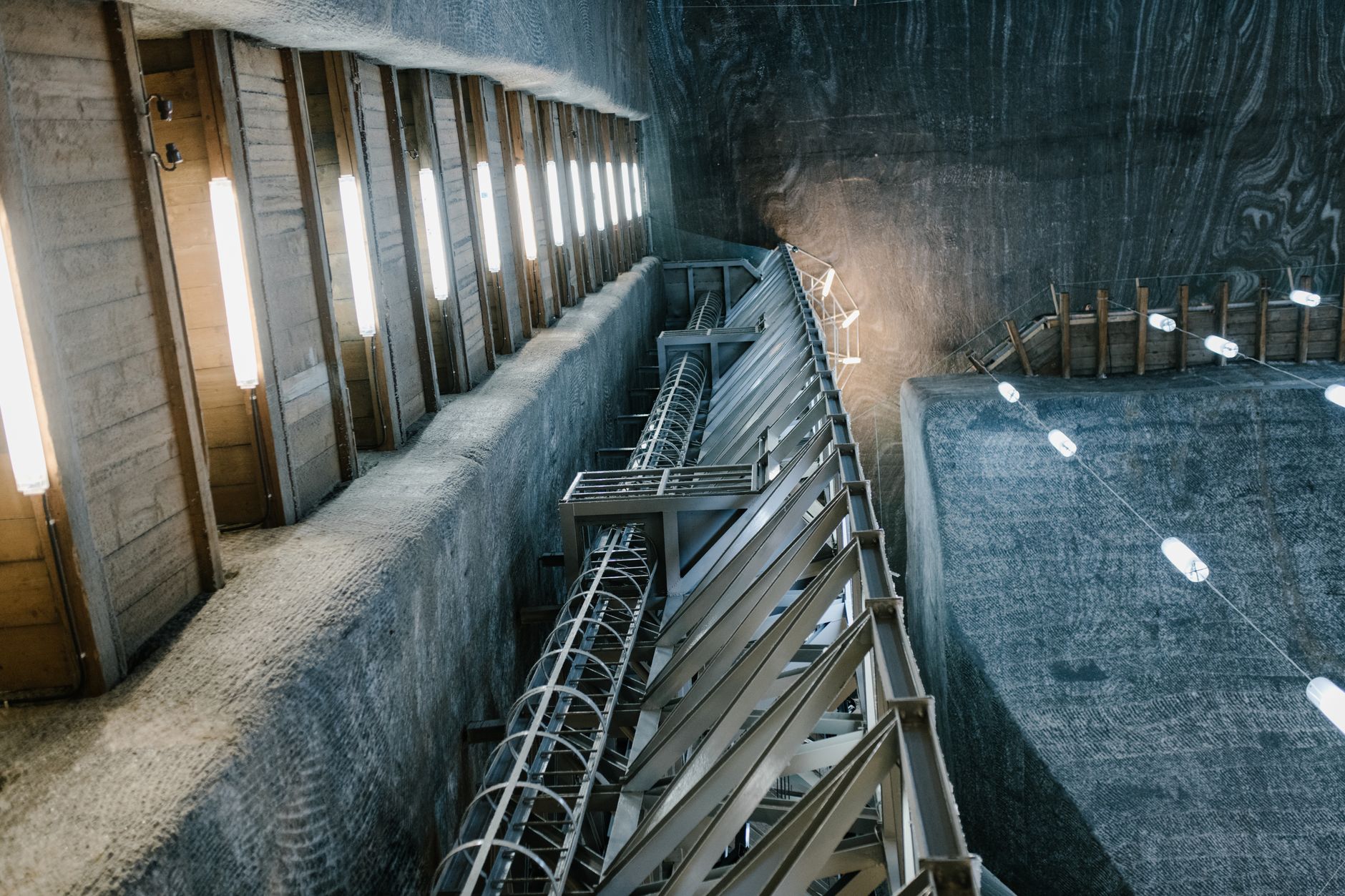
Depleted coal and silver mines are selling for massive premiums. The buyers aren't looking for leftover ore—they are financializing the vertical drop to balance the renewable grid.
In late August, a depleted silver mine in Nevada’s Washoe County changed hands for a sum that left local real estate assessors bewildered. The property had produced nothing of value since 2014. The underground tunnels were largely flooded, the surface infrastructure was rusting, and the environmental liability for groundwater remediation was estimated in the tens of millions. Traditional mining valuation models priced the tract at slightly below zero. Yet a consortium led by a New York-based private equity firm acquired the deed for $42 million in an all-cash transaction.
They were not looking for silver. They were buying the hole.
Across the American West and the Appalachian coal belt, a peculiar land grab is accelerating. Financial institutions are quietly bidding up the price of deep, structurally sound vertical shafts. The target asset is not a mineral, a gas, or a subterranean water right. The asset is empty space, paired with the immutable force of gravity.
As the American electrical grid transitions toward hyper-volatile renewable energy, the market for grid stabilization has exploded. Traditional chemical batteries, like lithium-ion megapacks, dominate the conversation regarding energy storage. But lithium degrades, catches fire, and suffers from supply chain bottlenecks. Enter the gravity battery. The concept is brutally simple: when electricity is cheap and abundant, surplus power is used to winch massive weights—often blocks of compacted waste rock or concrete weighing thousands of tons—up a deep vertical shaft. When power is scarce and prices spike, the weights are released. As they fall, they spin regenerative winches that feed electricity back into the grid.
The physics are elementary. The financial engineering is entirely new. Wall Street has realized that a 3,000-foot vertical drop is a finite, unbuildable resource. You cannot construct a 3,000-foot tower economically, but a century of industrial mining has already dug the equivalent structures underground. By purchasing these exhausted mines, private equity is effectively monopolizing the physical topography required for kinetic energy storage. They are securitizing the void.
The Grid Ancillary Services Market
To understand why a hole in the ground is worth $42 million, one must look at how electricity is priced in 2026. The real revenue in gravity storage does not come from merely saving power for the evening peak. It comes from the highly lucrative, split-second transactions of the grid ancillary services market.
Grid operators must maintain electrical frequency at exactly 60 hertz. If a cloud bank covers a massive solar farm, or a sudden cold snap spikes heating demand, frequency drops. If it drops too far, the grid physically shakes itself apart, triggering rolling blackouts. To prevent this, operators pay astronomical premiums for "frequency response"—assets that can inject or absorb power in milliseconds.
Chemical batteries are excellent at this, but cycling them multiple times a day shreds their operational lifespan. A lithium-ion cell degrades with every charge and discharge. A gravity battery does not. A steel cable and a concrete block do not care if they are moved up and down ten times a day or ten thousand times. There is no chemical degradation.
Financial models obtained from recent infrastructure fund pitches reveal the underlying math. A sufficiently deep mine shaft, outfitted with kinetic weights, can bid into the frequency regulation market continuously for fifty years with minimal operational expenditure. The owners are effectively being paid millions of dollars a month to dangle rocks in the dark. The energy arbitrage—buying cheap solar at noon and selling it back at dusk—is just the baseline revenue. The premium yield is the grid stabilization contract.
Pricing the Vertical Drop
This mechanical reality has birthed an entirely new class of real estate valuation. Real estate investment trusts (REITs) have traditionally valued land based on surface area, zoning, and location. Now, specialized sub-funds are valuing rural tracts based on "available verticality" and "shaft integrity."
A new metric has emerged in these specialized acquisitions: Dollar per Meter-Ton. This calculates the capital cost of acquiring the drop against the mass that the surrounding bedrock can safely support. A shallow, wide strip mine is useless for this application. A narrow, two-mile-deep copper shaft in Arizona is highly prized. The geological stability of the host rock dictates how heavy the suspended blocks can be, which directly dictates the megawatt capacity of the installation.
Consequently, firms are employing structural geologists as highly paid acquisitions analysts. They scour century-old mining records, looking for shafts carved through stable igneous rock rather than friable sandstone. They want deep, vertical, and dry.
This creates a bizarre geographical distortion. Dying rust-belt towns in West Virginia and abandoned ghost towns in Nevada suddenly possess critical infrastructure nodes. A municipality that has spent decades trying to figure out how to fill in a dangerous, abandoned mine shaft is suddenly fielding aggressive offers from Manhattan infrastructure funds wanting to buy the hazard outright.
The Remediation Loophole
The financial brilliance of the gravity arbitrage lies in its ability to flip a toxic liability into a capital asset. For decades, the largest barrier to acquiring old mines was the associated environmental cleanup. The Comprehensive Environmental Response, Compensation, and Liability Act (CERCLA) ensures that if you buy a polluted mine, you often buy the responsibility to clean up the acid mine drainage.
Private equity lawyers have found a structural workaround. By installing gravity batteries, the new owners are not engaging in extraction; they are installing green grid infrastructure. Under recent Department of Energy guidelines designed to spur renewable transition, converting a brownfield site into a grid storage facility qualifies the project for massive federal tax credits and shields the operator from historical remediation liabilities, provided they do not disturb the toxic tailings.
The heavy weights used in the gravity battery are frequently cast using the mine's own leftover waste rock, bound with geopolymer cement. The operators are literally cleaning up the surface hazards by casting them into giant blocks and suspending them down the shaft. This allows the financial sponsors to claim ESG (Environmental, Social, and Governance) credentials, unlocking access to massive pools of institutional green capital. They get paid by the grid to provide stability, they get subsidized by the government for renewable infrastructure, and they satisfy pension funds looking for sustainable investments. It is a triple-layered financial coupon built out of an industrial wasteland.
The Bottlenecks of Gravity
Despite the aggressive capital deployment, the gravity arbitrage faces severe physical and regulatory constraints. Physics demands perfection when thousands of tons are suspended over a deep abyss.
The primary vulnerability is cable fatigue. Steel wire ropes, no matter how thick, suffer from micro-fractures under constant cyclic loading. In traditional mining, elevator cables are replaced on a strict schedule based on usage. In a gravity battery, where the weights are yo-yoing up and down continuously to chase millisecond frequency fluctuations, the wear is unprecedented. Several early pilot projects in Europe experienced catastrophic cable snaps, sending massive concrete payloads plunging thousands of feet to the bottom of the shafts, causing localized seismic events and entirely destroying the regenerative winches upon impact. To mitigate this, developers are experimenting with carbon nanotube weaves and synthetic tension members, driving up upfront capital costs.
Furthermore, the underground environment is inherently hostile. Geothermal heat, highly corrosive groundwater, and shifting tectonic stresses mean that a perfectly vertical shaft in 2026 might develop a slight curve by 2030. If a 500-ton block scrapes the side of the shaft during a drop, the friction instantly destroys the energy return profile and risks a jam. Maintaining perfectly plumb guide rails in a shifting geological matrix requires constant, expensive robotic surveying.
Then there is the regulatory horizon. The Federal Energy Regulatory Commission (FERC) currently classifies these installations as "energy storage resources," allowing them to bid into wholesale markets alongside lithium-ion and pumped hydro. However, traditional utilities are pushing back. They argue that because gravity systems rely entirely on grid power to winch the weights up, they are a net-negative energy asset masquerading as a generator. If regulatory bodies decide to reclassify kinetic systems, capping their participation in the high-yield frequency regulation markets, the entire financial model collapses. The $42 million hole in the ground reverts to being just a hole.
The Ultimate Financialization
The rush to securitize empty underground space represents a fundamental shift in how markets assign value to geography. The earth is no longer just a source of raw materials to be extracted, burned, or smelted. In the era of the hyper-volatile electrical grid, the physical geometry of the planet is becoming a financial instrument.
Infrastructure funds are assembling portfolios of nothingness. They are calculating the exact yield of a 2,000-foot drop in Appalachia versus a 3,000-foot drop in the Sierra Nevadas. They are trading the mathematical certainty of gravity against the unpredictable fluctuations of wind and solar power.
For the communities sitting atop these depleted mines, the boom brings a strange flavor of economic revival. There are no thousands of miners descending in cages, no trains hauling ore, no smelters belching smoke. There is only a quiet, automated winch house sitting over a deep shaft, autonomously spooling cable up and down in response to algorithmic price signals from a grid operator hundreds of miles away.
Wall Street has found a way to charge rent on the fundamental laws of physics. As long as the wind occasionally stops blowing, and the sun continues to set, there will be a premium on dropping heavy things in the dark. The dirt has already been dug; the void is waiting.