The Kinetic Land Grab: Why Wall Street is Bidding Up Abandoned Mine Shafts
Nathan Caldwell · Engineering · 2026-10-15
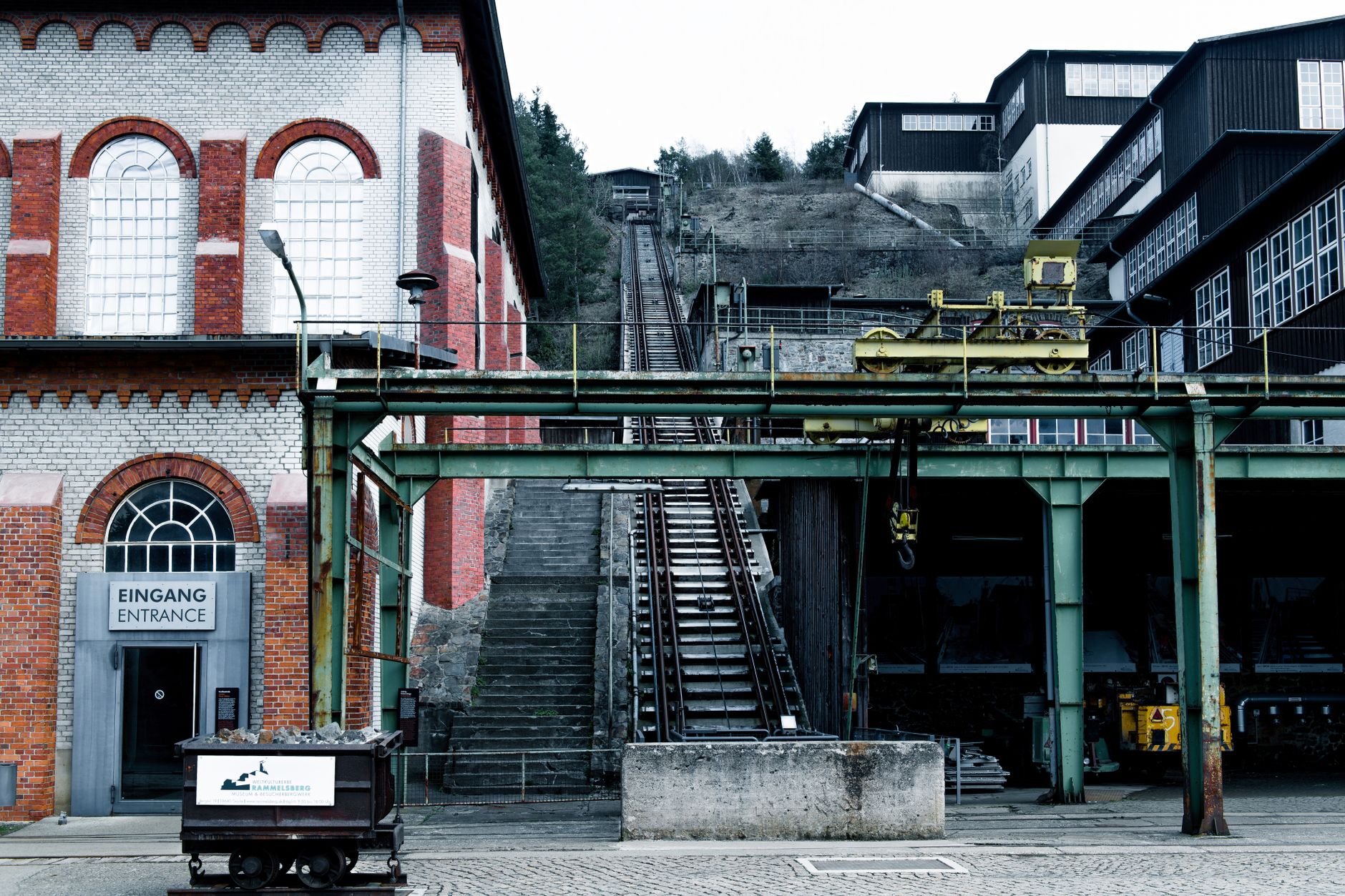
Energy storage isn't about lithium anymore; it's about sheer vertical drops. Abandoned, toxic mining shafts are suddenly becoming the most prized utility assets in America.
In the rolling hills of West Virginia, a defunct coal mine that ceased operations during the Reagan administration recently changed hands for a sum that would have seemed typographical error a decade ago. For thirty years, the property was a ledger liability. It required constant environmental monitoring, held the lingering threat of acid mine drainage, and offered absolutely zero productive yield. Last month, a consortium of infrastructure funds and grid operators acquired the site, and the surrounding surface rights, for a premium typically reserved for prime commercial real estate.
The buyers have no intention of extracting a single ounce of coal. They are purchasing the property entirely for the empty space left behind. Specifically, they are buying a two-thousand-foot vertical void.
As the American power grid absorbs increasing capacities of intermittent renewable energy, the math of electricity storage is hitting a physical wall. Chemical batteries, primarily lithium-ion, excel at responding to split-second frequency variations and covering short, localized demand spikes. They are hopelessly uneconomical for storing massive amounts of power for days or weeks. Storing gigawatt-hours of electricity in chemical form requires sprawling acres of flammable, degrading cells dependent on constrained global supply chains.
The engineering alternative taking hold across the utility sector abandons chemistry entirely in favor of high school physics. Gravity energy storage involves using surplus electricity—generated during sunny, breezy afternoons—to winch immense weights up a vertical shaft. When the sun sets and wind dies, the weights are released. As they slowly descend, they spin generators, feeding electricity back into the grid.
The concept is flawless in its simplicity. The mechanical efficiency often exceeds eighty percent. The raw materials—concrete, steel cable, and electric motors—are abundant and immune to geopolitical chokepoints. The mechanism does not degrade over thousands of cycles.
There is exactly one fundamental problem with gravity storage. Digging a straight, stable, thousand-foot hole in the earth costs an exorbitant amount of money. The capital expenditure required to sink a new shaft strictly for energy storage destroys the economic viability of the project before the first cubic yard of rock is moved.
This geotechnical reality has spawned a bizarre real estate arbitrage. Engineers and financiers have realized that the American industrial past left behind hundreds of thousands of pre-dug, exceptionally deep holes. Abandoned mines, long considered the toxic scars of the fossil fuel era, are suddenly the most prized utility assets in the nation. The physical void has become a commodity.
To understand the engineering challenge, one must look at what happens to a mine when the pumps are turned off. An active underground mine is a carefully managed equilibrium. Colossal volumes of water are constantly pumped to the surface. Ventilation fans fight the buildup of hazardous gases. Rock bolts and steel arches hold back the immense lithostatic pressure of the earth above.
When a mine is abandoned, nature reclaims the space. Groundwater floods the lower levels. The rock, exposed to alternating cycles of moisture and oxygen, begins to weather and spall. Support structures corrode. What was once a precise feat of excavation degrades into a highly unstable, unpredictable cavern.
Transforming this decaying liability into a high-precision kinetic battery is arguably one of the most complex geotechnical engineering tasks currently being undertaken in the energy sector. The margin of error is virtually nonexistent. A gravity battery operates by suspending composite weights—often exceeding five hundred tons—on heavy-duty cables. These weights must clear the sides of the shaft by mere inches as they descend. Even a minor rockfall or shaft deformation could jam the mechanism, resulting in catastrophic failure of the entire system.
The first phase of this subterranean retrofitting relies heavily on advanced spatial mapping. Engineering teams deploy autonomous drones equipped with high-resolution LiDAR and sonar arrays into flooded, hazardous shafts. These systems map the void down to the millimeter, creating a perfect digital twin of the decaying mine. This initial scan determines if the shaft geometry remains plumb enough to accommodate the suspended weights.
If the geometry is viable, the stabilization process begins. This is not a matter of simply pouring concrete down a hole. Geotechnical engineers must essentially rebuild the shaft from the inside out while dealing with the realities of a compromised geologic structure.
Water management is the immediate hurdle. Dewatering a century-old mine is a delicate operation. Removing the water too quickly can cause rapid changes in hydrostatic pressure, leading to sudden, massive collapses of the shaft walls. The drawdown must be slow, monitored by an array of piezometers and stress sensors embedded in the surrounding rock.
Once the shaft is dry, the physical reinforcement starts. Engineers utilize robotic sprayers to apply specialized, fiber-reinforced shotcrete to the rock walls. This concrete must be engineered to cure in highly humid, thermally variable environments, and it must resist the highly acidic conditions common in old coal and copper mines. Thousands of deep-seated rock bolts are drilled into the surrounding strata, actively binding the fractured rock layers together and preventing future spalling.
The installation of the mechanical components requires tolerances rarely seen in heavy mining. The guide rails that keep the descending weights perfectly aligned must be installed with laser-guided precision over distances exceeding a quarter-mile. The winching systems at the surface, anchored into massive concrete foundations, must handle the dynamic loads of thousands of tons of steel cable and concrete weights stopping and starting in seconds to match grid demand.
The economic implications of this engineering shift are profound. Entire regions of the Rust Belt and Appalachia, heavily burdened by the environmental legacy of extraction, are sitting on a massive, unrecognized energy infrastructure. Local municipalities that previously viewed these sites as permanent blights are now fielding inquiries from multinational infrastructure funds.
Private equity firms are executing a fascinating maneuver. They are acquiring properties with known environmental liabilities—specifically, the responsibility for managing acid mine drainage and soil contamination. Traditionally, developers flee from these sites. But the math of the energy transition changes the calculus. By assuming the liability and funding the required environmental remediation, these firms secure the underlying asset: the vertical void. The cost of cleaning the surface and capping the old tailings is negligible compared to the billions it would cost to dig a new, equivalent shaft for a gravity battery.
This dynamic is forcing state environmental agencies to rewrite their rulebooks. Regulations designed to manage the permanent closure and sealing of abandoned mines are suddenly applicable to massive, active utility installations. Regulators are grappling with how to permit a facility that is technically an active power plant located inside a legally defined hazardous waste site.
Furthermore, the materials science of the weights themselves is evolving. Early prototypes utilized solid blocks of steel or conventional concrete. Now, engineers are designing high-density composite weights using the very industrial waste that plagues these regions. Coal ash, mine tailings, and contaminated soils are being encapsulated in polymer matrices to create exceptionally dense, stable masses. The environmental liability of the site is literally being cast into the engine of the green energy facility.
There is, naturally, a degree of skepticism regarding the long-term durability of these systems. Critics point out that subterranean environments are inherently hostile to precision machinery. The constant presence of moisture, the microscopic shifting of the earth’s crust, and the inevitable fatigue on miles of steel cable operating in damp conditions present severe maintenance challenges. Friction losses along the guide rails, if not perfectly managed, could degrade the round-trip efficiency of the battery over time, eating into the tight profit margins of wholesale electricity markets.
Chemical battery advocates argue that the rapidly falling cost of sodium-ion and iron-air chemistries will eventually render massive mechanical projects obsolete. They suggest that building sprawling, solid-state facilities on flat ground will always be more reliable than dangling thousands of tons of concrete inside an old hole in the ground.
Yet, the scale of the grid's storage deficit makes these kinetic projects increasingly attractive. A single deep shaft can hold the equivalent potential energy of thousands of shipping containers filled with lithium-ion cells. It requires no rare earth metals, poses zero fire risk, and can operate for fifty years with standard mechanical maintenance.
The engineers stabilizing these decaying mines are engaged in a profound act of industrial recycling. They are proving that the most valuable component of a mine is no longer what you can pull out of it, but what you can drop into it. The transition to a renewable energy grid, it turns out, relies entirely on the structural corpses left behind by the fossil fuel era. By turning empty space into the heaviest batteries on earth, the energy sector is proving that the most lucrative resource in the ground might just be gravity itself.