The Senior Year Spin-Off: Why Industry is Privatizing High School
Emma Carlisle · Education · 2026-09-14
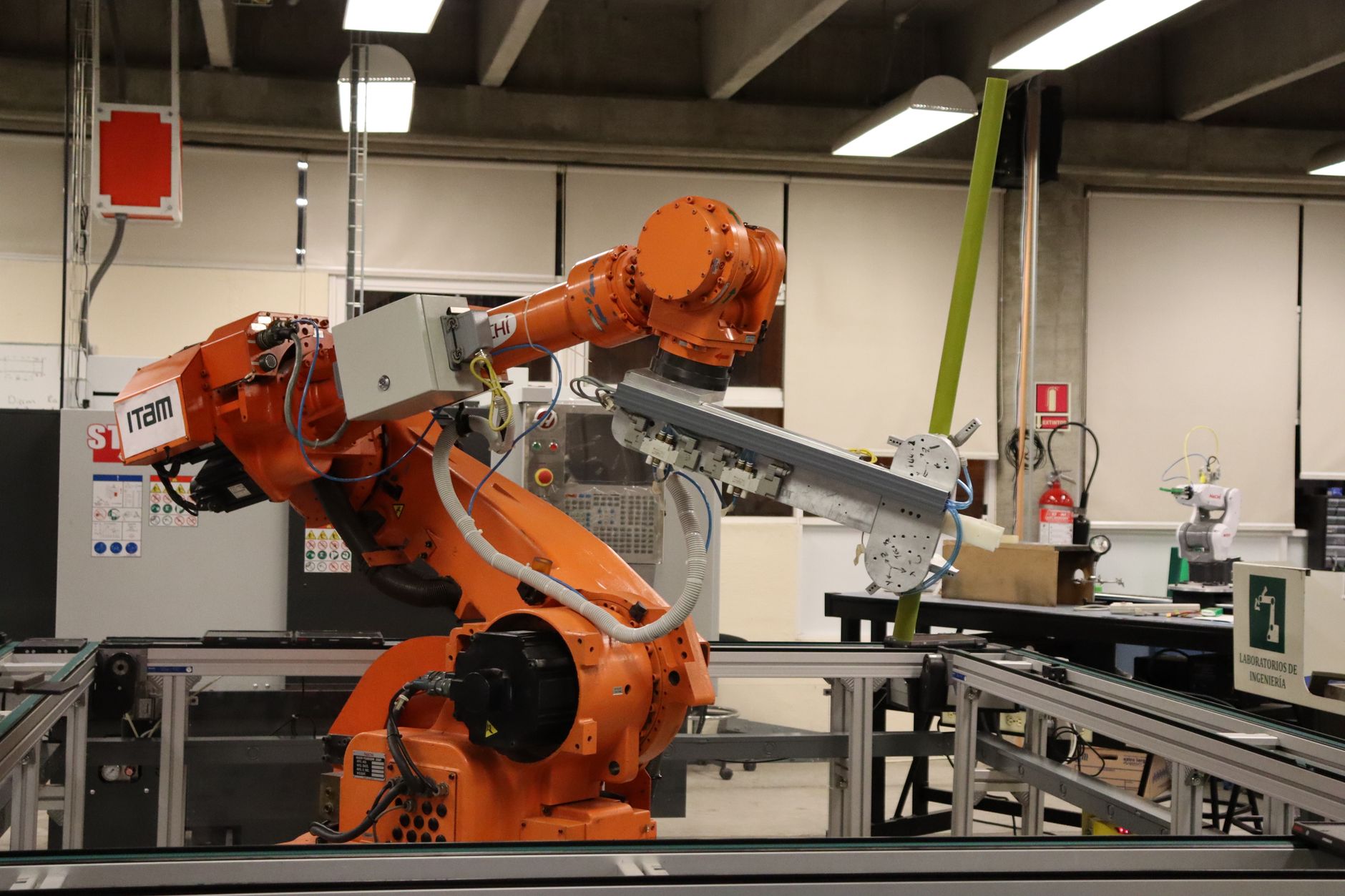
Desperate for technical talent, Fortune 500 companies are bypassing the university system by embedding proprietary training facilities directly into public high schools.
The senior wing of Thomas Jefferson High School in suburban Ohio looks distinctly different from the rest of the building. The cinderblock walls give way to glass partitions. The standard-issue desks are replaced by collaborative workstations and industrial robotics bays. The teachers wear badges bearing the logos of regional advanced manufacturing firms. The students in this wing do not take Advanced Placement exams, and they are not filling out the Common Application. When they graduate, they will bypass the university system entirely and step directly into salaried engineering technician roles, holding proprietary credentials issued directly by their future employers.
This is the corporate micro-campus. It represents a quiet but profound structural shift in how American industry sources its workforce. Desperate to circumvent a higher education system that reliably produces heavily indebted graduates with mismatched skills, Fortune 500 companies are moving upstream. They are embedding proprietary training facilities directly into the public K-12 infrastructure, effectively privatizing the final year of high school to establish closed-loop labor pipelines.
For decades, the standard corporate recruitment strategy relied on universities to act as sorting mechanisms. Employers outsourced the cost of training and vetting to the higher education sector, demanding bachelor’s degrees as a proxy for baseline competence and reliability. Students bore the financial risk of this arrangement through tuition debt, betting that the eventual corporate salary would justify the initial capital outlay.
That social contract has collapsed under the weight of its own economic inefficiency. The premium on a generic college degree has flattened, while the cost of obtaining one has continued its relentless upward trajectory. At the same time, industries reliant on specific technical proficiencies—advanced manufacturing, semiconductor fabrication, green energy deployment, and supply chain logistics—report chronic labor shortages. The skills required for these roles are highly specialized and rapidly changing, rendering the standard four-year university curriculum obsolete before a student even reaches their senior year.
The response from the private sector is a surgical bypass of the university monopoly on credentialing.
By establishing micro-campuses within public high schools, corporations achieve multiple strategic objectives simultaneously. First, they capture talent before the individual accrues six-figure student debt, which historically forces graduates to demand inflated entry-level salaries just to service their loans. A high school graduate entering a specialized corporate track at eighteen can accept a lower starting salary than a 22-year-old college graduate, yet still enjoy a higher standard of living and greater net worth by age 25 due to the absence of debt and four additional years of earning.
Second, the embedded model allows companies to dictate the curriculum with absolute precision. Instead of hoping a local community college updates its mechatronics syllabus, a firm like Siemens or Intel can install its own proprietary machinery in the high school wing. The students train on the exact equipment they will operate on the factory floor. The corporate instructors, often retired engineers or active technical leads, assess the students continuously over a nine-month period. This prolonged evaluation process virtually eliminates the hiring risk associated with a standard interview process.
The financial mechanics of these partnerships are highly attractive to underfunded school districts. The corporation typically funds the capital expenditure for the micro-campus, provides the equipment, and supplements the salaries of the technical instructors. In exchange, the district grants the company access to its student body and allows the corporate curriculum to count toward state graduation requirements. For local school boards facing perpetual budget shortfalls and pressure to demonstrate tangible post-graduation outcomes, the corporate micro-campus offers a localized economic stimulus that requires zero municipal tax increases.
However, this integration creates a new, highly visible tiering within the public education system. Students are increasingly forced to make a definitive career choice at age sixteen. Those who opt into the corporate track abandon the traditional path of broad intellectual exploration in favor of hyper-specialized vocational training. They trade optionality for security. The corporation guarantees employment upon successful completion of the senior year curriculum, but the skills acquired are frequently proprietary. A technician trained on a specific manufacturer's closed-ecosystem robotics platform may find it difficult to transfer those skills to a competitor without significant retraining.
This dynamic introduces a modern iteration of the company town, updated for the knowledge economy. When a single regional employer controls both the educational pathway and the primary source of employment, the balance of power shifts decisively away from the worker. Critics argue that these micro-campuses risk narrowing a student's horizon, turning public high schools into publicly subsidized HR departments for private enterprise. If a student completes the corporate track but decides at age twenty that they wish to pursue a different field, they lack the foundational college credits required to pivot efficiently.
Yet, the demand for these programs from students and parents is overwhelming. In districts where micro-campuses operate, applications for the corporate track consistently exceed capacity. The appeal is deeply pragmatic. Working-class and middle-class families recognize the diminishing returns of taking on massive debt for a mid-tier university degree. A guaranteed path to a stable, middle-class income, free of debt, is a highly rational economic choice.
The expansion of this model poses an existential threat to non-elite colleges and universities. Elite institutions—the Ivy League and heavily endowed private universities—will remain insulated, as their primary product is network access and elite social signaling rather than pure technical skill. But the vast middle tier of regional public universities and private liberal arts colleges relies heavily on students seeking a practical return on their tuition investment. As corporations demonstrate that they are willing to hire and train eighteen-year-olds directly out of high school, the core value proposition of the mid-tier university disintegrates.
We are witnessing the fragmentation of the American high school diploma. It is no longer a universal credential signifying a standard baseline of general knowledge. Instead, it is becoming a platform upon which private entities build specialized labor pipelines.
For corporate leaders and human resources executives, the implications are clear. The war for technical talent will not be won at university career fairs. The competitive advantage belongs to the firms willing to invest capital upstream, integrating themselves into the K-12 system to build bespoke workforce generators. Companies that continue to rely on the traditional higher education system to supply their technical workforce will find themselves competing for a shrinking pool of indebted graduates, while their more aggressive competitors harvest debt-free talent years earlier.
The privatization of the senior year is a rational market correction to an inefficient education system. It delivers debt-free employment to students and perfectly matched skills to employers. The long-term societal cost of replacing broad education with narrow, proprietary training remains to be seen. But in the immediate economic reality, the micro-campus is rewriting the rules of human capital accumulation. The factory floor has moved into the homeroom, and the university has been cut out of the deal entirely.