The Atmospheric Toll Road: Why Suburban America Is Suing Delivery Drones for Trespassing
Rick Tannenberg · Law · 2026-10-12
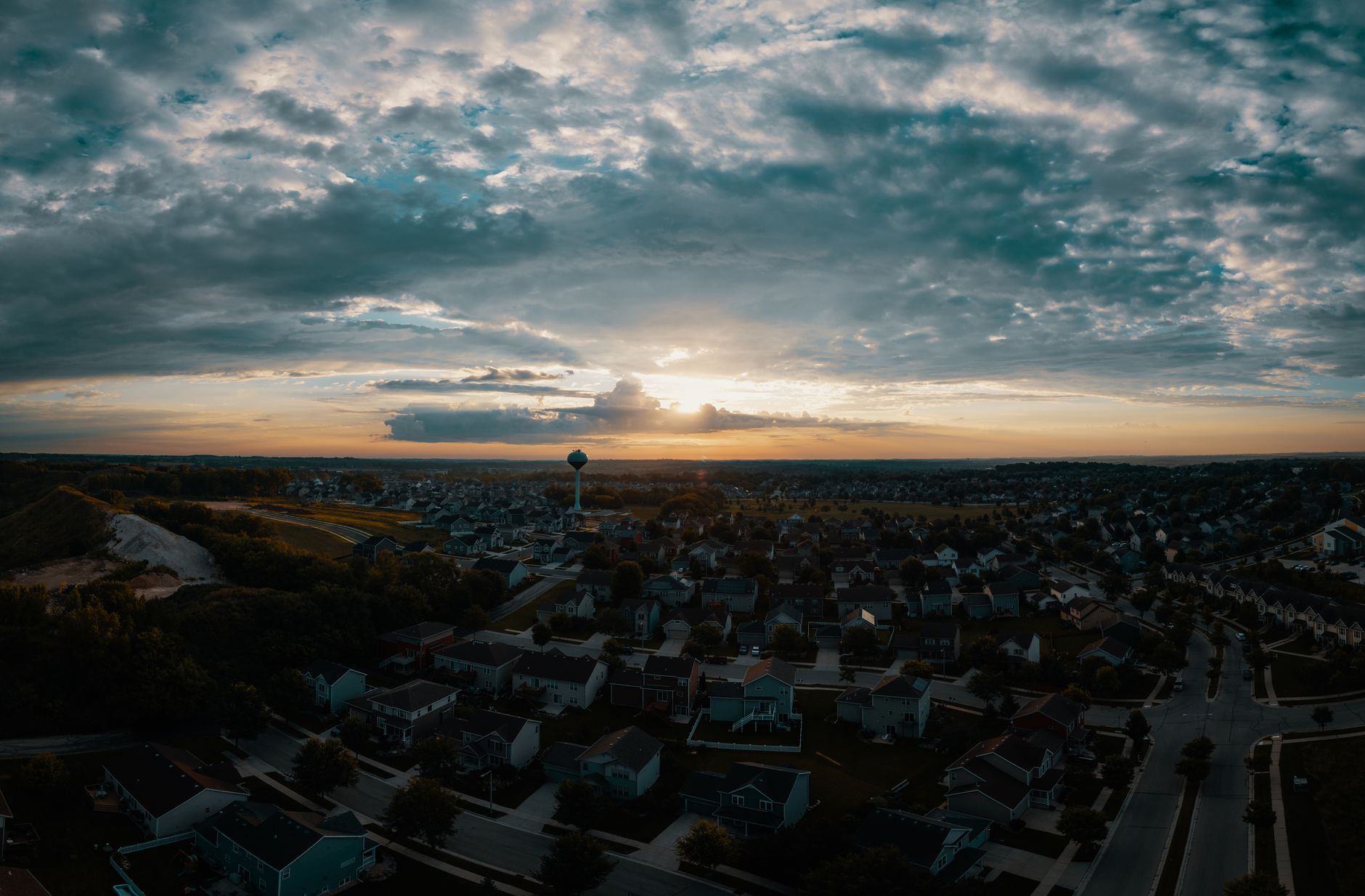
Corporate America envisioned a friction-free sky for drone logistics. Instead, a wave of novel legal claims is turning low-altitude airspace into the next great real estate frontier.
The American sky is quietly being chopped into invisible, monetizable parcels. For the better part of a decade, logistics giants poured billions into the promise of low-altitude drone delivery, envisioning a friction-free logistical utopia where consumer goods bypassed congested roads entirely. Regulators largely obliged, carving out operational frameworks for commercial flights below 400 feet. But corporate planners made a fatal miscalculation. They assumed the space immediately above suburban rooftops was empty, public, and free for the taking.
They were wrong. A formidable legal movement is sweeping through state and federal courts, driven not by anti-technology zealots, but by savvy property owners and aggressive plaintiffs’ attorneys. Armed with an eighty-year-old Supreme Court precedent, they are suing drone operators for trespassing.
These plaintiffs are not trying to ground the fleets. They are attempting to establish a toll system. By asserting private ownership over the immediate reaches of the atmosphere, suburban homeowners and real estate trusts are transforming low-altitude airspace into the newest, and potentially most lucrative, asset class in American property law.
The legal foundation for this insurgency rests on United States v. Causby, a 1946 Supreme Court decision involving a North Carolina chicken farmer. Military aircraft were flying so low over Thomas Causby’s property that the noise was frightening his chickens to death. The Court ruled in his favor, rejecting the ancient common law doctrine that property extended infinitely upward to the heavens, but crucially establishing that a landowner "owns at least as much of the space above the ground as he can occupy or use in connection with the land." The Court declared that flights over private land constitute a taking if they are so low and frequent as to be a direct and immediate interference with the enjoyment and use of the land.
For decades, the Causby standard sat dormant, a quirk of aviation law rarely invoked because commercial airliners fly miles above the ground. The advent of the delivery drone fundamentally altered the physical reality of aviation. Today, commercial drones routinely operate at 200 feet, dipping even lower to execute deliveries.
Lawyers representing homeowner associations across the Sun Belt and the Midwest are seizing upon this exact altitude. If a drone repeatedly traverses the airspace 150 feet above a backyard, does it constitute a trespass? Does it interfere with the enjoyment of the land? More importantly, who actually possesses that specific slice of air?
The logistics industry insists the answer is the federal government. Companies argue that the Federal Aviation Administration has exclusive sovereignty over the navigable airspace of the United States. If the FAA grants a carrier permission to operate in a low-altitude corridor, corporate counsel argues, state-level trespass claims are preempted. They warn that allowing individual property owners to dictate airspace access would create an unnavigable patchwork of regulations, effectively killing the commercial drone industry before it reaches maturity.
This defense relies on a broad interpretation of federal preemption, asserting that the sky must remain a unified public thoroughfare. But property rights advocates counter that the FAA’s regulatory authority over safety does not extinguish underlying property rights. The FAA dictates how and where aircraft can fly safely, but it does not grant operators immunity from civil liability for trespassing on private property, just as state highway regulations do not give delivery trucks the right to drive across your front lawn.
What makes this legal battle entirely distinct from historical environmental or nuisance litigation is the financial motive. The goal is not injunction; the goal is monetization.
Enterprising legal consortiums are currently aggregating these micro-air rights. By bundling thousands of suburban properties into localized airspace trusts, they are creating contiguous private corridors. The pitch to homeowners is straightforward: sign over the enforcement rights to the airspace above your house, and receive a dividend every time a logistics company pays for a transit license through your neighborhood.
This mechanism introduces a radical shift in infrastructural economics. Highways, railroads, and power lines require the state to exercise eminent domain, purchasing land for public use. Drone corridors were supposed to bypass this massive capital expenditure entirely. If the courts rule that low-altitude airspace is private property, the logistical models of the world’s largest retailers will collapse under the weight of unforeseen lease agreements.
The financial implications extend far beyond a few extra cents on a delivery fee. The entire economic viability of the drone sector depends on high volume and low marginal costs. If operators must negotiate transit rights with localized airspace trusts, or face continuous trespass litigation, the operational friction becomes insurmountable. A delivery route could be instantly blocked if a single neighborhood revokes its airspace lease.
Corporate America is panicking. Lobbying groups are furiously pressuring Congress to redefine navigable airspace, pushing for federal legislation that explicitly lowers the public domain threshold to the treetops, extinguishing private claims once and for all. Such a move would undoubtedly trigger Fifth Amendment challenges, with property owners demanding just compensation for the regulatory taking of their airspace.
We are witnessing the enclosure of the American sky. Just as the invention of barbed wire fenced off the open range in the nineteenth century, the convergence of drone technology and property law is fencing off the low atmosphere. The courts are now tasked with drawing invisible boundaries in the air, determining precisely where the private home ends and the public sky begins.
For logistics executives who promised investors a limitless sky, the realization is setting in abruptly. The atmosphere is no longer an open expanse. It is a highly contested, meticulously subdivided real estate market, and the toll booths are currently under construction.