The Liquid Ore Arbitrage: Why Wall Street is Building Desalination Plants
Nathan Caldwell · Engineering · 2026-09-23
Private equity is funding multi-billion-dollar municipal water plants. They aren't doing it for the freshwater. They want the exclusive rights to the exhaust.
For the past five decades, the fundamental math of reverse osmosis has remained stubbornly fixed. Pushing seawater through semi-permeable membranes requires immense amounts of electricity, making desalinated water one of the most expensive municipal resources on earth. Coastal cities from California to Chile have historically built these plants only as a last resort, swallowing the exorbitant operating costs to stave off drought.
Yet over the last eighteen months, the financing structure of municipal water infrastructure has inexplicably inverted. Private equity groups, sovereign wealth funds, and global battery manufacturers are aggressively bidding to fully fund the construction of multi-billion-dollar desalination facilities across the American Sunbelt and the Mediterranean. They are not asking for a premium on the water produced. In several recent municipal contracts in Texas and Western Australia, the consortiums have offered to supply the freshwater to local utility districts at a steep loss, sometimes pennies on the dollar.
The generosity is an illusion. The private markets have simply realized that a desalination plant is no longer a water utility. It is a liquid mine.
The target is the brine. When a facility processes seawater, it extracts the freshwater and leaves behind a hyper-saline exhaust stream. Historically, this brine was treated as a toxic liability, carefully pumped back into the ocean through expensive diffusers to avoid suffocating local marine life. But seawater contains dissolved traces of nearly every element on the periodic table, including lithium, uranium, rubidium, and magnesium. While the natural concentration of these elements in the open ocean is too low to justify direct extraction, the reverse osmosis process acts as a massive, free concentrator. The exhaust brine holds these critical minerals at up to ten times their natural density.
By applying next-generation selective electrodialysis and ion-exchange membranes to the waste stream, engineering firms have solved the recovery problem. The freshwater delivered to the municipal pipes is merely the loss-leader. The real profit center flows out the back of the plant.
The Shift in Plant Architecture
This economic inversion is fundamentally altering the engineering of liquid filtration. When water was the product, plants were designed for maximum flow rate and minimal energy consumption. The membranes were engineered to block salt, full stop.
Today, industrial engineering firms are tearing up the standard schematics. The new facilities are designed around sequential ion-selective cascades. Instead of one massive pressure barrier, the water passes through a series of highly specific filters, each tuned to snag a different molecular weight. The first phase removes the pure water. The second phase isolates the magnesium, which is highly profitable for lightweight aerospace alloys. The third phase targets lithium.
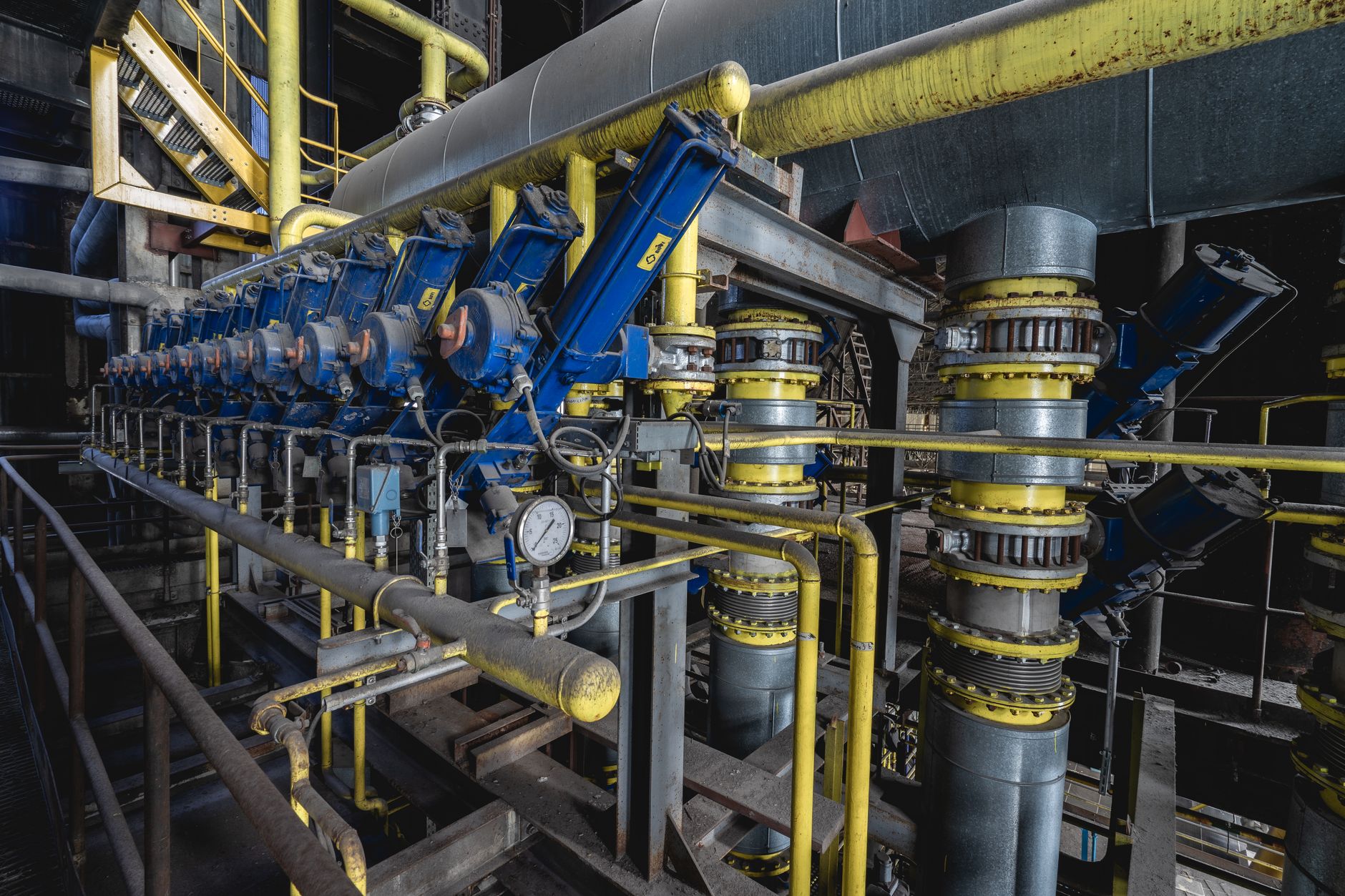
These plants look completely different from their predecessors. The footprint dedicated to mineral separation now dwarfs the traditional reverse osmosis arrays. Massive concrete holding tanks and electro-chemical processing circuits snake through the facilities. The piping must be upgraded from standard industrial PVC and marine-grade steel to advanced fluoropolymer composites, capable of withstanding the highly corrosive, acidic reagents used to precipitate the metals out of the brine.
Engineers are no longer optimizing for gallons of freshwater per kilowatt-hour. They are optimizing for parts-per-million of lithium yield. The thermodynamic calculus has shifted. Running higher pressures or utilizing thermal evaporation techniques that were previously deemed too energy-intensive for water production suddenly make perfect economic sense when the end product is battery-grade lithium carbonate destined for electric vehicles.
The Liquid Ore Land Grab
The geopolitical implications of this engineering shift are profound. The traditional mining industry is constrained by geography; you can only mine lithium where geologic history deposited it, typically in ecologically sensitive salt flats or deep underground. Mining permits take decades to secure.
Seawater, by contrast, is infinitely accessible. The ocean is a homogenous, low-grade ore body that touches every major global economy. By attaching extraction technology to municipal water plants, industrial consortiums are effectively bypassing the traditional mining regulatory framework. A coastal desalination plant is permitted as critical public infrastructure, fast-tracked by local governments desperate for water security. The environmental impact assessments focus on the water intake and output, rarely scrutinizing the chemical factories quietly operating behind the municipal facade.
This has triggered a quiet land grab along strategically positioned coastlines. Regions with specific oceanic currents that naturally concentrate mineral densities—such as the Gulf of Mexico and the western coast of South America—are seeing an influx of unsolicited infrastructure proposals.
We are witnessing the birth of the coastal processing monopoly. The legal framework surrounding ocean water rights is entirely unprepared for this development. Under current maritime and municipal law, whoever holds the permit to process the seawater implicitly owns the mineral rights to the exhaust. By offering cheap water to cash-strapped municipalities, private consortiums are locking in fifty-year contracts for exclusive access to the brine streams.
The Maintenance Crisis
The transition from water utility to chemical refinery introduces severe operational risks. Municipal water grids require absolute reliability. If a traditional reverse osmosis membrane fouls, it can be flushed or replaced with minor disruption. But the new ion-selective membranes are exceptionally fragile. They are highly susceptible to bio-fouling from marine micro-organisms and scaling from the concentrated heavy metals they are designed to trap.
When an extraction circuit fails, it does not just halt mineral production; it causes a hydraulic backlog that can shut down the entire freshwater operation. Water utility managers are finding themselves hostage to the maintenance schedules of the mining operators. In a recent incident in Southern California, a pilot plant was forced to dump raw, unprocessed brine back into the intake system because the lithium precipitation tanks suffered a continuous flow failure. The resulting chemical imbalance ruined millions of dollars worth of filtration equipment and temporarily severed the water supply to three local townships.
Furthermore, the chemical reagents required to separate the minerals—highly concentrated hydrochloric acid and organic solvents—must be trucked into these facilities in massive quantities. Desalination plants, typically situated near vulnerable coastal ecosystems and dense residential populations, are rapidly accumulating the hazard profiles of heavy industrial chemical plants.
The Ultimate Calculation
The financial markets have already priced in the shift. Startups specializing in brine-mining membranes are achieving valuations that rival software companies, while traditional water engineering firms are being acquired by mining conglomerates.
The endgame of this technology is a complete decoupling of desalination from water scarcity. Within a decade, we will see massive desalination facilities constructed in regions that already have abundant freshwater. The plants will be built on the coastlines of the Pacific Northwest and Northern Europe, drawing in ocean water, extracting the minerals, and unceremoniously dumping the newly purified freshwater into local rivers simply to get rid of it.
Water is no longer the objective. It is the waste product of the 21st century's most efficient mining operation. The engineering discipline of municipal fluid dynamics has been quietly hijacked by global commodities trading, and the coastline will never be evaluated the same way again.