The Demolition Arbitrage: Why Wall Street is Buying Uninsurable Coastlines to Tear Them Down
Claire Whitmore · Real Estate · 2026-08-30
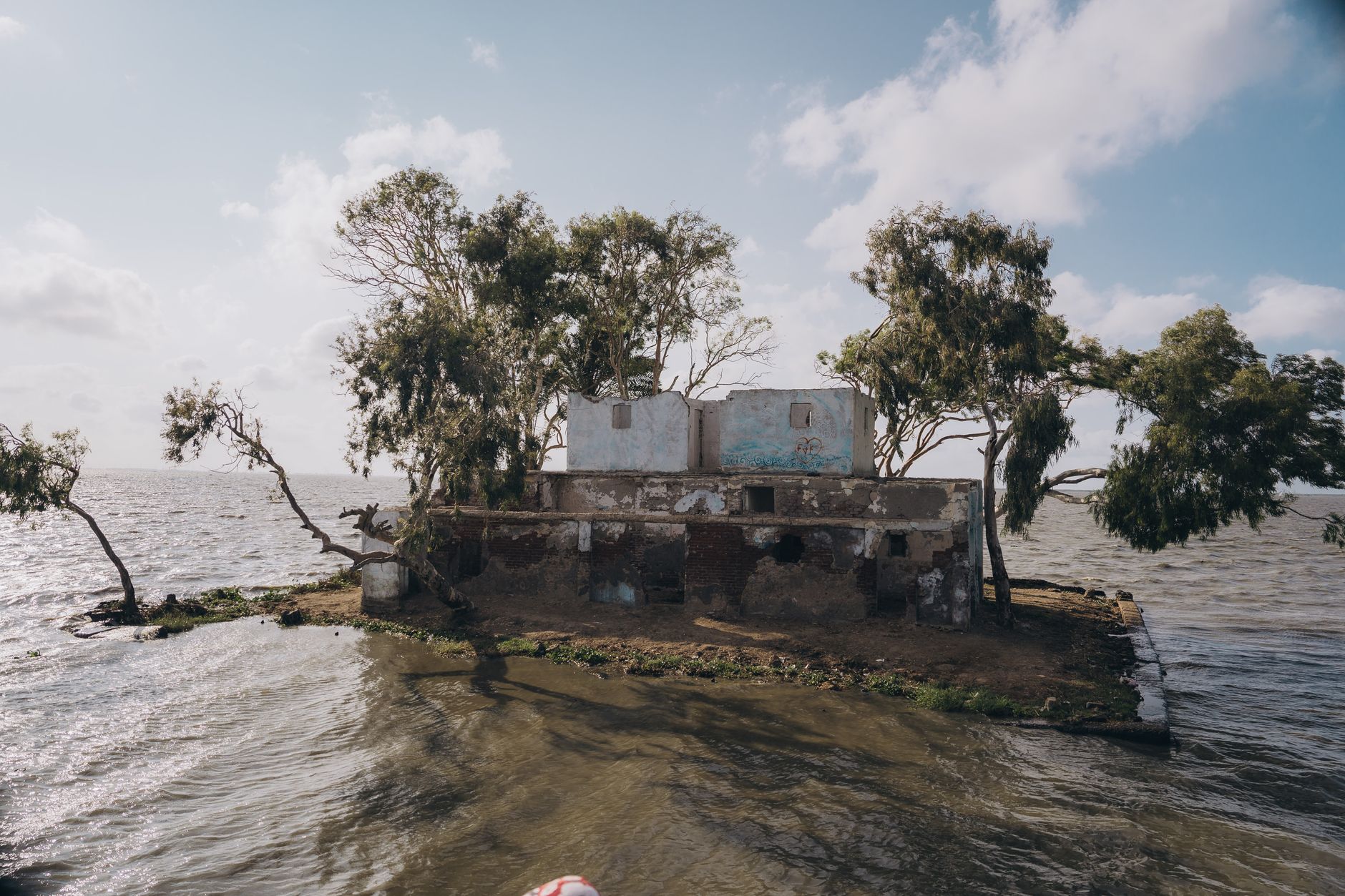
Private equity has found a lucrative new asset class in doomed coastal properties, aggregating uninsurable neighborhoods to sell as block conservation sites to the government.
A strange phenomenon is unfolding along the most vulnerable stretches of the American coastline. In neighborhoods where flood insurance has evaporated and local tax bases are collapsing under the weight of municipal debt, all-cash buyers are quietly accumulating residential property. They are not distressed-asset flippers looking to patch roofs and rent to risk-tolerant tenants. They are not holding out for a miraculous reversal in climate modeling or a sudden federal intervention to subsidize coastal living.
They are buying the houses to tear them down.
Over the past three years, institutional capital has identified a highly lucrative, entirely counterintuitive asset class: uninsurable real estate. By aggregating heavily flooded, legally encumbered, and physically deteriorating coastal properties, private equity firms are executing a sophisticated financial maneuver that turns the managed retreat of the American coastline into a high-yield institutional product. They are acting as private intermediaries for federal and state buyouts, transforming the bureaucratic nightmare of climate relocation into a streamlined, securitized process.
This is the demolition arbitrage. It operates on a simple premise: a single uninsurable house on a receding shoreline is a toxic liability. But a contiguous block of fifty uninsurable houses is a premium infrastructure asset, provided you know how to sell it back to the government.
To understand the mechanics of this trade, one must look at the structural failure of the traditional coastal bailout. Historically, when a neighborhood became repeatedly inundated, homeowners faced a grim binary. They could either abandon the property and absorb a total loss, or they could apply for a federal buyout through the Federal Emergency Management Agency (FEMA) or the Department of Housing and Urban Development (HUD).
The government buyout system was designed for acute disasters, not chronic geological shifts. Applying for a federal buyout typically requires local municipal sponsorship. The municipality must agree to purchase the properties, demolish the structures, and maintain the resulting land as open space in perpetuity, usually funded by a federal grant. For a local government already losing property tax revenue to flooding, taking on the administrative burden and perpetual maintenance of dead land is deeply unappealing.
Furthermore, the bureaucratic friction is staggering. The average FEMA buyout takes upwards of five years to clear. Homeowners who have lost everything cannot wait half a decade for a government check; they default on their mortgages, their properties fall into foreclosure, and titles become hopelessly entangled in liens and municipal code violations.
Institutional capital recognized this friction as a margin.
Real estate funds specializing in "managed retreat aggregation" operate by stepping into the temporal gap between desperate homeowners and slow-moving federal funds. They deploy advanced mapping software to identify clusters of high-risk properties that sit in critical environmental corridors—areas where state governments desperately need land to build levees, restore mangroves, or create marshland buffers to protect critical inland infrastructure.
The funds approach homeowners with immediate, all-cash offers. The price is drastically below the pre-flood market value, often pennies on the dollar, but it is liquid, instant, and guaranteed. For families trapped in uninhabitable homes while paying off underwater mortgages, this private off-ramp is often the only viable exit strategy.
Once the fund has acquired a critical mass of contiguous properties, the real engineering begins. It is not physical engineering, but legal and bureaucratic.
The funds clear the entangled titles, pay off the lingering municipal liens, and resolve the complex web of secondary debts attached to the properties. They demolish the physical structures, hauling away the debris and capping the utilities. They strip the neighborhood down to bare earth.
Then, they package this assembled, cleared, and legally unencumbered land and present it to state resilience authorities or federal infrastructure agencies as a turnkey solution.
Instead of forcing a state environmental department to negotiate fifty individual buyouts, fight through fifty fragmented title disputes, and manage fifty disparate demolition contracts, the private fund offers a single, clean transaction. The state can purchase a unified, 40-acre tract of coastal buffer zone in one stroke.
The premium charged for this aggregation and clearing service is substantial. Funds are reportedly achieving internal rates of return exceeding 20 percent on these managed retreat portfolios. They are capturing the spread between the distressed desperation of the individual homeowner and the massive, slow-moving budgets of federal climate resilience programs.
This model has profound implications for the future of municipal finance and urban planning. On one hand, it drastically accelerates the necessary process of managed retreat. Coastlines that would otherwise languish in a state of blighted, dangerous decay for decades are being efficiently depopulated and returned to nature. The private sector is providing the liquidity and administrative ruthlessless required to execute a geographic shift that local governments are politically incapable of managing.
When a mayor suggests condemning a neighborhood and moving its residents inland, it is political suicide. When a private fund quietly buys out the residents one by one and presents the city with an empty wetlands park, it is viewed as a successful public-private partnership.
However, the privatization of climate retreat fundamentally alters the distribution of public disaster funds. The federal dollars allocated to help distressed communities relocate are increasingly being captured as yield by private equity. The homeowner, the actual victim of the environmental shift, receives a fraction of the land's ultimate federal buyout value. The bulk of the government's expenditure goes toward paying the private fund for its administrative arbitrage.
Furthermore, this dynamic creates a bizarre new incentive structure within the real estate market. The underlying value of a coastal property is no longer tied to its proximity to the beach, its school district, or its architectural charm. Its value is entirely determined by its utility as an empty lot within a state-level flood mitigation plan.
We are witnessing the emergence of a real estate market where the highest and best use of a property is its own erasure.
Some states are beginning to notice the margin being extracted by these institutional aggregators. In response, a few forward-thinking coastal authorities are attempting to establish state-backed "bridge facilities"—revolving loan funds designed to provide immediate payouts to homeowners, effectively cutting out the private equity middleman.
But government agencies are culturally unsuited to the aggressive, street-level real estate tactics required to assemble these parcels. Buying distressed property from traumatized residents, negotiating with hostile mortgage servicers, and executing rapid demolitions requires a level of operational intensity that bureaucratic agencies rarely possess. For the foreseeable future, the demolition arbitrage will remain a private market play.
The real estate industry has spent a century securitizing the construction of the built environment. It is only natural that it has figured out how to securitize its dismantling. As the sea reclaims the edges of the continent, the final transaction for these doomed neighborhoods will not be a salvage operation or a tragic abandonment. It will be a highly structured block trade, executed cleanly on a balance sheet, turning the retreat of the shoreline into a predictable, institutional yield.