The Accreditation Arbitrage: Why Big Tech is Buying Bankrupt Liberal Arts Colleges
Emma Carlisle · Education · 2026-09-04
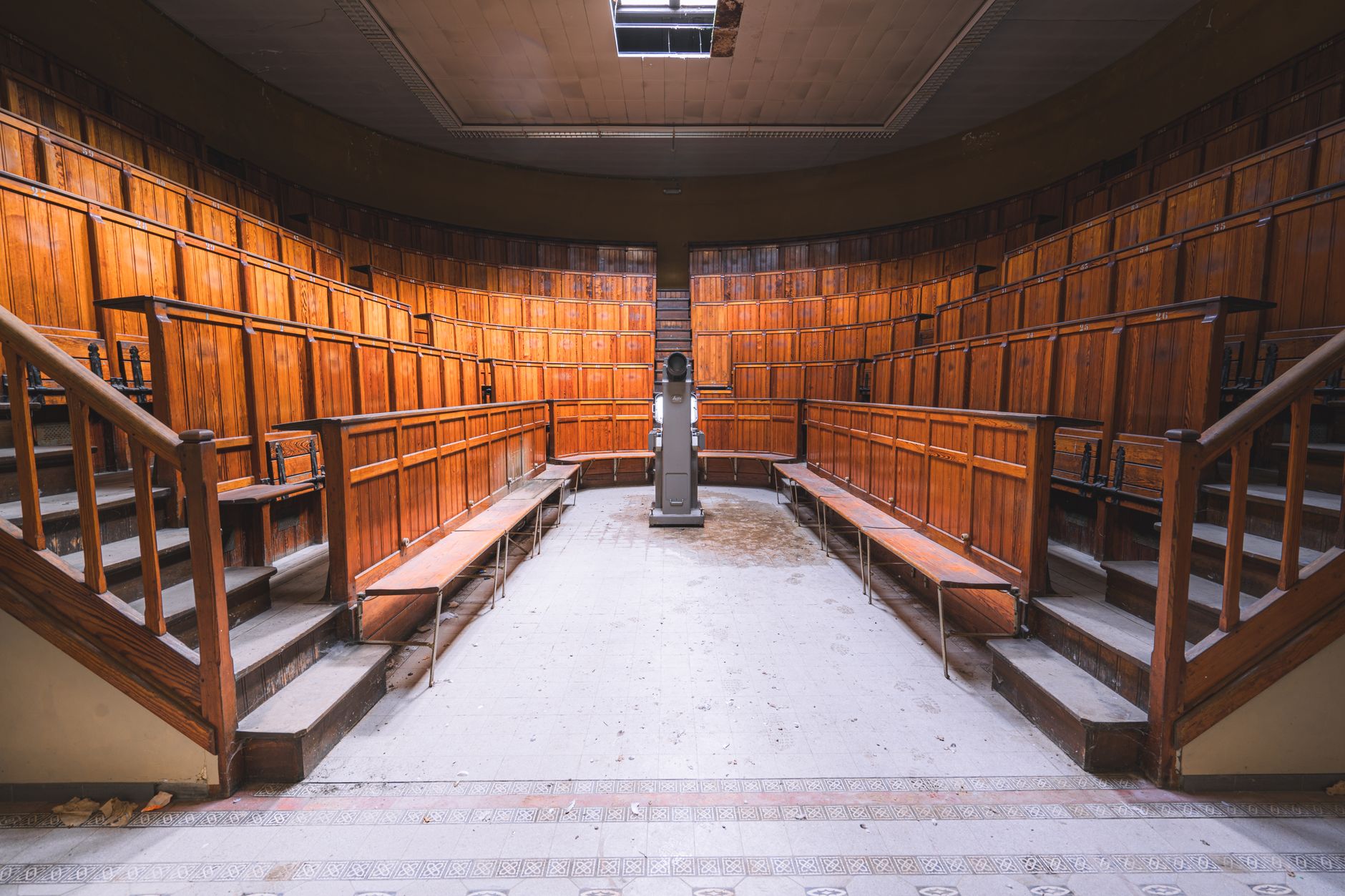
The demographic cliff is bankrupting small colleges. Corporate giants are buying the defunct campuses not to save them, but to harvest their regional accreditation and legally capture billions in federal student aid.
The campus of a defunct liberal arts college in the American Midwest typically meets a predictable fate. The local municipality buys the real estate for a community center, a housing developer levels the dormitories for a subdivision, or the brick buildings slowly succumb to deferred maintenance and ivy. But in the late summer of 2026, a bizarre new class of buyer has entered the distressed higher education market. Private equity firms and corporate holding companies are aggressively bidding on bankrupt colleges. They have absolutely no interest in the library, the quad, or the tenured faculty. They are buying the paperwork.
Specifically, they are acquiring the regional accreditation charters and Title IV federal funding eligibility attached to these failing institutions.
For decades, establishing a new, federally recognized university required years of rigorous academic scrutiny, massive endowments, and a glacial probationary period with regional accreditors. Today, as the long-feared demographic enrollment cliff finally forces hundreds of small colleges into insolvency, corporate giants have realized a structural loophole. It is infinitely cheaper, and remarkably faster, to buy a dying college out of receivership, execute a "change in control" with the Department of Education, and legally inherit the institution’s authority to issue recognized bachelor’s degrees and process federal student loans.
This is the accreditation arbitrage. What we are witnessing is the backdoor corporate privatization of the American college degree, funded by the very federal grant system designed to keep traditional education afloat.
The timing is far from coincidental. The birth rate decline that began during the 2008 financial crisis has finally reached college freshman orientation. Estimates show that higher education will lose hundreds of thousands of prospective students annually between now and 2030. Regional state schools and heavily endowed Ivy League institutions can absorb the shock. Small, tuition-dependent private colleges cannot. Hundreds are currently in technical default on their bond covenants, operating solely on the grace of their creditors.
Simultaneously, the American corporate sector is facing a severe, chronic shortage of middle-skill technical talent—cloud architects, supply chain logisticians, advanced manufacturing technicians, and data security analysts. Tech companies and logistics giants have spent the last five years trying to convince the labor market that short-term certificates and internal bootcamps are equivalent to a college degree. The market, firmly entrenched in degree inflation, largely rejected the premise. Hiring algorithms still silently filter out applicants without a bachelor’s degree, and parents still view corporate certificates as a risky divergence from the traditional path to middle-class stability.
If the market refuses to value a corporate certificate like a bachelor’s degree, the logical corporate response is to simply acquire the legal right to print a bachelor’s degree.
When a holding company acquires a distressed college, the physical campus is usually liquidated. The new owners transition the academic model entirely online or into their existing corporate training facilities. They gut the traditional liberal arts curriculum—eliminating the expensive, low-yield departments like history, literature, and sociology—and replace them with highly vocational, company-specific training programs. Because the institution retains its regional accreditation during the transition, these newly minted corporate academies can offer federally recognized Bachelor of Science degrees in applied technologies.
The financial mechanics of this maneuver are staggering in their efficiency. By acquiring a Title IV-eligible institution, the parent corporation suddenly gains access to the vast pool of Pell Grants and federally subsidized Stafford Loans. A major technology firm can now hire a high school graduate, enroll them in their wholly-owned "university," and mandate that the employee apply for federal financial aid to cover the cost of their own onboarding and technical training. The federal government effectively subsidizes the corporation's internal talent development pipeline.
This mechanism flips the traditional corporate tuition reimbursement model on its head. Instead of paying a state university to educate a future employee, the corporation gets paid by the federal government to train its own workforce, while simultaneously locking that employee into a proprietary ecosystem.
Regional accreditors, the historical gatekeepers of academic integrity, find themselves structurally unequipped to manage this phenomenon. Agencies like the Higher Learning Commission (HLC) or the New England Commission of Higher Education (NECHE) were designed to evaluate faculty governance, library holdings, and the academic rigor of peer-reviewed research. They evaluate educational inputs. They do not know how to assess an institution whose primary campus is a sprawling Amazon logistics center, whose "faculty" are senior software engineers, and whose curriculum is dictated by the quarterly earnings targets of its parent company.
When a change of ownership occurs, accreditors require a substantive change review. Historically, this meant ensuring the new board of trustees was financially solvent and committed to the academic mission. Corporate buyers navigate these reviews by retaining a small core of the college’s original administrative staff to serve as a compliant bureaucratic front, fluent in the language of academic assessment, while the actual educational delivery is fundamentally rewired. By the time the accrediting body realizes the institution has morphed into a vocational training mill for a single corporate employer, the new curriculum is already deeply entrenched.
The Department of Education has attempted to patch these regulatory vulnerabilities, primarily by scrutinizing for-profit conversions. However, the entities buying these distressed colleges often utilize complex non-profit organizational structures. A tech giant will fund an independent, tax-exempt foundation, which then executes the acquisition of the college. Legally, the university remains a non-profit entity. Functionally, it operates as a captive supplier of human capital to the corporate sponsor. Regulators struggle to pierce the veil of these sophisticated corporate structures, largely because the tax code lacks a precise definition of what constitutes a "legitimate" university in an era of digital instruction.
This shift carries profound consequences for the American labor market. As corporate-owned degrees proliferate, the definition of higher education fractures. A traditional university education is designed to be broadly applicable, fostering critical thinking and adaptability across various industries. A corporate-owned degree is inherently specialized, optimized for the exact software architecture or supply chain methodology utilized by the parent company.
Graduates of these programs emerge highly skilled but professionally captive. Their degree proves mastery of a specific corporate ecosystem, making them immensely valuable to their immediate employer but potentially unemployable if that specific technological standard becomes obsolete. The risk of skill depreciation shifts entirely from the employer to the employee.
Defenders of this corporate acquisition model argue that it is the ultimate realization of workforce alignment. For decades, employers have complained that traditional universities produce graduates who are utterly unprepared for the realities of the modern workplace, requiring months of expensive retraining. By integrating the university directly into the corporate structure, the gap between education and employment drops to zero. Proponents also note that these corporate academies often guarantee job placement upon graduation, a promise that traditional liberal arts colleges simply cannot make. In an era of crushing student debt, a guaranteed salary upon graduation is a compelling proposition for working-class families, regardless of the name on the diploma.
Yet, this alignment comes at the cost of academic independence. The university, as a societal institution, was built to serve as an objective repository of knowledge, insulated from the immediate pressures of the commercial market. When higher education becomes a wholly owned subsidiary of the Fortune 500, the pursuit of knowledge is subjugated to the pursuit of quarterly productivity. Curriculum is updated not based on academic consensus, but on software release cycles.
We are watching the rapid unbundling of the university. The physical campus, the sports teams, and the dormitories are being stripped away, leaving only the regulatory shell—the accreditation charter. As the demographic cliff deepens over the next four years, hundreds more small colleges will face the choice between absolute bankruptcy and acquisition by an industrial conglomerate. Most will choose the latter. They will sell their centuries-old names and their hard-won accreditation to the highest bidder.
The degree you hold may soon say less about your academic journey and more about which corporate ecosystem acquired your college's charter out of Chapter 11. Higher education is no longer an industry unto itself; it is rapidly becoming a heavily subsidized supply chain function for the wider corporate economy.