The Transmission Arbitrage: Why Global Data Networks Are Acting as Virtual Power Lines
Ivan Robertson · Technology · 2026-09-05
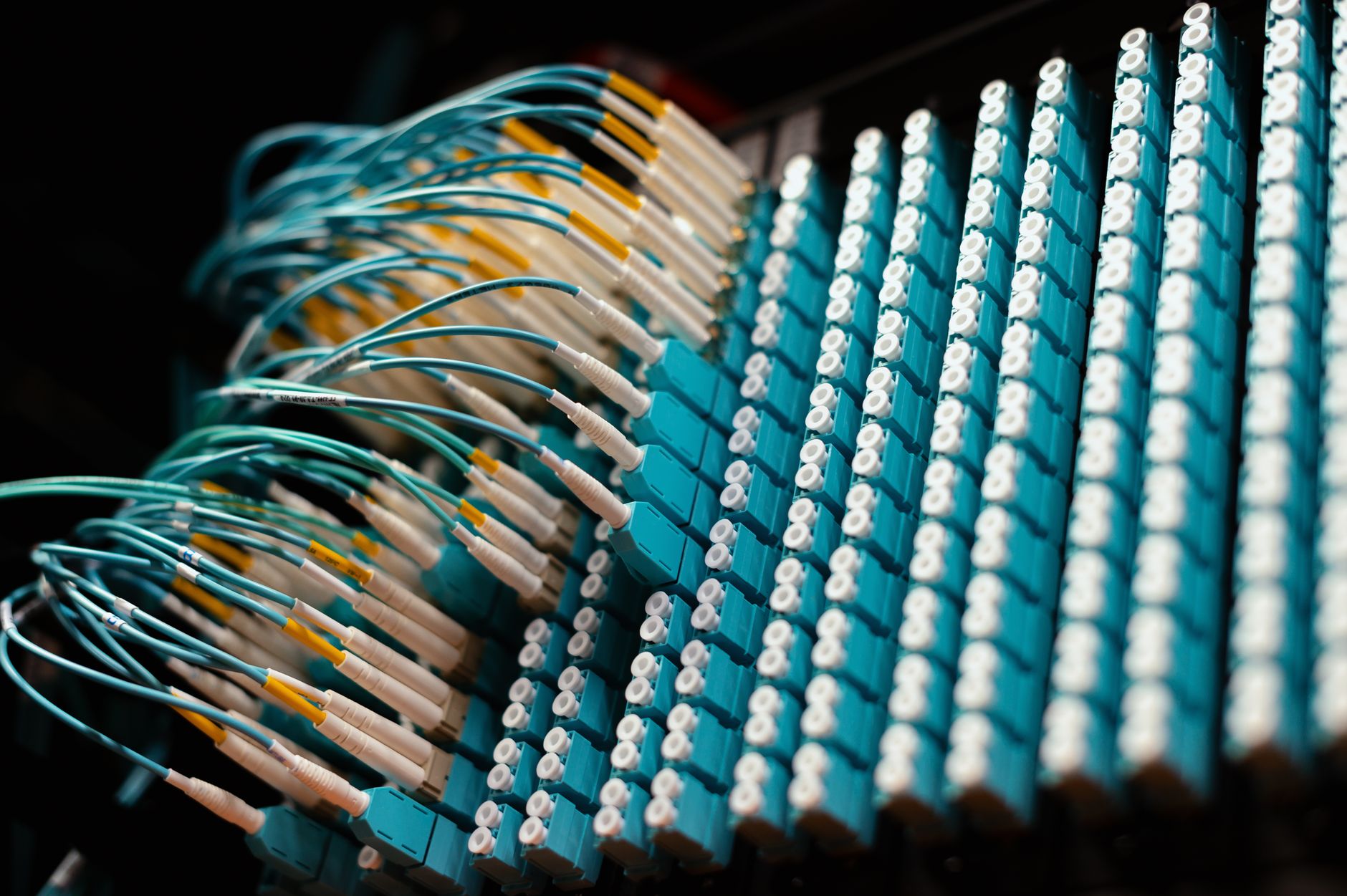
Tech giants are bypassing congested electrical grids by routing AI training workloads over fiber optics to capture negative power prices across the globe.
Every afternoon, as the desert sun hits its zenith over the American Southwest, a peculiar sequence of events unfolds across the global network of a major cloud provider. Server racks in a hyperscale data center outside Phoenix, previously running at a low hum, suddenly draw hundreds of megawatts of electricity. Thousands of miles away, an identical facility in Ireland quietly idles its cooling systems and powers down its heavy compute clusters.
No switch was flipped by a human operator. No alert was sounded. Instead, an automated energy trading algorithm detected that solar generation in Arizona had temporarily exceeded local grid capacity, driving the wholesale price of electricity below zero. In a fraction of a second, the algorithm routed massive, energy-intensive artificial intelligence training workloads from Europe to the American desert.
The cloud provider was not just saving money on its electricity bill. Because the local utility was desperately shedding excess power to avoid overloading the grid, the tech company was actually being paid to absorb the load. It was getting paid to train its own AI.
We have spent the last decade viewing data centers as voracious consumers of electricity, a localized burden on aging grids. But that framework is entirely backwards. Driven by the unique physics of fiber optics and the explosive growth of asynchronous computing, the world’s largest technology companies have quietly built something entirely different: the most efficient electricity transmission network on earth.
They are no longer simply consuming power. They are moving it.
The Problem With Copper
To understand the mechanics of this shift, one must look at the fatal flaw in traditional electrical grids. Moving electricity over long distances is incredibly difficult, expensive, and wasteful. High-voltage transmission lines suffer from inherent line loss, bleeding a percentage of their carrying capacity into the air as heat for every mile traversed. Building new transmission infrastructure requires billions of dollars, decades of environmental reviews, and endless battles over rights-of-way.
Consequently, the energy market is highly localized. A massive surplus of wind power generated in West Texas cannot easily be transported to satisfy peak evening demand in New York. When supply outstrips transmission capacity—a phenomenon known as curtailment—generators must shut down their turbines or pay large industrial users to take the electricity off their hands, resulting in negative pricing.
Moving data, however, suffers from none of these physical or regulatory limitations. Fiber optic cables transmit information via pulses of light, virtually immune to distance-related degradation. Routing a gigabyte of data from London to Tokyo takes milliseconds and costs fractions of a cent.
For years, this fundamental difference did not matter to the energy markets. Historically, computing workloads were tightly bound to human geography. Web hosting, financial transactions, video streaming, and corporate databases are latency-sensitive. They must be processed physically close to the user to avoid the dreaded lag of a buffering screen or a delayed stock trade. You could not run a New York bank's trading servers in Iceland just because the geothermal power was cheaper.
Artificial intelligence broke this geographic tether.
The Asynchronous Arbitrage
The training of large language models, the rendering of complex visual graphics, and the crunching of vast scientific simulations are fundamentally different from web browsing. They are asynchronous workloads. The machine does not care where the math is done, nor does it require real-time human interaction. A multi-billion-parameter neural network can be trained just as effectively in a remote Norwegian fjord as it can in downtown Manhattan.
This decoupling of compute from geography has created a massive arbitrage opportunity. If electricity cannot easily travel from where it is cheap to where it is needed, tech companies are simply sending the demand for electricity to the cheap power instead.
Industry insiders call this spatial compute shifting. By migrating heavy workloads across their global footprints in real-time, hyperscalers are acting as virtual power lines. A gigawatt of computing demand can be instantly transferred from a grid experiencing a winter storm and high gas prices to a grid flooded with afternoon solar power. The fiber optic cables are bypassing congested copper transmission lines entirely, moving the consumption of energy at the speed of light.
The financial implications of this mechanism are profound. Large tech companies are no longer just managing cloud infrastructure; they are functioning as high-frequency energy traders. They maintain complex models of global weather patterns, grid congestion, and wholesale electricity markets. Software continuously calculates the cost of migrating petabytes of data against the localized price of a megawatt-hour. When the spread is wide enough, the workload moves.
Bypassing the Utility Monopoly
This dynamic is quietly destabilizing the traditional utility business model. Utilities make money by building physical infrastructure and charging ratepayers a regulated return on that capital investment. When a tech company shifts its power demand from a congested grid to an underutilized one, it avoids the local grid tariffs and transmission fees that typically fund the utility sector.
Regulators are beginning to notice the revenue leakage. Grid operators in regions with heavy data center concentrations rely on these massive facilities to provide steady, predictable revenue to support grid maintenance. If a data center can simply teleport half its electrical demand to another continent during a local price spike, the local utility is left holding the bag on infrastructure upgrades it built specifically to service that facility.
Conversely, renewable energy developers are realizing they no longer need to wait a decade for interconnection queues to attach their rural wind farms to the national grid. Instead of lobbying for high-voltage lines to carry their electricity to cities, developers are partnering with tech firms to build heavy-compute data centers directly on-site at the point of generation. The wind farm produces stranded, un-grid-connected power; the servers consume it entirely, turning raw kinetic energy into trained algorithms, which are then exported globally via a single fiber optic cable. The tech industry has essentially invented a way to export renewable energy via internet protocols.
The Physical Limits of Virtual Transmission
Naturally, this system faces structural constraints. The primary friction in spatial compute shifting is the cost and capacity of the network itself. While moving data is cheap compared to moving electricity, transferring the massive datasets required for continuous AI training takes massive bandwidth. State-of-the-art models require entire memory architectures to be synchronized. Tearing down a distributed computing environment in one hemisphere and standing it up in another requires immense software orchestration and incurs a minor penalty in lost compute time during the transition.
Furthermore, silicon is not entirely impervious to the physical world. Forcing servers to ramp up to maximum utilization and then spin down completely causes rapid thermal cycling. The continuous expansion and contraction of microscopic components degrades the lifespan of graphics processing units that cost tens of thousands of dollars each. Hardware depreciation models must now factor in the mechanical stress of aggressively chasing cheap electricity.
There is also the question of data sovereignty. Governments are increasingly mandating that citizens' data remain within national borders. While the training algorithms themselves may be agnostic to geography, the raw data they process often carries strict legal passports. A cloud provider cannot seamlessly route a European healthcare dataset to a server farm in Texas just because the wind is blowing across the plains. This regulatory fragmentation threatens to cap the total addressable market for spatial compute shifting, cordoning off the most sensitive workloads from global energy arbitrage.
The Convergence of Sectors
Despite these barriers, the economic gravity of negative power pricing is too strong to ignore. As artificial intelligence models scale exponentially, requiring gigawatts of power to iterate, the cost of electricity will become the single largest variable expense in the technology sector. The companies that survive the next decade of the AI arms race will not merely be those with the best algorithms or the fastest chips. They will be the ones that have mastered the temporal and geographic arbitrage of global power markets.
We are witnessing the final blur between the technology and energy sectors. Data centers are evolving into dispatchable load assets—virtual batteries that absorb excess power when the grid is overwhelmed and disappear when power is scarce. Energy executives are attending semiconductor conferences, and software engineers are writing code that dictates the operation of hydroelectric dams.
The industrial revolution was defined by our ability to transport fuel to the factory. The digital revolution was defined by our ability to put a factory on every desk. The current era will be defined by the realization that compute is simply a highly compressed, infinitely transportable form of electricity. The transmission lines of the future are already built, and they are made of glass.