The Asphalt Power Plant: Why Unsold EVs Are Becoming Grid Storage Arbitrage
Claire Whitmore · Business · 2026-09-06
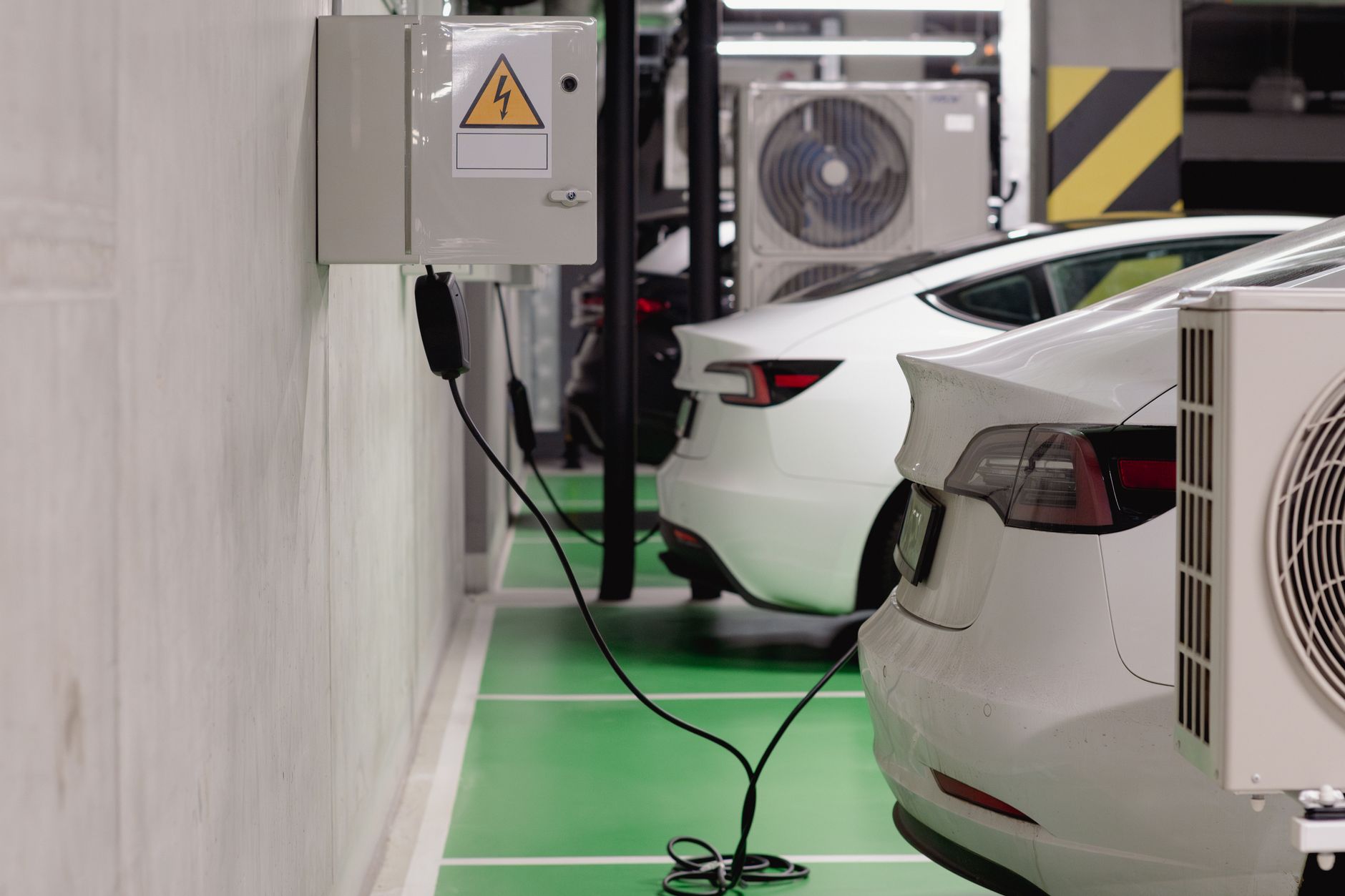
Stuck with massive lots of unmoving electric vehicles, manufacturers have discovered a lucrative loophole: plugging them into the grid and trading wholesale power.
Outside a massive logistics hub in West Texas, three thousand identical electric SUVs sit motionless under the late-afternoon sun. They have no license plates, no registered owners, and zero miles on their odometers. To a traditional automotive analyst, this vast expanse of metal and lithium represents a catastrophic inventory glut—millions of dollars tied up in depreciating, immovable stock. But listen closely, and you can hear the faint, high-pitched whine of industrial inverters. These vehicles are not waiting for buyers. They are actively trading on the Texas electricity market.
Welcome to the asphalt power plant. Over the past eighteen months, the automotive industry has quietly solved one of the most punishing problems in heavy manufacturing: the sheer cost of holding unsold inventory. Faced with a structural plateau in electric vehicle adoption and rising interest rates, manufacturers have stopped slashing prices to clear lots. Instead, they have realized that a densely packed yard of bidirectional EVs is functionally indistinguishable from a utility-scale battery farm.
The economics of automotive manufacturing have historically been unforgiving. When cars sit on a dealer lot, they bleed capital. Floorplan financing costs accumulate, rubber degrades, and the eventual price cuts required to move stagnant inventory destroy brand equity and decimate the residual values of leased vehicles. In 2026, the global auto industry found itself sitting on a record 140 days of EV supply. The traditional playbook dictated aggressive factory rebates and margin-crushing incentives.
But modern electric vehicles are fundamentally different from their internal combustion predecessors. A 2026 electric SUV is essentially an 85-kilowatt-hour battery wrapped in a chassis, equipped as standard with vehicle-to-grid (V2G) hardware. When grouped together and connected to high-voltage commercial grid nodes, these stationary fleets become a formidable energy asset.
The mechanism is elegant in its simplicity. Instead of shipping excess production to regional dealerships, manufacturers are routing surplus vehicles to centralized, heavily electrified holding facilities strategically located near major grid interconnection points. Through automated software platforms, these "ghost fleets" operate as Virtual Power Plants (VPPs). They absorb excess renewable energy during the day when wholesale prices drop below zero, and discharge it back into the grid during peak evening hours.
More lucratively, these parked fleets participate in frequency regulation markets. The electrical grid requires constant stabilization to maintain its frequency at exactly 60 hertz. Because batteries can respond to frequency deviations in milliseconds—far faster than natural gas peaker plants—grid operators pay a heavy premium for this service. A stationary EV participating in these ancillary service markets can generate between $1,200 and $2,800 annually.
This yield entirely rewrites the mathematics of automotive inventory. The holding cost of an unsold vehicle is suddenly neutralized by its energy market revenue. The inventory has become yield-bearing.
We are witnessing a fundamental shift in how industrial balance sheets function. A car manufacturer typically records unsold vehicles as current assets, dragging down return on capital. By transforming these vehicles into active grid infrastructure, automakers are effectively hedging their production output against energy volatility. If consumer demand for cars softens, the financial blow is cushioned by the steady, predictable revenue of wholesale energy trading.
Several major automakers have already established shadow energy trading desks. These units do not build cars; they monitor wholesale electricity prices across the California Independent System Operator (CAISO) and the Electric Reliability Council of Texas (ERCOT). When the margin on energy trading exceeds the margin on a heavily discounted vehicle sale, the manufacturer simply holds the car, cycles the battery, and collects the yield.
The strategy also protects the fragile ecosystem of automotive pricing. If a manufacturer dumps 50,000 cars onto the market at a 20 percent discount, they permanently rebase the perceived value of their brand. Used car prices collapse, angering recent buyers, and leasing companies demand higher subvention payments to cover the degraded residual values. By parking the cars and turning them into power plants, automakers restrict the physical supply reaching the consumer market, artificially supporting retail prices.
Naturally, this model introduces a novel mechanical complication: battery degradation. A vehicle that sits on a Texas lot for a year, cycling its battery daily to stabilize the grid, is accumulating internal wear even if its wheels never turn. How does a manufacturer eventually sell a "new" car that has already experienced 400 deep discharge cycles?
The industry is navigating this by decoupling the battery warranty from the vehicle's odometer. Software meticulously tracks the "grid miles" the battery has driven. When the vehicle is finally sold, it is marketed with a battery health certificate rather than a pure factory warranty. Some manufacturers are using this as the ultimate wedge to transition toward battery-as-a-service models, where the consumer buys the chassis but leases the energy storage unit. If the battery has already paid for a fraction of its own manufacturing cost through energy arbitrage, the automaker can offer a significantly lower monthly lease rate to the final consumer.
Dealerships, historically the middlemen of the auto industry, are finding themselves entirely bypassed by this new architecture. Traditional franchise laws protect dealers' rights to sell cars, but they say nothing about the manufacturer's right to operate unsold inventory as a distributed utility. The holding facilities where these energy trades occur are owned entirely by the automakers or their financial arms, allowing them to capture the entire margin of the grid services.
This development poses serious questions for financial regulators and grid operators. The energy capacity of a major automaker's unsold inventory now rivals that of dedicated power utilities. We are entering an era where automotive manufacturing and energy distribution are becoming indistinguishable. A factory producing cars is simultaneously producing dispatchable grid storage, and the decision to sell a vehicle to a consumer is now weighed against the opportunity cost of pulling that battery offline.
The definition of a vehicle has fundamentally fractured. For a century, a car was a consumer durable good, designed solely to move people and goods from one physical location to another. Today, the modern electric vehicle spends the first year of its life as a stationary financial instrument, trading megawatts in the dark. Only when the energy arbitrage ceases to be profitable does it finally become a car.