The Aquifer Arbitrage: Why Silicon Valley Is Buying Up American Farms
Claire Whitmore · Business · 2026-10-07
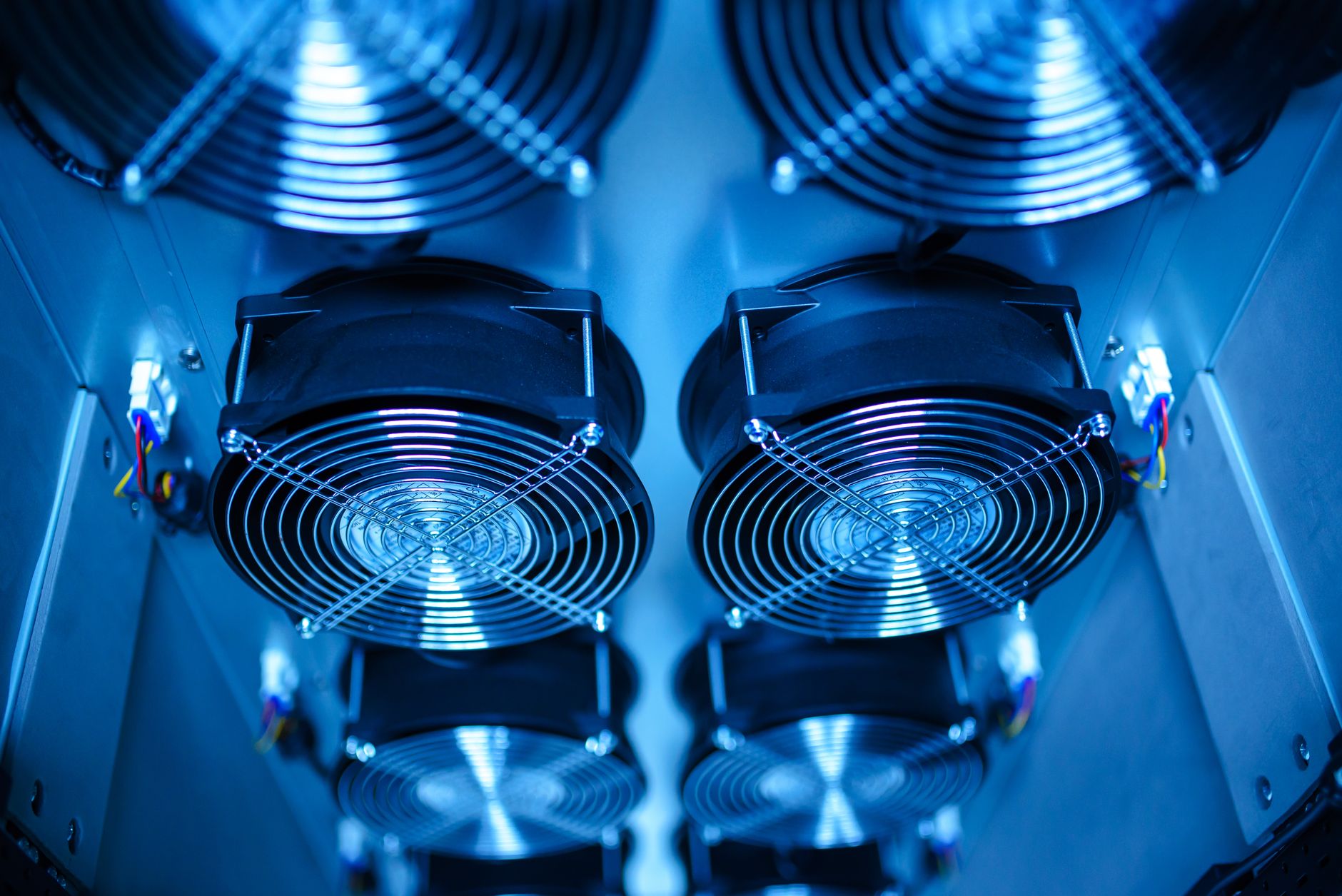
The next generation of artificial intelligence is constrained by thermodynamics. To cool their servers, tech giants are becoming the largest water speculators in the American West.
A peculiar real estate transaction occurred last month in the high desert of central Oregon. A 4,000-acre alfalfa farm, which had been struggling with dropping water tables and tightening municipal restrictions for a decade, was sold for nearly triple its assessed agricultural value. The buyer was not an agribusiness conglomerate, a private equity firm specializing in farmland, or a residential developer. It was a holding company registered in Delaware, traced back to a major Silicon Valley infrastructure provider.
No new crops will be planted on this land. The tractors are being auctioned off. The irrigation pivots are being dismantled. The buyers were entirely uninterested in the soil, the proximity to rail lines, or the local agricultural supply chain. They bought the farm for a single, invisible asset: its senior water rights, established in 1914.
We are entering a new phase of the artificial intelligence boom, one dictated entirely by thermodynamics. The conversation surrounding AI infrastructure has historically focused on two bottlenecks: the manufacturing of advanced semiconductors and the generation of electricity required to run them. But as compute density scales to unprecedented levels, a third constraint has quietly superseded the others. You cannot run a gigawatt data center without cooling it, and you cannot cool it without millions of gallons of water.
In response, the technology industry is executing a quiet but massive land grab across the American West. By purchasing legacy agricultural operations, tech companies are acquiring the legal rights to drain local aquifers, transferring the water usage from farming to server cooling. Water rights have become the new zoning permits for artificial intelligence. If you control the aquifer, you control the compute.
The Thermodynamics of Compute
The shift from general-purpose cloud computing to specialized AI training has fundamentally altered the physical architecture of the data center. Traditional servers dissipate heat relatively easily. Facilities rely on computer room air conditioning (CRAC) units, pushing chilled air through raised floors and pulling hot air out through the ceiling.
This model collapses under the thermal load of modern AI clusters. When you pack tens of thousands of next-generation GPUs into a single building, air cooling violates the laws of physics. The heat density requires direct-to-chip liquid cooling, where coolant runs directly over the processors, absorbs the thermal energy, and carries it away to massive heat exchangers.
Those heat exchangers rely heavily on evaporative cooling towers to dump the thermal energy into the atmosphere. This process consumes staggering volumes of water. A standard 100-megawatt data center running high-density AI clusters can easily consume over a million gallons of water a day. As developers scale up to gigawatt-class campuses, the water requirements rival those of small cities.
Municipalities are beginning to balk. City councils from Virginia to Arizona are facing severe droughts, overdrawn municipal aquifers, and angry constituents who refuse to see their residential water rates spike to subsidize a technology giant's server farm. Securing municipal water permits for new data center construction has shifted from a routine bureaucratic hurdle to a multi-year political battle with a high probability of failure.
Silicon Valley’s solution is entirely rational: bypass the municipalities altogether.
The Seniority Advantage
Water law in the western United States operates on the doctrine of prior appropriation, commonly summarized as "first in time, first in right." The entities that first diverted water for beneficial use hold "senior" rights. In times of drought or shortage, senior rights holders get their full allocation before junior rights holders get a single drop.
The oldest and most senior water rights in the country belong almost exclusively to agriculture. Farms established in the early 20th century hold the keys to the West's aquifers and rivers. For a century, these rights were tethered to the production of water-intensive crops like alfalfa, cotton, and almonds.
Now, tech companies realize that buying a struggling farm is the cheapest and most legally sound way to guarantee cooling capacity. A senior agricultural water right is immune to municipal zoning disputes. It cannot be easily revoked by a city council worried about residential supply. By purchasing the land, retiring the agricultural operation, and applying for a change of use permit with the state water board, a tech company can legally divert millions of gallons of water from irrigation ditches to cooling towers.
The financial arithmetic is striking. To an alfalfa farmer operating on thin margins, water might generate a few hundred dollars of agricultural yield per acre-foot. To an AI infrastructure provider, that same acre-foot of water is the critical input required to lease out compute capacity at a massive premium. The technology sector can afford to outbid agricultural interests by orders of magnitude without putting a dent in their capital expenditure budgets.
The Commodity Pivot
This dynamic is quietly transforming the valuation of arid land. Real estate speculators are no longer looking at proximity to fiber optic trunks or high-voltage transmission lines. They are mapping local aquifers against state registries of senior water rights. The most valuable parcel of land in Nevada or New Mexico is no longer the one closest to a substation; it is the one with the oldest piece of paper granting access to the water table.
We are witnessing the financialization of cooling capacity. In some jurisdictions, tech companies are not even building their data centers on the acquired farmland. They are simply buying the farms, fallowing the land, and using the acquired water credits to offset the consumption of a data center built fifty miles away in an industrial park, utilizing complex water-banking mechanisms managed by local water districts.
The mechanism essentially turns agricultural water into a tradable tech commodity. It decouples the water from food production and reassigns it to data processing. From a pure market efficiency standpoint, the water is flowing toward its highest economic use. The gross domestic product generated by a gallon of water used to cool an AI cluster dwarfs the GDP generated by a gallon of water used to grow cattle feed.
The Counter-Tide
Technology companies fiercely defend their water stewardship. Industry representatives frequently point to their investments in watershed restoration projects, leak detection technologies, and the development of closed-loop cooling systems that consume zero net water.
It is true that engineering teams are desperately trying to close the loop. Some experimental facilities are deploying advanced radiative cooling panels or deep-water source cooling. Others pledge to replenish more water than they consume by funding regional conservation efforts, essentially buying carbon-style offsets for their water usage.
However, the laws of thermodynamics are stubborn, and closed-loop systems require significantly more electricity to run the refrigeration cycles that replace the efficiency of evaporation. Given that the industry is simultaneously facing an unprecedented power shortage, trading electricity for water is often a mathematically impossible compromise. Until a fundamental breakthrough in thermal management occurs, evaporation remains the only viable way to shed gigawatts of heat at scale. The watershed restoration projects, while commendable, do not change the immediate physical requirement of pulling millions of gallons of wet water out of the ground to keep servers from melting today.
A Structural Realignment
This arbitrage carries profound implications for regional economies. As agricultural water is diverted to industrial cooling, the ancillary businesses that support farming—tractor dealerships, seed suppliers, transport logistics—wither. The economic base of rural counties is hollowed out and replaced by automated server farms that employ a fraction of the workforce and generate localized heat plumes.
Furthermore, this trend centralizes the control of a fundamental natural resource in the hands of a few corporate entities. The technology giants are accumulating a portfolio of senior water rights that rivals the holdings of major agricultural conglomerates. In a future defined by climate volatility and increasing water scarcity, holding the senior rights to the West's aquifers is a geopolitical lever disguised as a facilities management strategy.
For investors, the takeaway is clear: the bottleneck for AI scaling is no longer silicon, and it is no longer just power. The next generation of compute will be built where the water flows. Those attempting to predict the geographic footprint of the next tech boom should stop looking at the power grid and start looking at the water table. The farms of the 20th century are becoming the server racks of the 21st, one acre-foot at a time.