The Great De-Automation: Why American Factories Are Unplugging Their Robots
Nathan Caldwell · Manufacturing · 2026-09-28
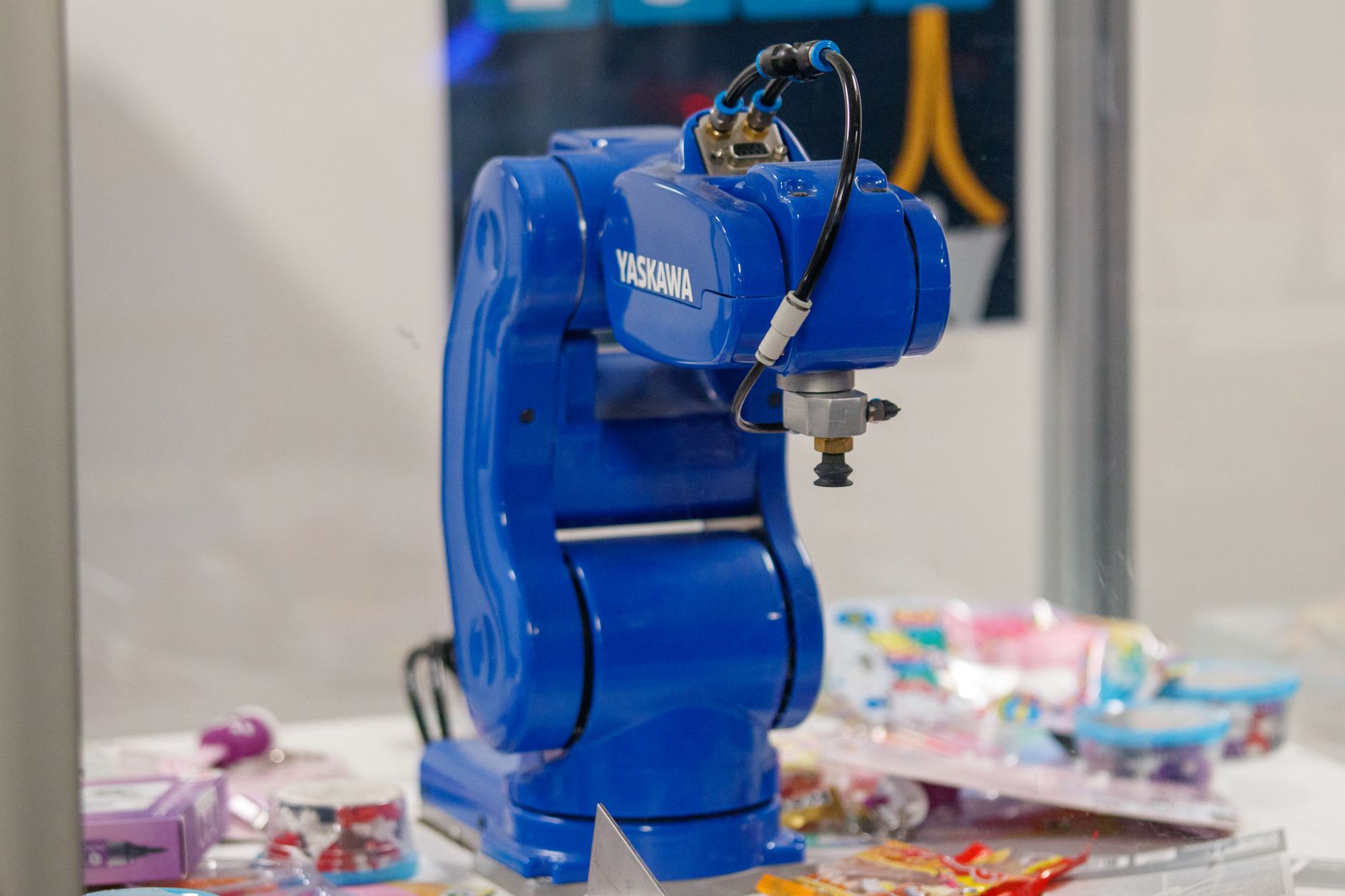
As the hidden costs of software licensing and proprietary maintenance devour profit margins, a quiet rebellion is taking shape on the assembly line. Human labor is becoming the premium upgrade.
The assembly line at a medium-sized automotive parts supplier in Ohio recently underwent a radical transformation. Management spent the weekend unbolting a series of six-axis robotic arms, severing their ethernet connections, and rolling them into a storage warehouse. On Monday morning, a crew of human workers stood at those same stations, wielding traditional pneumatic tools.
This was not a union protest, nor a reaction to a catastrophic software failure. It was the result of a ruthless, cold-blooded financial audit. After three years of trying to make the math work, the company’s chief financial officer realized that "cutting-edge automation" was steadily driving the firm toward bankruptcy.
A quiet rebellion is brewing across the American manufacturing landscape. For decades, the industry accepted a singular dogma: the future belongs to automation, and those who fail to digitize will die. But an increasing number of mid-market manufacturers are discovering that the financial architecture of modern robotics is fundamentally broken. Driven by a shift from capital expenditures to recurring operational costs, the economics of automation have inverted. Factories are now pulling the plug on their robots, inaugurating an era of deliberate de-automation.
To understand why a factory would willingly abandon millions of dollars in mechanical infrastructure, you must look at how machinery is sold today. Ten years ago, a manufacturer purchased a robotic welder for a flat fee. It was an asset. It depreciated over time, it required occasional physical maintenance, and it belonged entirely to the factory.
Today, industrial machinery is entirely tethered to the software ecosystem. Equipment manufacturers have aggressively adopted the Robotics-as-a-Service (RaaS) model. When a factory installs a modern assembly robot, the physical hardware is often heavily subsidized. The true cost lies in the mandatory, recurring software licenses required to operate it.
These digital tethers take many forms. There are monthly subscription fees for the machine vision software that allows the robot to recognize parts. There are per-gigabyte charges for the telemetry data that the robot constantly streams to the manufacturer's cloud servers. There are annual licensing fees for the predictive maintenance algorithms, and mandatory service contracts that prohibit the factory’s own engineers from opening the chassis.
The initial pitch is seductive. Equipment vendors promise lower upfront costs and continuous software upgrades. But the reality on the factory floor is a creeping financial hemorrhage.
Consider the mathematics of a standard packaging line. A human worker might cost a firm $65,000 a year in wages and benefits. A robotic packaging station might cost $40,000 upfront, which looks like an immediate win. However, the vision system requires a $12,000 annual software lease. The cloud analytics platform demands another $8,000. When the robot encounters a novel object and throws an error code, resolving it requires a remote diagnostic call billed at $500 an hour, because the equipment vendor’s end-user license agreement explicitly forbids the factory’s technicians from bypassing the software lock.
By year three, the total cost of operating that robotic station often exceeds the cost of a human worker. By year five, the factory has paid for the robot twice over in software licenses, yet owns nothing of the intellectual property that actually makes the machine run.
The vulnerabilities extend far beyond the balance sheet. Modern manufacturing demands extreme flexibility. Supply chains remain volatile, requiring factories to frequently switch between different materials, packaging sizes, and product iterations.
A human worker can adapt to a new packaging size after a five-minute conversation. Reprogramming a fleet of proprietary robots to handle that same change requires a software integration ticket, three weeks of lead time from the vendor, and a consulting invoice. In the quest to eliminate the unpredictability of human labor, manufacturers have chained themselves to the far more rigid bureaucracy of enterprise software schedules.
This rigidity creates operational paralysis. When a critical cloud server hosted by an automation vendor goes down, entire production lines in different time zones freeze in place. The robots are physically capable of moving, but because they cannot authenticate their licenses via the internet, their software halts operation. Factory managers find themselves staring at perfectly functional steel arms, entirely powerless to fulfill their client orders because an API endpoint failed in a data center two thousand miles away.
Consequently, a distinct competitive advantage is emerging for companies that can advertise analog resilience. A new breed of mid-market manufacturers is actively marketing their lack of digital dependency. They secure contracts with major aerospace and automotive clients by guaranteeing that their production lines cannot be taken down by a ransomware attack, a severed fiber-optic cable, or a vendor’s software update gone wrong.
These companies treat human labor not as a legacy cost to be eliminated, but as the ultimate flexible, edge-computing system. Humans do not require firmware updates to recognize a slightly discolored aluminum billet. They do not charge a telemetry fee to report that a drill bit is getting dull. Most importantly, their compensation is tied directly to local economic realities, not the aggressive revenue targets of a Silicon Valley venture capital firm backing the robotics vendor.
Naturally, there are strict limits to this de-automation trend. No human can etch a nanometer-scale transistor onto a silicon wafer. No factory is going to remove the automated, hermetically sealed systems used to mix highly toxic chemical compounds. Where extreme precision, heavy lifting, or hazardous environments are involved, the robots are permanent residents.
The rollback is happening primarily in the vast middle ground of manufacturing: assembly, packaging, quality control, and logistics. These are the areas where human dexterity and adaptability have always been competitive, and where the marginal gains of automation have been entirely erased by software extraction.
The heavy equipment industry has badly misread its customer base. By attempting to import the aggressive, subscription-heavy business models of consumer software into the low-margin, high-stakes world of physical production, robotics vendors have triggered a defensive reaction. Manufacturers operate in a world defined by physical reality, where margins are measured in fractions of a cent and downtime is fatal. They do not have the luxury of absorbing endless operational bloat just to maintain a veneer of technological sophistication.
The physical world is pushing back against the software world. Until automation vendors return to selling tools rather than leasing dependencies, the smartest investment a factory manager can make might just be a comfortable pair of steel-toed boots for a human employee.